 Granbo Sonic













Do You Just Use Water in an Ultrasonic Cleaner?
Browse Volume:22 Classify:Support
Water can be used in an ultrasonic cleaner, but plain water is not always the best choice. It can remove loose dust, light dirt, fingerprints, and some water-soluble contamination. For oil, grease, polishing compound, tarnish, mineral deposits, or biological residue, a compatible ultrasonic cleaning solution usually provides better results because it improves wetting, reduces surface tension, and supports the chemical removal of contaminants.
The correct liquid depends on the object being cleaned, the type of contamination, the tank material, the operating temperature, and the required cleanliness level. An ultrasonic cleaner does not clean simply because a part is submerged in water. Its transducers generate high-frequency pressure waves that travel through the liquid. These pressure changes form and collapse microscopic bubbles, a process known as acoustic cavitation. The collapsing bubbles produce localized liquid movement and pressure that help detach contamination from surfaces and recessed areas.
Water provides the liquid medium required for acoustic cavitation, but the cleaning result is controlled by the interaction between the liquid, the sound field, the workpiece, and the contaminant. The Cleaning guidance from the Centers for Disease Control and Prevention explains that ultrasonic cleaning removes soil through cavitation and acoustic energy in an aqueous solution.

water
When Water Alone Is Suitable
Plain water is acceptable when the contamination is loose, water-soluble, or lightly attached. For example, water may be sufficient for rinsing small parts after another cleaning stage, removing dust from hard surfaces, or cleaning objects that must not contact detergents or additives. It can also be useful for a preliminary test when material compatibility is uncertain.
Water alone is most effective when the workpiece has a hard, nonporous surface and the contamination does not contain significant oil or chemically bonded deposits. Glass, stainless steel, some plastics, and selected metal parts may show acceptable results with water, particularly when the item is cleaned soon after contamination occurs.
However, plain water has limited ability to dissolve oils and grease. Water also has relatively high surface tension, which can reduce its ability to wet narrow grooves, blind holes, threads, and other recessed surfaces. If water does not fully contact a contaminated area, acoustic cavitation cannot act efficiently on that location.
Why Solution Often Produces Better Results
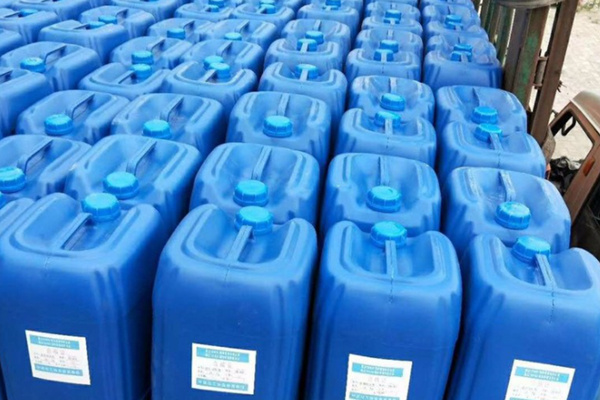
Ultrasonic Cleaning Agent
Ultrasonic cleaning solutions are formulated to work with acoustic cavitation rather than simply adding soap to water. A suitable solution may contain surfactants, builders, chelating agents, corrosion inhibitors, emulsifiers, or other ingredients selected for a particular material and contaminant. These chemicals help separate contamination from the workpiece, keep removed particles suspended, and reduce the possibility of redeposition.
Surfactants are particularly important because they lower surface tension and improve liquid contact. Better wetting allows the liquid to enter small cavities and surround contamination more effectively. This does not replace the acoustic process. Instead, chemical action and cavitation operate together: the solution weakens or dissolves the contaminant while the collapsing bubbles provide mechanical removal.
For oil-covered automotive parts, a mildly alkaline aqueous degreaser may be more appropriate than plain water. For mineral deposits, a carefully selected acidic or chelating formulation may be required. For jewelry, the liquid should be compatible with the metal, plating, solder, and gemstone. For dental appliances, the solution must be suitable for the appliance material and appropriate for oral-contact items after rinsing.
The Ultrasonic Cleaners Do Need Cleaning Solution? Understanding Liquid Requirements for Optimal Performance guide explains why water can operate an ultrasonic cleaner but may not provide the same cleaning efficiency as a purpose-formulated solution. The related Dish Soap in Ultrasonic Cleaners: Technical Compatibility Analysis guide also addresses why household dish soap is not automatically equivalent to a professional ultrasonic detergent.
How Acoustic Cavitation Works in Water
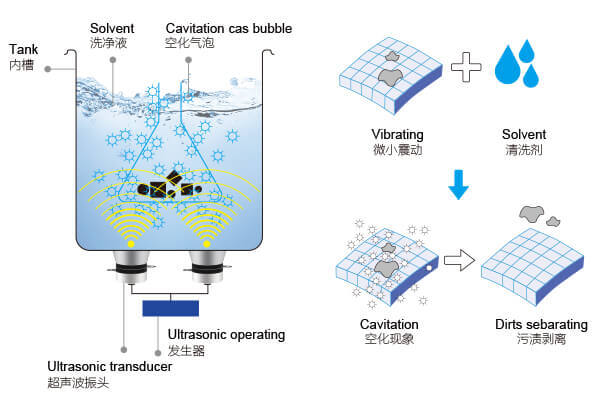
The Principle Behind Ultrasonic Cleaning
Inside the cleaner, an electrical generator supplies a high-frequency signal to ultrasonic transducers. The transducers convert electrical energy into mechanical vibration and transmit pressure waves into the liquid. During low-pressure portions of the sound cycle, microscopic cavities or bubbles can form. During high-pressure portions, those bubbles collapse.
The collapse produces localized pressure pulses and high-speed liquid movement close to the immersed surface. These effects can break the bond between contamination and the workpiece, particularly in crevices that are difficult to reach with a brush. The process is not the same as mechanical stirring. Any circulation pump, spray nozzle, rotating fixture, or separate mixing device performs a different function and should not be confused with ultrasonic cleaning.
Water quality affects the process because dissolved gases, minerals, and suspended particles influence cavitation behavior. Freshly filled water normally contains dissolved air. A short degassing cycle can remove some of this gas and help the ultrasonic field become more stable. Many equipment designs therefore include a degas function, especially when the unit is filled with fresh solution.
Acoustic cavitation also has a materials risk. High sound intensity, low frequency, extended exposure, or unsuitable chemical conditions can damage soft metals, coatings, plated surfaces, or fragile assemblies.
Choosing Water Quality for Ultrasonic Cleaning
Tap water is often adequate for general-purpose cleaning, but it may leave mineral spots after evaporation. Hard water contains calcium and magnesium salts that can form deposits on the tank, basket, and workpiece. These residues are especially visible on glass, polished metal, optical components, and jewelry.
Filtered or deionized water can reduce spotting and mineral residue, but it is not automatically the best liquid for every application. Water quality should be selected according to the final cleanliness requirement and the cleaning chemistry. In some industrial processes, the final rinse uses deionized water even when the primary wash uses a formulated detergent.
Water should be clean enough that suspended particles do not become a new source of contamination. If the solution becomes visibly dirty, changing or filtering it is usually more effective than extending the cleaning time. A heavily contaminated solution can also reduce cleaning consistency because removed oil and particles remain available for redeposition.
Which Cleaning Solutions Can Be Used?
The safest general principle is to use a solution specifically identified as compatible with ultrasonic equipment and the material being cleaned. The solution should be water-based unless the equipment manufacturer has approved another liquid and the machine is designed for that application. Flammable solvents can create serious fire, vapor, and electrical hazards in equipment that was not designed for them.
Common solution categories include neutral detergents for general cleaning, mildly alkaline detergents for oils and grease, enzymatic formulations for certain biological residues, acidic formulations for mineral scale, and specialized products for silver tarnish or industrial contamination. Concentration should follow the chemical supplier’s instructions. Increasing concentration beyond the recommended range does not necessarily improve cleaning and may increase foaming, corrosion, residue, or disposal problems.
Foam is a particular concern. Excessive foam can interfere with acoustic energy transmission because it introduces a layer of gas between the transducers and the liquid. High-foaming detergents may therefore produce weaker or less uniform cleaning, even when the chemical itself appears effective in manual washing.
Solutions for Jewelry, Glasses, Parts, and Dental Appliances
For jewelry and eyeglasses, a dilute neutral or mildly alkaline solution is commonly preferred, provided the material is suitable for ultrasonic processing. Plain water may remove surface dust and light fingerprints, but oils from skin, cosmetics, polishing compounds, and soap residue generally require a detergent component. The Jewelry Ultrasonic Cleaner category is relevant for users who need a compact cleaning system for suitable metal jewelry and small objects.
Gemstones require special caution. Loose stones, fracture-filled stones, porous materials, treated gems, soft stones, and jewelry with weakened settings may be unsuitable for ultrasonic cleaning. Ultrasonic energy can reveal an existing weakness in a prong, bezel, solder joint, or stone. A jeweler’s inspection is appropriate when the setting condition or gemstone treatment is unknown.
For automotive parts, carburetors, injectors, bearings, and hardware, water alone is rarely sufficient when the main contamination is oil, grease, carbon, or varnish. A compatible degreasing solution improves the removal process. Parts should be disassembled when practical, because trapped air inside blind holes or enclosed cavities can prevent liquid contact.
For retainers, dentures, aligners, or mouthguards, the cleaning liquid must be compatible with the appliance material. A mild, nonabrasive cleaning product may be suitable, but the appliance manufacturer’s instructions take priority. Ultrasonic cleaning removes contamination; it does not automatically disinfect or sterilize the item. Dental instruments require a validated cleaning and sterilization workflow rather than a household cleaning cycle.
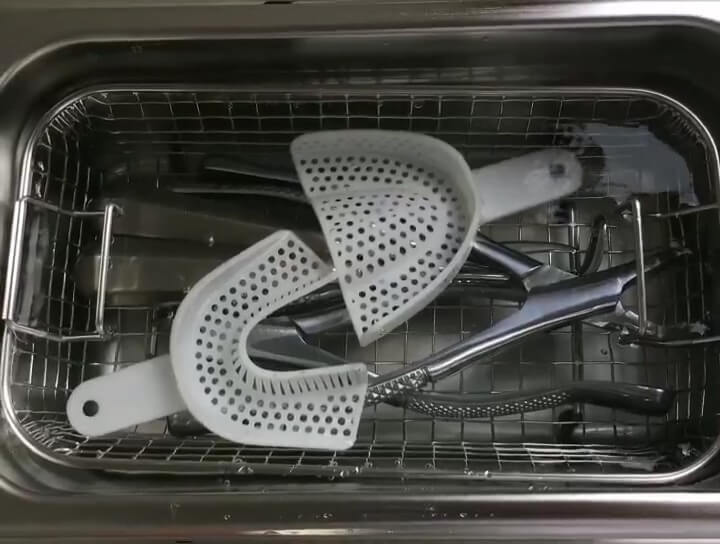
3.2L Dental Instruments Cleaning
Why Dish Soap, Vinegar, and Strong Chemicals Require Care
Dish soap may clean an ultrasonic tank in some low-risk situations, but many dishwashing liquids produce substantial foam. Fragrance, dyes, additives, and high surfactant levels may also leave residues or create compatibility problems. A low-foaming ultrasonic detergent is generally easier to control because its formulation is designed for immersion cleaning and acoustic cavitation.
Vinegar can help dissolve some mineral deposits because it is acidic, but it should not be treated as a universal ultrasonic cleaning solution. Acids may attack certain metals, coatings, solder joints, or the tank itself if used at an unsuitable concentration or temperature. The solution should never be mixed with bleach or other incompatible chemicals.
Strong acids, strong alkalis, chlorine-containing products, and unapproved solvents can damage the tank, transducers, seals, workpieces, or electrical components. Chemical compatibility should be checked before use, especially when the tank is stainless steel but contains welded joints, protective coatings, or other exposed materials.
Step-by-Step Procedure for Using Water or Solution
Begin by identifying the workpiece material and the contaminant. Remove loose debris manually, open hinged parts, and disassemble components where the manufacturer permits it. Select water or a low-foaming solution based on the contamination rather than choosing a liquid only because it is readily available.
- Fill the tank to the marked operating level. Do not operate the ultrasonic system with insufficient liquid.
- Add the cleaning concentrate at the specified dilution ratio. Avoid pouring concentrated chemicals directly onto the workpiece.
- Run a short degassing cycle when using fresh water or freshly prepared solution.
- Place parts in the basket so that they do not rest directly on the tank bottom or block one another.
- Set a moderate temperature and cleaning time appropriate for the material and contamination.
- Inspect the result after the first cycle rather than assuming that a longer cycle is always better.
- Rinse cleaned parts with suitable water to remove loosened contamination and detergent residue.
- Dry the workpiece and inspect recesses, joints, holes, and surfaces that must meet a specific cleanliness requirement.
Items should not be placed directly on the tank bottom because contact can interfere with sound transmission and may cause localized wear. Overloading the basket can also create shadowing, where one part blocks acoustic access to another. Consistent spacing and correct basket loading are important in both household and industrial applications.
Proper Placement of Items for Cleaning
Temperature, Frequency, Degassing, and Loading Factors
Moderate heating often improves cleaning because warmer solutions reduce viscosity and help dissolve oils. Excessive heat, however, can damage plastics, accelerate chemical attack, soften adhesives, or bake biological residues onto a surface. The correct temperature should therefore be selected from the solution and workpiece requirements rather than using the highest available setting.
Frequency influences bubble size and cleaning aggressiveness. Lower frequencies generally produce larger, more energetic bubbles that can be useful for robust parts and heavy contamination. Higher frequencies produce smaller bubbles that may be more appropriate for fine features, delicate surfaces, and complex geometries. The correct selection depends on the material, surface condition, contaminant, and cleanliness target.
Power density is equally important. Excessive acoustic power may increase cavitation erosion, surface marking, or damage to soft materials. Insufficient power may produce poor results, especially in large tanks or heavily loaded baskets. Professional equipment selection should consider tank geometry, transducer distribution, generator matching, operating frequency, and the actual workpiece load.
The What Temperature Should You Use When Ultrasonic Cleaning Parts? guide provides additional discussion of temperature selection. For applications that require adjustable operating parameters, the Granbo GL Series Ultrasonic Cleaner is listed with frequency customization support, which may be relevant when the cleaning process requires more than a fixed-frequency household cycle.
Common Problems Caused by Using the Wrong Liquid
A poor cleaning result may come from using plain water on an oily part, but liquid selection is only one possible cause. Other causes include inadequate degassing, incorrect temperature, insufficient time, excessive loading, poor transducer distribution, unsuitable frequency, or contamination that requires chemical treatment rather than mechanical removal.
Heavy foam usually indicates an unsuitable detergent or excessive concentration. White spots after drying may indicate hard water or inadequate rinsing. Discoloration or corrosion may result from an acidic or alkaline solution that is incompatible with the material. A strong chemical odor may indicate that ventilation, concentration, or chemical selection needs attention.
When a part remains dirty after cleaning, increasing the timer should not be the first response. A controlled process review is more reliable: verify the solution concentration, measure the temperature, inspect the liquid condition, confirm that the basket is not overloaded, and check whether the contaminant requires a different chemistry.
References
- Cleaning (Centers for Disease Control and Prevention)
- Ultrasonic Cleaners Need Cleaning Solution? Understanding Liquid Requirements for Optimal Performance
- Dish Soap in Ultrasonic Cleaners: Technical Compatibility Analysis
- What Temperature Should You Use When Ultrasonic Cleaning Parts?
- Do Ultrasonic Cleaners Sterilize?
- What water is used for ultrasonic cleaning machines?
- How to Use an Ultrasonic Cleaner Correctly for Best Results