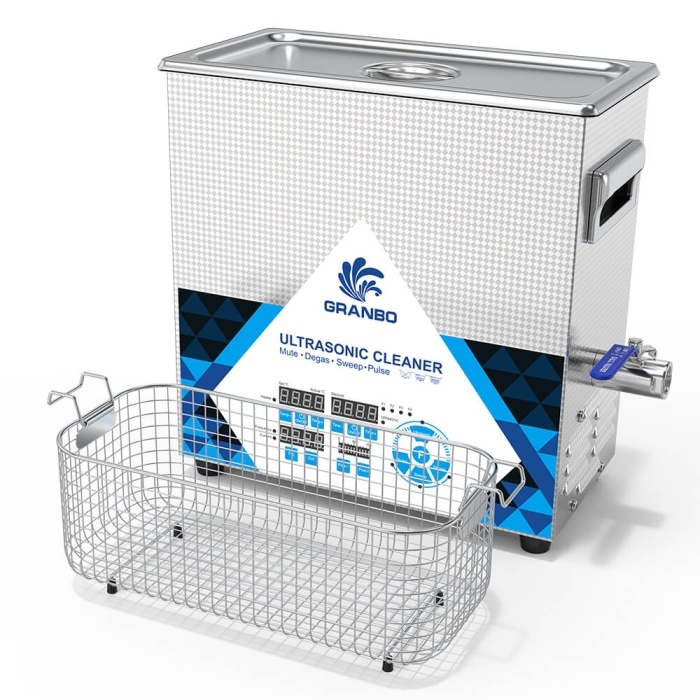
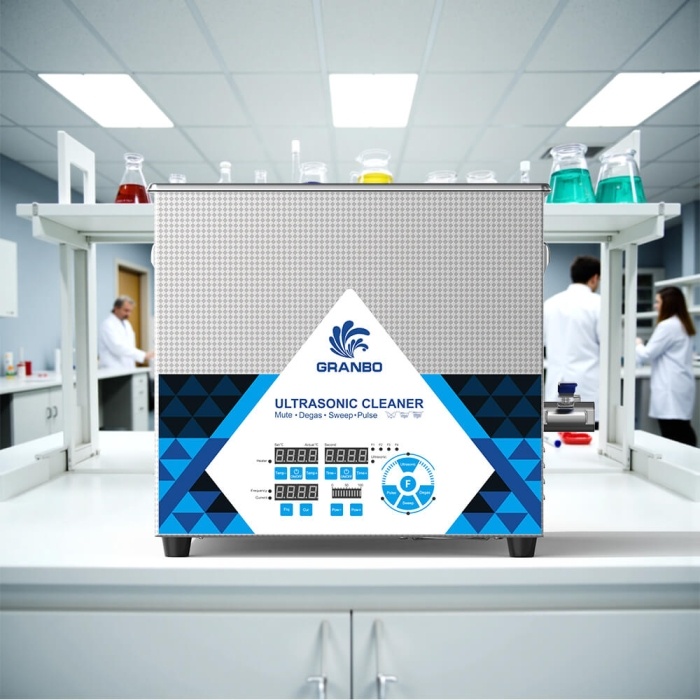
 Granbo Sonic












Is It Safe to Use an Ultrasonic Cleaner for Invisalign
Browse Volume:141 Classify:Support
Invisalign aligners sit directly against your teeth and gums for twenty-two hours a day, which means they pick up everything your mouth produces. Saliva dries on the surface, thin layers of plaque begin to settle into the curves of the trays, and microscopic food particles slip inside even when you think you have rinsed carefully. Over time, this buildup turns the aligners cloudy, gives them an unpleasant smell, and makes them feel less fresh against your teeth. Because the material is clear and smooth, any residue stands out immediately, making the aligners look less transparent and more worn than they actually are.
In addition to daily residue, Invisalign trays deal with natural bacteria from the mouth. Even though you remove the aligners before eating, bacteria do not stop growing simply because food is not present. Warmth and moisture encourage bacterial activity, and the inner surfaces of the aligner become an environment where bacteria settle easily. This is why some people notice that their trays smell different depending on how consistently they clean them. When bacteria collect inside small creases or around bite ramps, the odor becomes more noticeable.
This daily buildup also affects how Invisalign feels. If a thin film coats the inside of the aligner, the trays may not seat onto the teeth as smoothly as they did when they were new. You might feel a slight roughness or stickiness where plaque has begun to form. This sensation is subtle at first, but it grows more noticeable the longer the aligner goes without cleaning. Because each Invisalign tray is designed to move your teeth by a very specific amount, keeping the material free of buildup helps ensure the aligner fits as it should.
Aligners are also exposed to everyday habits that accelerate residue. Coffee, tea, and flavored drinks can stain the aligners if trace amounts remain on your teeth when you put them back in. Toothpaste with abrasive particles can scratch the surface if used directly on the trays. Even the process of removing the aligners with your fingers transfers oils that cling to the plastic and attract additional debris. Over time, these little interactions create enough accumulation that daily rinsing alone cannot reverse the cloudiness.
Because Invisalign aligners are made to be replaced every one to two weeks, many people assume deep cleaning is unnecessary. But the short wear cycle does not prevent buildup from forming. A tray worn for only a single week can still accumulate a surprising amount of plaque and bacteria if it is not cleaned thoroughly. This buildup makes the trays look older than they are and may contribute to unpleasant odors during the final days of the wear cycle.
These challenges explain why so many Invisalign users look for ways to keep their aligners as clear and fresh as possible. Manual brushing helps, but brushing alone does not always remove thin films or the debris that collects in tight areas around attachments. Soaking tablets dissolve some buildup, but they may not reach corners that require more targeted cleaning. As a result, many people begin searching for alternative methods that provide a deeper clean.
Ultrasonic cleaners seem appealing because they promise a level of precision that is difficult to achieve manually. The idea of placing an Invisalign tray in a bath, allowing sound waves to lift away every trace of plaque, and restoring perfect clarity in a matter of minutes is understandably attractive. It feels like a solution that could resolve both hygiene concerns and maintenance challenges with minimal effort.
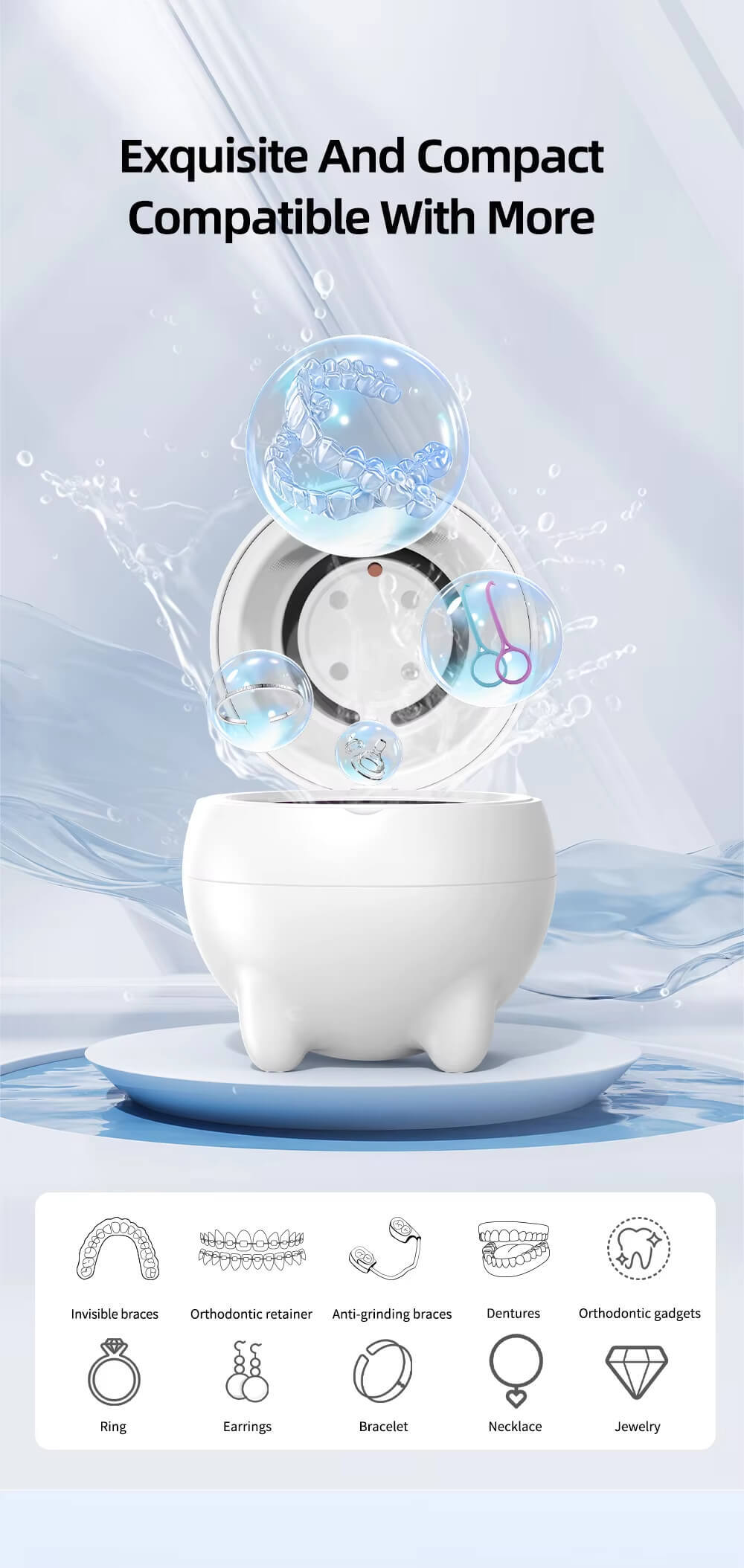
Ultraviolet Ultrasonic Cleaner for Retainers and Dentures
But before assuming that ultrasonic cleaners are safe for Invisalign, it’s important to understand how these devices work. The same mechanism that makes them effective for jewelry and dental tools may not behave the same way with clear aligner material. The key lies in the interaction between the ultrasonic waves and Invisalign’s unique SmartTrack polymer.
To understand that interaction, we first need to take a closer look at the technology behind ultrasonic cleaners.
What Ultrasonic Cleaners Do and How They Work
Ultrasonic cleaners use sound—high-frequency sound that is far above what the human ear can detect—to remove dirt and buildup from surfaces. When the machine is turned on, it sends ultrasonic waves through the water inside the tank. These waves create microscopic bubbles that form and collapse rapidly in a process called cavitation. Each time a bubble collapses, it releases a tiny burst of energy that lifts away debris from the surface of whatever is being cleaned.

The Principle Behind Ultrasonic Cleaning
This process is much more powerful than it first appears. Cavitation does not rely on scraping, brushing, or scrubbing. Instead, it uses vibration and pressure changes to detach particles that cling tightly to surfaces. For items with cracks, crevices, or curves, the bubbles reach places that fingers or toothbrushes cannot. This is why ultrasonic cleaners are used in dental offices, laboratories, jewelry stores, and industrial settings. They excel at removing particles that are trapped where hand tools cannot reach.
As the ultrasound waves move through water, the energy spreads evenly, creating consistent cleaning action across the entire surface of an object. The vibration is gentle enough to avoid damaging most hard materials but effective enough to remove even stubborn buildup. When the right frequency, power level, and solution are used, ultrasonic cleaning can make an object look significantly cleaner in just a few minutes.
The cleaning solution itself helps the process. Water alone allows cavitation to occur, but a mild cleaning agent disperses oils, loosens biofilm, and prevents debris from re-attaching. Many solutions also prevent foaming, which can weaken cavitation. Without the correct solution, ultrasonic waves may clean unevenly or fail to lift certain residues.
Temperature plays a role as well. Warmer water dissolves oils faster and allows bubbles to form more efficiently. This is why many ultrasonic cleaners have a heating function. In settings where metal tools, dental instruments, or jewelry are being cleaned, heat improves performance. However, ultrasonic devices designed for household use often lack precise temperature control, which can create challenges when cleaning heat-sensitive materials.
The reason ultrasonic cleaners draw so much attention from Invisalign users is simple: aligners have curves, ridges, and small interior spaces where plaque and saliva film settle. Toothbrushes reach the flat surfaces but rarely clean the small contours completely. Cavitation, on the other hand, should theoretically reach all of these difficult areas. That potential makes ultrasonic cleaning seem like an ideal way to keep aligners fresh and clear.
But ultrasonic technology that works beautifully on stainless steel dental tools or solid metal jewelry does not always perform the same way on flexible, semi-elastic polymers like Invisalign’s SmartTrack material. Hard materials remain stable under vibration, but softer plastics respond differently. The rapid pressure changes inside the tank can stress certain materials, especially if they are thin or designed for flexibility.
Unlike metals, Invisalign aligners are not rigid. They bend, flex, and adapt to the shape of the teeth. This flexibility is important for comfort and controlled orthodontic pressure, but it also makes the material more sensitive to heat and vibration. Even a mild temperature change can cause the polymer to expand slightly, and ultrasonic waves can affect the surface differently than they would on a hard object.
Are Ultrasonic Cleaners Safe for Invisalign
The short answer is that ultrasonic cleaners can be safe for Invisalign under the right conditions, but they also have the potential to damage aligners if used incorrectly. The safety depends heavily on temperature, vibration intensity, the specific ultrasonic device, and how long the aligners remain in the tank. Invisalign aligners are not made of hard, rigid plastic like dental tools or retainers used in orthodontic offices. Instead, they are made of a specialized flexible polymer that reacts differently to heat and vibration.
Many people assume ultrasonic cleaning is automatically safe because dental clinics use ultrasonic machines to clean instruments. But those instruments are metal, not flexible polymers. The SmartTrack material used for Invisalign requires more caution. Even slight changes in heat or vibration can affect the fit, clarity, or structural integrity of the aligner.
In most cases, Invisalign trays can handle gentle ultrasonic cleaning as long as the machine does not heat the water. Many consumer ultrasonic cleaners gradually warm the water during operation, even without a built-in heating function. This heat is beneficial for cleaning metal or jewelry but becomes a problem for Invisalign because the material softens and expands slightly when warmed. If the aligners warm too much, they may warp, which interferes with the precise fit needed for tooth movement.
Another risk involves vibration strength. Ultrasonic cleaners vary widely in power. Professional-grade machines—especially those used in jewelry or dental labs—produce intense cavitation meant for durable surfaces. While cavitation does not break Invisalign trays, excessive vibration can create surface micro-texturing or hairline distortions. These changes are too small to see with the naked eye, but they affect clarity and can make the aligners feel less smooth against teeth and gums. Over time, this roughening can create more places for bacteria to accumulate.
Invisalign aligners are designed to apply controlled and even pressure to your teeth. Any change in shape, even one that appears small, can reduce the tray’s effectiveness. A distorted aligner may not sit flush against your teeth, which slows down progress and creates discomfort. Because each tray is manufactured to exact specifications, maintaining shape is essential.
Not all ultrasonic devices are equal. Some units are marketed specifically for cleaning dental appliances, including clear aligners. These devices usually operate at a milder frequency and avoid prolonged heating. They are designed for plastic-based dental appliances, which makes them safer for Invisalign. On the other hand, generic ultrasonic cleaners made for jewelry or tools may operate at a frequency that is too aggressive for aligner plastic.
Although ultrasonic cleaning can remove plaque and odor-causing bacteria, Invisalign’s manufacturer does not officially recommend or endorse ultrasonic cleaners. They encourage soaking solutions or aligner cleaning crystals instead. This does not mean ultrasonic cleaning is always harmful, but it does mean the responsibility falls on the user to ensure the device is appropriate and used correctly.
If ultrasonic cleaning is used carefully, it can be an effective supplement to daily brushing and soaking. It removes film that toothbrushes sometimes leave behind and restores clarity when trays become cloudy. However, if the device becomes too warm or cycles for too long, the risk of deformation increases.
Understanding Invisalign Material and Its Sensitivity
Invisalign aligners are not made from typical plastic. They are crafted from a proprietary material called SmartTrack, a flexible, medical-grade thermoplastic engineered specifically for orthodontic movement. This material is designed to apply gentle, continuous pressure to the teeth, bending and flexing slightly every time you insert or remove the aligner. Its elasticity makes Invisalign comfortable, but this same flexibility also makes it more sensitive to environmental stress.
Unlike rigid dental appliances, SmartTrack responds noticeably to temperature changes. Even a small rise in heat can soften the material just enough to alter how it fits. This sensitivity is intentional: flexibility helps the aligner adapt to subtle differences in tooth anatomy. But that flexibility becomes a risk factor when exposed to warm ultrasonic baths. If the aligner warms unevenly, certain areas may expand more than others, leading to slight warping or distortion. Even millimeter-level changes can affect how the tray seats on the teeth, which in turn impacts treatment accuracy.
The surface of SmartTrack is another key factor. Invisalign trays feel smooth because their outer layers are polished during manufacturing. This smoothness helps reduce bacterial adherence and makes the aligners more comfortable to wear for long periods. Ultrasonic vibration interacts with this smooth surface in ways that differ from how it interacts with metal or harder plastics. Cavitation bubbles collapsing near a hard surface typically remove debris without affecting the material. But near a soft or semi-flexible surface, these same micro-bursts of energy can create a very subtle texture change.
This micro-texturing is not always visible, but it can be felt. A tray that was once smooth may feel slightly rough, and even a faint texture gives bacteria new places to settle. Over time, this contributes to odors, cloudiness, and the development of plaque biofilm. While ultrasonic vibration is not strong enough to crack the plastic outright, repeated exposure—especially on high-powered devices—can gradually affect the texture.
Invisalign’s design also includes fine detailing. Aligners feature small pressure points, ridges, and areas molded to fit around attachments or buttons placed on the teeth. These shapes contribute to the precise force the aligner needs to apply. If the plastic softens even slightly due to heat, the structural details can shift. A ridge might flatten a little. A pressure point might lose sharpness. The result is subtle, but in orthodontics, subtle changes can influence the pace or direction of tooth movement.
Another important characteristic of SmartTrack is its layered structure. The material has an elastic core surrounded by thinner, more rigid surfaces. These layers work together to provide comfort and control. But layered materials do not always react uniformly to vibration and temperature. While the outer layer remains stable, heat may cause deeper layers to expand slightly differently. This uneven response can create tension within the material, which may lead to long-term surface rippling or minute dimensional changes.
SmartTrack is also engineered to resist staining, but it is not completely stain-proof. The material’s molecular structure is designed to slow down discoloration, not eliminate it. This means any change in surface smoothness makes the aligner more vulnerable to staining from food, drinks, or even natural pigments in the mouth. A roughened surface, even one created unintentionally by ultrasonic vibration, can trap more particles and discolor more quickly.
In addition, Invisalign aligners are manufactured with precise pressure-mapping quality control. Each tray is made to fit authentically within a tight tolerance range. Even minor deformation—something that may not be noticeable when looking at the aligner—can affect that carefully calculated fit. Because tooth movement relies on exact, predictable pressure, any misalignment created by cleaning methods can interfere with the aligner’s orthodontic effect.
For all these reasons, the sensitivity of Invisalign’s SmartTrack polymer becomes the determining factor when evaluating ultrasonic cleaning. The aligners do not need extreme vibration to become clean, yet many consumer ultrasonics deliver more power—and more heat—than necessary. Matching the cleaning device to the material’s properties is essential.
When used appropriately, ultrasonic cleaning can remove buildup without damaging the polymer. But when the wrong machine, temperature, or duration is used, SmartTrack reacts in ways that reduce clarity and precision.
When Ultrasonic Cleaning Works Well for Invisalign
Ultrasonic cleaning can be an effective option for Invisalign aligners when it is used in the right way and with the right kind of device. There are certain situations where ultrasonic cleaning offers clear advantages, producing results that brushing or soaking alone cannot achieve. When done properly, it restores clarity, removes stubborn buildup, and keeps trays feeling fresh — without altering their fit.
One of the most noticeable benefits of ultrasonic cleaning appears when aligners develop a thin film of saliva and plaque that brushing fails to remove completely. This film often settles in the small curves and creases inside the aligner. While brushing can remove debris from the flatter areas, it does not always reach the tiny recesses where saliva residue collects. Ultrasonic cavitation reaches these hidden areas easily. The bubbles created during the cleaning process lift the film away from the inner surfaces, making the aligner appear clearer and feel smoother against the teeth.
Ultrasonic cleaning works especially well for aligners that have only early-stage buildup. When residue is still soft and has not yet hardened, gentle ultrasonic vibration removes it without requiring heat or long cleaning cycles. This is particularly helpful for people who struggle to maintain daily brushing of their aligners or who notice cloudiness forming even when using cleaning tablets. The process quickly breaks up biofilm, revealing the natural transparency of the SmartTrack material.
Another effective use for ultrasonic cleaning is removing odor-causing bacteria. Even with regular brushing, bacteria can settle into tiny grooves, especially around areas that contour closely to the gumline. These bacteria contribute to unpleasant smells that become noticeable when the aligners are removed. Ultrasonic cleaning helps dislodge these bacteria, making the aligners smell fresher and feel more hygienic. This is often most helpful toward the end of the aligner’s wear cycle, when odor tends to develop more easily.
Aligners with bite ramps, precision wings, or other sculpted features benefit significantly from ultrasonic cleaning. These specialized shapes give bacteria extra places to hide. Manual cleaning often leaves these areas less pristine than the rest of the tray. Ultrasonic vibration adapts to the contours of the aligner, ensuring that the detailed sections receive the same level of cleaning as the flatter surfaces. This improves comfort during wear, especially when the detailed areas sit close to soft tissues.
People who use whitening gels or other dental treatments with their aligners sometimes find that a faint sticky layer forms afterward. Ultrasonic cleaning can loosen leftover gel residue that brushing fails to remove. This helps ensure that whitening products do not leave behind a film that disrupts the clarity of the aligner.
For users who travel frequently or have demanding schedules, ultrasonic cleaning offers a time-efficient way to refresh aligners. Instead of spending several minutes brushing and rinsing the trays, the aligners can be placed in the ultrasonic bath while other tasks are completed. This convenience is one of the reasons ultrasonic devices designed specifically for dental appliances have become more popular in recent years.
Importantly, ultrasonic cleaning works best when the aligner is structurally sound and has not been exposed to high heat or abrasive brushing. A tray that is already slightly scratched or softened is more vulnerable to surface changes, even with gentle vibration. When the aligner is in good condition, ultrasonic cleaning can produce excellent results with minimal risk.
Another situation where ultrasonic cleaners are useful is for retainers used after Invisalign, especially clear retainers made of thicker or more rigid materials than SmartTrack. These retainers often accumulate more visible plaque because they are worn long-term. Ultrasonic cleaning often works even better on them than on aligners, because retainers are typically more stable under vibration.
When used cautiously — with no heat, short cleaning cycles, and mild solutions — ultrasonic cleaning can be a valuable tool for maintaining aligner clarity. It provides a level of cleanliness that enhances both comfort and appearance. But just as there are situations where ultrasonic cleaning works well, there are also scenarios where it introduces significant risks.
Potential Risks and When Ultrasonic Cleaning Should Be Avoided
Although ultrasonic cleaners can refresh Invisalign aligners effectively under the right conditions, there are clear situations where they should not be used. The potential risks are tied to how ultrasonic vibration and heat interact with the SmartTrack material, as well as how individual ultrasonic devices operate. Understanding these risks helps ensure you protect both the clarity and the structural integrity of your aligners.
One of the most significant risks comes from heat generated during the cleaning process. Even ultrasonic cleaners without built-in heaters naturally warm the water as they run. This heat is beneficial for cleaning metal tools, but it softens Invisalign’s thermoplastic material. When exposed to elevated temperatures, the aligner may expand slightly or become more flexible than intended. Even a small amount of deformation is enough to alter the tray’s fit. Because Invisalign relies on precision for effective tooth movement, heat distortion is one of the most serious concerns associated with ultrasonic cleaning.
Another risk is excessive vibration. Some ultrasonic cleaners—especially models designed for jewelry, metal parts, or lab instruments—produce strong cavitation that is too intense for soft or flexible plastics. This level of vibration can cause surface micro-wear, creating a subtle texture that makes the aligners appear cloudy. Although these microscopic changes may not affect the aligner’s ability to move teeth, they do reduce transparency and create a surface where plaque and bacteria can accumulate more easily. Over time, this can lead to odors and discoloration that make the aligners feel less clean.
Ultrasonic vibration can also interact unpredictably with aligners that already have small scratches. Any existing damage on the aligner’s surface may serve as a weak point where vibration concentrates. Even though ultrasonic cleaners do not crack trays outright, they can amplify wear in these areas, making scratches more noticeable or encouraging the plastic to degrade prematurely. Aligners with visible scratches or cloudiness are generally better cleaned with manual or chemical methods rather than ultrasonic vibration.
Aligners with bonded attachments or significant sculpted features may also be at risk. Although attachments are bonded to the teeth, not the aligner, trays that wrap closely around attachment sites often have small stress points. If the aligner has begun to lose elasticity around these curves, ultrasonic vibration may worsen the issue and affect how the tray fits around the attachments. Slight distortions in these areas may cause the aligner to no longer anchor securely, reducing treatment efficiency.
Another situation where ultrasonic cleaning should be avoided is when the tray has developed hairline cracks or small weakened spots. Even if the crack is extremely small, the vibration from ultrasonic cleaning can cause the area to widen or weaken further. This increases the risk of the aligner breaking during insertion or removal. Because Invisalign trays must maintain consistent pressure along the entire arch, even minor cracking undermines their effectiveness.
Ultrasonic cleaners should also be avoided when using strong or chemical-heavy solutions inside the tank. Many cleaning solutions designed for jewelry contain ammonia or solvents that are inappropriate for Invisalign’s medical-grade polymer. Combined with ultrasonic vibration, these chemicals can soften or discolor the plastic. Only neutral or denture-safe solutions should ever be used if ultrasonic cleaning is attempted.
Extended cleaning cycles also pose a risk. Leaving aligners in an ultrasonic cleaner for more than a few minutes increases the chance of heat buildup and prolonged vibration exposure, both of which raise the likelihood of distortion. The safest approach is always short cycles, but many people unknowingly run their ultrasonic cleaners for long periods because the device’s default timer is set for lengthy cleaning sessions.
Finally, ultrasonic cleaning should be avoided when the aligner is exposed to staining agents. If the aligner already contains trapped pigments from coffee, tea, or spices, ultrasonic vibration may not remove the stains effectively. In some cases, it can even cause pigments lodged in micro-scratches to settle deeper, making discoloration more permanent. Soaking solutions designed for clear aligners work better for this type of stain.
Because the risks depend heavily on the device and the condition of the aligner, it is important to evaluate each situation carefully. When conditions are unfavorable—particularly when heat or vibration may compromise the material—manual or soaking-based cleaning methods are safer options.
Invisalign with Attachments or Buttons: Special Considerations
Many Invisalign wearers have attachments or buttons bonded to their teeth to help guide movement more effectively. These small composite shapes give the aligners places to grip, allowing them to apply controlled pressure in specific directions. While attachments do not change the fundamental function of the aligners, they do change how the trays interact with your teeth, how they collect residue, and how they should be cleaned. Because aligners must fit snugly around these raised spots, maintaining that precision is essential for treatment to progress smoothly.
When attachments are present, the aligner’s inner surfaces must contour tightly around each composite bump or button. This close contact means saliva and plaque gather more readily around these curved areas. Brushing can clean the outer surfaces, but the deep recesses created by attachment contours make manual cleaning more difficult. This is one reason people consider ultrasonic cleaning more strongly when attachments are involved. The idea of vibration reaching into every curve and cleaning those hard-to-access areas is appealing.
However, attachments also introduce additional sensitivity to the cleaning process. The SmartTrack material stretches slightly each time it is placed over the attachments. Over the course of its wear cycle, an aligner will naturally adapt to these shapes. If heat or ultrasonic vibration softens the material even slightly, the areas around the attachments may stretch in unintended ways. This stretching can loosen the fit, making the aligner feel less secure and reducing the pressure needed to move teeth. Even small changes in how the material grips the attachments can interrupt the intended direction of tooth movement.
The precise fit around attachments also depends on very small details molded into the tray. Each aligner is created from a digital model of your teeth that accounts for the size, shape, and placement of attachments. These molded contours are extremely exact. Ultrasonic vibration, while helpful in cleaning, can alter surface tension or smooth out tiny ridges around the attachment sockets if the device is too powerful. This does not cause obvious damage but can subtly affect how the tray anchors onto the attachment, reducing efficiency.
Another challenge is that attachments make the aligners slightly harder to remove, especially during the first days of each new tray. People naturally apply more pulling force to remove aligners with attachments. If ultrasonic cleaning softens the material, even temporarily, the extra pressure needed to remove the tray increases stress on the plastic. This stress may cause the aligner to develop tiny flex marks near the attachment contours. While these marks are not dangerous, they increase the risk of long-term wear or small tears.
For users with buttons — often used for elastics — the design becomes even more complex. Buttons create deeper openings in the aligner material, which must wrap around them precisely. These areas are thin and prone to stretching. Ultrasonic vibration does not damage the material directly, but heat and repeated cycles can weaken the structure of that thin plastic. If the plastic loosens around the button openings, the aligner may slip slightly during wear, reducing the stability needed for elastic-driven movement.
Ultrasonic cleaning also interacts with plaque differently when attachments are present. Because attachments create extra hiding spots for bacteria, plaque often hardens more quickly in the curved areas surrounding them. If this hardened plaque is not removed completely, the aligner may not sit correctly, causing pressure discomfort or reducing effectiveness. Ultrasonic cleaning helps loosen this buildup, but only when the cleaner operates at a safe temperature and mild vibration strength. Strong devices may loosen the plastic rather than the plaque, causing more harm than good.
On the other hand, aligners with attachments often benefit from occasional ultrasonic cleaning when done carefully. The technology reaches tight spots that toothbrushes cannot clean effectively. It removes the faint sticky layer that forms near attachment edges and prevents odors that tend to develop at these contact points. The key is to use short cycles, cool water, and a low-intensity cleaner made for dental appliances.
If attachments are newly placed or recently adjusted, it is wise to avoid ultrasonic cleaning for a few days. During this period, you may remove or insert the aligner more frequently as you adjust to the new shape. Allowing the tray to settle into its routine shape without the added influence of heat or vibration helps preserve its structural integrity.
Because attachments create both cleaning challenges and material sensitivities, understanding how they interact with ultrasonic cleaning is essential before choosing this method. The type of ultrasonic cleaner you choose becomes even more important when attachments or buttons are part of your treatment.
Choosing the Right Ultrasonic Cleaner for Invisalign
Not all ultrasonic cleaners are appropriate for Invisalign. The effectiveness—and the safety—of ultrasonic cleaning depends heavily on the type of device used, the frequency it operates at, the temperature it reaches during a cycle, and the kind of solution placed in the tank. Choosing the wrong machine can lead to warping, surface damage, or gradual loss of clarity, while choosing the right one can provide gentle, efficient cleaning that refreshes your aligners without affecting their fit.
One of the most important factors when selecting an ultrasonic cleaner for Invisalign is frequency. Ultrasonic cleaners operate at different kilohertz levels, and each frequency interacts differently with various materials. Lower frequencies produce larger, more forceful bubbles that collapse with more energy. These are excellent for rigid metals and durable surfaces but are often too aggressive for flexible thermoplastics like Invisalign’s SmartTrack material. Higher frequencies create smaller, gentler bubbles that clean with less force. For aligners, a machine operating at a higher frequency is generally safer because it delivers the mild cleaning action needed without stressing the material.
Another critical factor is temperature control. Many household ultrasonic cleaners heat the water naturally as they run, even when the user does not activate a heating function. Heat improves cleaning efficiency for metal instruments, but Invisalign aligners react poorly to elevated temperatures. A device that allows you to keep the water cool or room temperature throughout the entire cycle is far safer than one that gradually warms the water. If the device does not offer temperature control or tends to heat quickly, it becomes unsuitable for cleaning aligners.
The power level of the cleaner also influences safety. High-power ultrasonic cleaners produce intense cavitation designed to remove heavy residue or industrial contaminants. These machines are efficient for jewelry, automotive parts, and dental instruments, but they are too powerful for Invisalign trays. A device marketed for jewelry or laboratory use may deliver more vibration than aligner plastic can comfortably tolerate. When choosing an ultrasonic cleaner, selecting one made specifically for retainers, dentures, or orthodontic appliances is far safer than using a multi-purpose device built for hard materials.
In addition to frequency and power, the size of the tank matters. Smaller tanks designed for dental appliances often distribute energy more evenly and use gentler cycles. Larger tanks built for tools or jewelry usually operate with stronger mechanical action. Invisalign aligners are thin and flexible, so they benefit from the more controlled environment that compact dental-specific devices provide.
The cleaning solution used inside the ultrasonic cleaner plays a major role in protecting the plastic. Solutions that contain ammonia, vinegar, alcohol, or abrasive additives can damage the aligner’s surface or cause cloudiness. Invisalign material responds best to neutral, non-abrasive cleaning solutions. Many companies make aligner-safe tablets or liquids designed specifically for clear orthodontic appliances. These are ideal for use in ultrasonic cleaners as long as the device runs cool and gentle. Tap water can be used alone, but adding a mild, aligner-safe solution enhances cleaning results without stressing the polymer.
Some newer ultrasonic cleaners on the market are specifically designed for clear aligners, retainers, and dental appliances. These devices use lower intensity vibration and often feature automated short cycles that prevent overheating. They do not rely on heat to achieve cleaning power, and they are designed to maintain the clarity of transparent plastics. This type of cleaner is the safest option for Invisalign because it aligns with the material’s needs and limits. Using a device meant for jewelry or metal tools increases the risk of surface wear or temperature-related distortion.
Another consideration is the cycle duration. Many general-purpose ultrasonic cleaners run for five, ten, or even fifteen minutes per cycle. These long periods are unnecessary for Invisalign and may expose the aligner to gradually warming water or prolonged vibration. Devices made for aligners typically offer shorter cycles—often one to three minutes—which are both effective and safer for the plastic.
People who wear Invisalign for many hours at a time should also consider how frequently they intend to use the ultrasonic cleaner. Daily ultrasonic cleaning is generally unnecessary unless the device is specifically designed for orthodontic appliances and operates without heat. Weekly or occasional use is usually sufficient when paired with gentle daily washing. Aligners that are cleaned too aggressively or too often may lose clarity faster or show signs of wear.
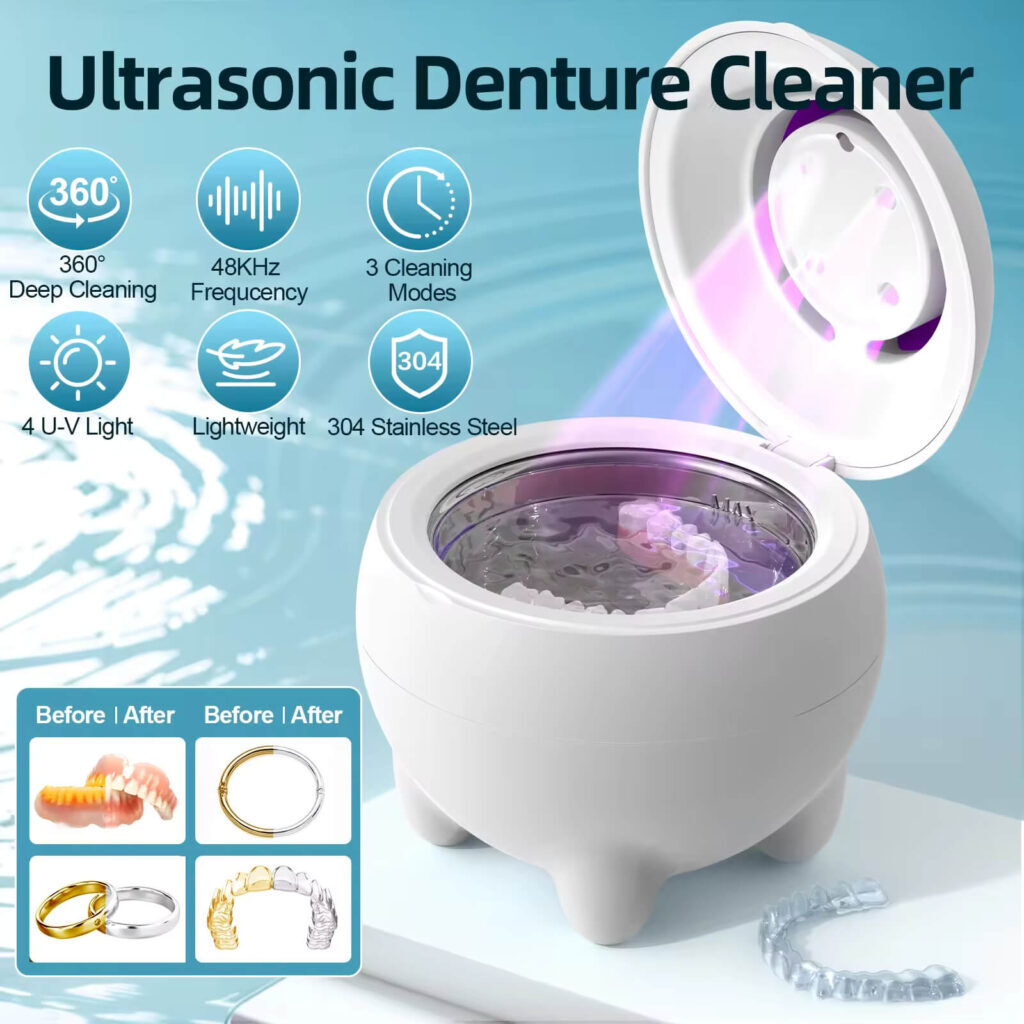
Ultrasonic Denture cleaner
Step-by-Step Safe Ultrasonic Cleaning Workflow for Invisalign
Cleaning Invisalign aligners in an ultrasonic cleaner requires care, patience, and proper technique. The goal is to take advantage of ultrasonic cleaning’s ability to remove stubborn residue without exposing the aligners to unnecessary heat or overly strong vibration. A safe workflow protects the clarity of the SmartTrack material and ensures the aligners maintain their precise fit, which is essential for orthodontic progress. When done correctly, ultrasonic cleaning can refresh aligners in a way that feels effortless, gentle, and thorough.
The process begins before the aligners ever enter the ultrasonic tank. Always rinse the trays under cool or lukewarm water to remove loose saliva or surface particles. This initial rinse prevents debris from interfering with the ultrasonic cleaning process and reduces the time the trays need to spend inside the machine. Rinsing also prevents leftover toothpaste or whitening gel from reacting with the cleaning solution.
Next, make sure the water in the ultrasonic cleaner is cool or room temperature. Never start with warm water, because ultrasonic devices naturally warm the water as the cycle progresses. If the water begins at room temperature, the final temperature remains low enough to protect the SmartTrack material. Fill the tank only to the recommended level, ensuring the aligners will be fully submerged but not floating against the surface.
Add a clear aligner–safe cleaning tablet or mild, neutral solution to the water. These solutions dissolve quickly and help break down the protein film and light plaque that tend to coat aligners after hours of wear. Avoid any cleaning agents that contain ammonia, alcohol, vinegar, or abrasives. The goal is to provide just enough chemical assistance to help the ultrasonic waves lift away buildup without stressing the polymer.
Place the aligners in the ultrasonic tank using a basket or holder designed for dental appliances. Do not place the aligners directly on the metal floor of the tank. Direct contact with the bottom can expose the aligners to stronger vibration hotspots, which may increase the risk of surface wear. A basket suspends the trays gently in the water, allowing cavitation to work evenly on all surfaces.
Run the ultrasonic cleaner using a short cycle, ideally between one and three minutes. Short cycles are safer because they reduce the chance of heat buildup and prevent the aligners from being exposed to prolonged vibration. Most plaque and film detach quickly under ultrasonic action, so long cycles are rarely necessary. If the aligners need more cleaning, it is always safer to run two short cycles with a break in between than one long uninterrupted cycle.
During the cleaning cycle, observe the water. You may notice small streams of bubbles forming around the aligners. This is a normal sign of cavitation. If the water begins to warm noticeably, stop the cycle immediately. When in doubt, shorter cycles are always better for Invisalign than extended cleaning times.
Once the cycle finishes, lift the basket out of the tank and rinse the aligners thoroughly under cool running water. This rinse step is essential because it removes any dissolved residue or cleaning solution that might otherwise dry on the aligners and leave behind a film. Rinsing also restores the smooth feel of the SmartTrack material, preventing any lingering taste from the cleaning solution.
After rinsing, inspect the aligners under bright light. If they appear clear and smooth, and no visible residue remains around the edges or attachment contours, the cleaning was successful. If a faint cloudy film remains, run one more short ultrasonic cycle using cool water. Avoid long cycles, because extended vibration will not necessarily improve cleaning, but it will increase wear on the trays.
Dry the aligners gently using a soft, lint-free cloth. Avoid paper towels, which may scratch the surface. If moisture remains in small creases, allow the aligners to air-dry for a few minutes before wearing them again. Aligners worn while damp may feel slippery and may attract more saliva during the first few minutes of use.
Once dry, the aligners should look fresh, clear, and free of unpleasant odors. Store them in their case if you are not wearing them immediately. Good storage habits prevent dust, hair, and airborne particles from settling on the surface, which would undo some of the cleaning benefits.
Following this workflow ensures that ultrasonic cleaning supports your Invisalign treatment rather than interfering with it. The careful balance of cool water, short cycles, and mild solution allows you to enjoy the benefits of deep cleaning without exposing the aligners to unnecessary stress.
To further understand how safe and effective ultrasonic cleaning can be, it helps to look at how professionals—orthodontists and dental hygienists—approach this cleaning method.
Professional Dental Recommendations: What Orthodontists Say
Orthodontists understand Invisalign aligners better than anyone else, not only because they prescribe them, but because they see firsthand how different cleaning habits affect the trays and the progress of treatment. Their recommendations form a balanced and practical perspective on whether ultrasonic cleaners are appropriate for Invisalign. While opinions vary slightly from one professional to another, most orthodontists agree on several key principles that help guide safe cleaning practices.
The first point many orthodontists emphasize is that Invisalign aligners are made of a flexible, heat-sensitive thermoplastic, and any cleaning method that introduces heat carries risk. Because ultrasonic cleaners naturally warm the water as they run—even when heat settings are disabled—many orthodontists approach ultrasonic cleaning with caution. They often point out that overheating an aligner does not require extreme temperatures. Even a mild increase in warmth can soften the material enough to interfere with its shape. When shape changes even slightly, the aligner may no longer deliver the intended orthodontic force.
Orthodontists also highlight Invisalign’s precision fit, noting that each aligner is engineered to apply controlled pressure in specific areas. Any distortion can disrupt planned tooth movement. This is one reason many orthodontists advise patients to avoid using ultrasonic cleaners unless the device is specifically designed for clear aligners or retainers. Devices made for jewelry or dental instruments may produce stronger vibration than the SmartTrack material is designed to endure.
Another common point raised by orthodontists is the importance of material smoothness. Smooth surfaces resist bacterial buildup and help the aligners remain comfortable. If ultrasonic cleaning alters that smoothness—through micro-abrasion or subtle surface texturing—it can make the aligners more susceptible to plaque accumulation. Orthodontists have observed that aligners with roughened surfaces often become odor-prone, cloudy, and harder to keep clean with standard daily methods.
However, many orthodontists also acknowledge that gentle ultrasonic cleaning can be helpful when used correctly. They recognize that Invisalign aligners collect plaque in areas that brushing may not reach effectively, especially around contours shaped to sit over attachments. Some orthodontic offices even use ultrasonic devices to clean aligners or retainers, but these are specialized units engineered for plastic dental appliances, not the high-powered universal cleaners available to consumers. These professional units operate at controlled temperatures, moderate frequencies, and shorter cycle durations to avoid stressing the aligner material.
Some orthodontists recommend ultrasonic cleaning as an occasional enhancement, not an everyday routine. They explain that aligners worn for only one to two weeks rarely accumulate heavy plaque unless oral hygiene is inconsistent. A mild ultrasonic cleaning session performed once during longer wear cycles—such as the final days before switching to a new tray—can refresh the aligners without exposing them to repeated stress. This approach strikes a balance between deep cleaning and material protection.
Orthodontists also stress the importance of safe cleaning solutions. They warn against using chemical-heavy liquids, jewelry cleaners, or any solutions containing alcohol, vinegar, or harsh detergents. These substances can weaken the aligner surface, cause discoloration, or create brittleness that makes the aligners prone to cracking. Dental professionals strongly favor neutral cleaning solutions or aligner-specific tablets that dissolve safely without chemical interactions that degrade the material.
While orthodontists agree that ultrasonic cleaning can be safe when used carefully, they also emphasize that there is no requirement to use an ultrasonic cleaner to maintain proper Invisalign hygiene. The standard daily routine—rinsing with cool water, brushing gently with a soft toothbrush, and soaking in approved cleaning solutions—is sufficient for most patients. Ultrasonic cleaning is optional, not essential, and should be approached with awareness of the material’s limitations.
Patients who use whitening gels with their aligners or who drink staining beverages throughout the day often ask whether ultrasonic cleaning can prevent yellowing or remove stubborn stains. Orthodontists generally advise that ultrasonic cleaning alone does not prevent staining and may not reverse discoloration caused by pigments embedded in micro-scratches. Instead, they recommend minimizing contact with staining agents while the aligners are in use and using approved soaking tablets when discoloration appears.
Most orthodontists also encourage patients to consult their provider before introducing ultrasonic cleaning into their routine. Every patient’s treatment plan is unique, and the orthodontist may consider factors such as attachment design, wear cycle length, and aligner fit sensitivity before advising whether ultrasonic cleaning is appropriate.
Their collective perspective can be summarized in a single guiding idea: ultrasonic cleaning can be safe for Invisalign if performed with caution, using the right equipment and proper technique, but it is not universally necessary or risk-free. Understanding how orthodontists think about cleaning methods helps patients make informed decisions based on clarity rather than assumption.
This guidance becomes even more useful when comparing ultrasonic cleaning with the other cleaning options available for Invisalign. Each method has strengths, limitations, and ideal use cases, and understanding how they differ helps reinforce where ultrasonic cleaning fits within a complete care routine.
Comparing Ultrasonic Cleaning to Other Invisalign Cleaning Methods
Ultrasonic cleaning is only one of several ways to keep Invisalign aligners clear, fresh, and hygienic. Each cleaning method interacts differently with the SmartTrack material, and each offers its own advantages and limitations. Comparing these approaches helps illustrate where ultrasonic cleaning fits within a complete aligner-care routine and why it should sometimes be used cautiously rather than as a daily habit.
The most common method people rely on is gentle brushing with a soft toothbrush. This approach removes fresh debris well, especially when done immediately after removing the aligners. Brushing helps eliminate the thin saliva film that settles on the trays during wear. It also removes loose particles before they have a chance to harden. Brushing is simple, inexpensive, and safe for daily use. However, it cannot always reach into the deeper contours near attachment imprints or around bite ramps. Even with careful brushing, a faint cloudy layer often develops over time because brushing does not loosen plaque embedded at a microscopic level.
Another widely used method is soaking aligners in Invisalign cleaning crystals or similar clear-aligner solutions. These products dissolve quickly in warm water and break down proteins and bacteria efficiently. They help eliminate odors and reduce the sticky film that forms on aligners during extended wear. Soaking solutions provide an even, less abrasive cleaning experience than brushing alone, and they penetrate the tiny curves inside the trays more effectively. But soaking solutions work more slowly than ultrasonic cleaning, and they may not fully remove buildup that is beginning to harden.
Some patients attempt to clean their aligners using denture tablets, since they are designed to loosen plaque from mouth appliances. Denture tablets work well for retainers and partials, but they are not ideal for Invisalign because they sometimes leave behind a chalky residue or create a faint discoloration. The bubbling action is gentler than ultrasonic cavitation, but denture cleaners are formulated for sturdier materials and may not maintain the clarity of Invisalign plastic as well as aligner-specific products.
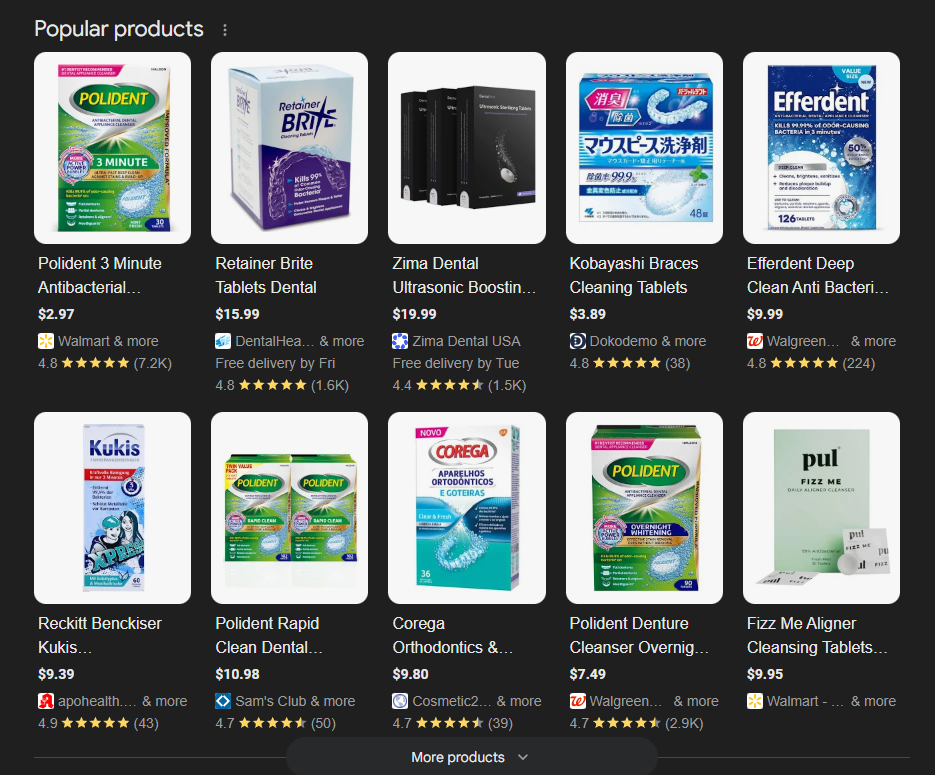
denture tablets
Manual methods such as rinsing with cool water throughout the day offer basic hygiene but do not provide deep cleaning. Rinsing removes saliva and food residue temporarily, but it does not prevent cloudiness from developing. Still, it is a crucial maintenance habit, especially before placing the aligners back into the mouth after meals.
Some people try unconventional methods such as using toothpaste, baking soda, vinegar, or mouthwash, but orthodontists almost universally advise against them. Toothpaste can scratch the smooth surface of the aligners, creating tiny rough points that trap bacteria and make the aligners look cloudy. Baking soda is too abrasive, vinegar is too acidic, and alcohol-based mouthwash can weaken the material with repeated use. These methods may clean temporarily, but they reduce the long-term clarity and lifespan of the trays.
Compared with these options, ultrasonic cleaning occupies a middle ground between gentle daily cleaning and deep chemical soaking. It provides a level of precision brushing cannot reach and a speed that soaking solutions cannot match. Cavitation bubbles lift away buildup in corners and curves that manual methods often miss. When the aligner is not stained, ultrasonic cleaning can restore clarity effectively without prolonged soaking or scrubbing.
However, ultrasonic cleaning’s biggest limitation is its sensitivity to heat and vibration intensity, both of which can distort Invisalign plastic when not carefully controlled. Other methods, like brushing and soaking, may be less powerful but carry far lower risk of warping or surface wear. For this reason, many orthodontists consider ultrasonic cleaning a helpful supplemental method rather than the primary daily solution.
In cases where the aligner is heavily stained, ultrasonic cleaning alone is not enough. Stains from coffee, tea, turmeric, berries, or wine often lodge deep within microscopic scratches caused by brushing or wear. Even gentle cavitation may not fully lift pigments embedded in these roughened areas. Soaking tablets designed specifically for clear aligners remain the best option for stain removal.
On the other hand, ultrasonic cleaning can significantly improve clarity when the aligner is hazy due to dried saliva or loosened plaque. Where brushing struggles to reach, ultrasonic waves excel. When used periodically—perhaps once during longer wear cycles or once every few days for people prone to rapid buildup—ultrasonic cleaning can serve as an effective complement to daily brushing and soaking.
Understanding how ultrasonic cleaning compares to other methods clarifies how it fits into a safe, balanced Invisalign care routine. Once aligners are thoroughly cleaned, proper long-term habits help preserve their clarity between cleaning sessions and reduce the need for more aggressive methods.
Long-Term Care for Invisalign: Keeping Trays Clear and Odor-Free
Keeping Invisalign aligners clear, fresh, and odor-free over their full wear cycle involves more than just cleaning them thoroughly. It requires thoughtful habits throughout the day, consistent hygiene practices, and mindful handling of the trays each time they are removed or inserted. The better the daily routine, the less frequently deep cleaning methods—including ultrasonic cleaning—are needed. Long-term care also helps maintain comfort, ensures the trays remain transparent, and reduces the risk of plaque buildup creating odors or visible cloudiness.
The first long-term habit that preserves aligner clarity is maintaining good oral hygiene while the aligners are out. Brushing your teeth after meals and before reinserting the trays is one of the most effective ways to keep aligners clean from the inside out. Any food particles or pigment left on the teeth can transfer into the tray’s interior and create staining or buildup during wear. Even beverages like coffee, tea, wine, and fruit juices can leave small residues that settle into the aligner if the teeth are not brushed properly before reinsertion.
Another important habit is rinsing the aligners every single time you remove them. This quick rinse prevents saliva from drying on the surface, which is often the cause of the chalky film that develops when aligners sit out of the mouth for even a short period. If the trays dry before rinsing, the saliva residue hardens and becomes more difficult to remove later, prompting the need for stronger cleaning methods. Immediate rinsing, even with just cool water, reduces the amount of buildup that can accumulate over the course of a day.
Handling the trays properly is another part of long-term care. When removing Invisalign aligners, it is natural to pull from one side or lift them off quickly, especially when in a hurry. Over time, this can introduce stress points in the plastic that become more noticeable the longer the tray is worn. Being gentle and consistent during removal helps maintain the aligner’s structural integrity. This is particularly important near the contours that wrap around attachments, where the plastic flexes more intensely. Gentle handling reduces wear and minimizes the risk of microscopic damage that might later encourage plaque adhesion.
Keeping aligners away from potentially damaging substances is another essential practice. Whitening toothpastes, abrasive cleansers, and anything containing alcohol can interact poorly with the SmartTrack material. Even some mouthwashes can dull the aligners if they contain strong antiseptic ingredients. Avoiding these products helps maintain long-term transparency, especially in the areas where the tray rests closest to the gumline and is more prone to cloudiness.
Another long-term care strategy is to store aligners properly whenever they are not being worn. Leaving them exposed on a bathroom counter can cause airborne particles, dust, and microorganisms to settle onto their surface. Placing aligners loosely in a pocket or bag exposes them to lint, oils, and accidental bending. The best practice is to use the Invisalign case every time the aligners are removed. A well-ventilated case allows the trays to stay dry while protecting them from accidental damage or contamination.
Daily soaking also helps maintain clarity when done with approved solutions. Invisalign cleaning crystals or equivalent clear aligner solutions break down protein film, kill bacteria, and refresh the trays. Soaking trays once a day, even for a short period, reduces the need for more intensive cleaning methods such as ultrasonic cleaning. Soaking is predictable, safe for the material, and effective for everyday hygiene.
Hydration plays an unexpected role in aligner freshness as well. Drinking plenty of water throughout the day keeps the mouth moist and reduces bacterial activity. Dry mouth increases bacterial growth, which can transfer to the aligners and create unpleasant odors. Water also helps rinse the mouth naturally, reducing the amount of residue that settles into the aligners during wear.
Avoiding pigmented drinks while wearing aligners is another key long-term habit. Coffee, tea, wine, flavored waters, and sodas can stain the SmartTrack material. These stains often settle into tiny scratches or texture changes that occur from daily wear, making them harder to remove even with soaking or ultrasonic cleaning. Removing the aligners before drinking anything except water prevents these issues entirely and keeps the trays looking clear until the end of their two-week cycle.
People who exercise while wearing aligners should also be mindful of how mouth dryness affects cleanliness. During exercise, saliva production often decreases, bacteria multiply more quickly, and the aligners may trap more particles. Rinsing them immediately after physical activity helps prevent long-term buildup and reduces odor.
Finally, routine inspection of the aligners helps identify early signs of wear, cracking, or increased cloudiness. If the tray appears significantly rough or opaque, it may indicate that the material is beginning to degrade or accumulate plaque in a way that brushing cannot address. These inspections also help determine whether ultrasonic cleaning might be beneficial or whether another method would be safer.
Long-term care is not about perfection; it is about consistency. Small habits—rinsing, storing properly, brushing regularly, avoiding staining beverages, and soaking daily—create a routine that protects the trays and reduces the need for stronger cleaning interventions. When aligners are cared for thoughtfully, they remain clear, odor-free, and comfortable throughout their wear cycle.
These long-term habits also determine how well ultrasonic cleaning fits into your overall aligner maintenance routine. With good daily care, ultrasonic cleaning becomes a helpful supplement rather than a necessity. As the article approaches its final section, it becomes easier to form a balanced perspective on whether ultrasonic cleaners belong in your Invisalign care routine.
Final Thoughts: Should You Use an Ultrasonic Cleaner for Your Invisalign
Cleaning Invisalign aligners is about more than maintaining their appearance. It is about preserving their function, their clarity, and their ability to deliver each planned tooth movement accurately. Ultrasonic cleaners offer a compelling promise: quick, thorough cleaning that reaches deep into the small curves and impressions where plaque and residue settle. When used thoughtfully, they can refresh aligners and restore the smooth transparency that makes Invisalign such an appealing orthodontic choice.
But ultrasonic cleaning is not a universal solution. Invisalign aligners are made from a flexible, heat-sensitive polymer designed for controlled movement rather than mechanical stress. This makes them fundamentally different from the metal tools and solid dental appliances that ultrasonic cleaners were originally designed to clean. Heat, vibration strength, and cycle duration all influence the safety of the cleaning process. When any of these factors exceed what the SmartTrack material can comfortably withstand, the aligners may warp, develop surface texturing, or lose some of their precision fit.
For many people, the safest approach is to use ultrasonic cleaning sparingly, as a supplemental method rather than a daily habit. A gentle, cool-water cycle in a device designed specifically for dental appliances can help refresh aligners that feel sticky or appear cloudy after brushing and soaking. But for routine cleaning, the traditional combination of rinsing, soft brushing, and aligner-safe soaking remains the most reliable choice. These habits protect the material, prevent odor, and preserve the clarity of the trays throughout their wear cycle.
Your own Invisalign routine should be guided by the condition of your aligners, the cleaning tools you have available, and the advice of your orthodontist. Some people may find ultrasonic cleaning valuable when used carefully, while others may not need it at all. The key is to prioritize the long-term health of the aligners and maintain the practices that keep them clear, comfortable, and ready to perform the orthodontic work they were designed for.
Ultrasonic cleaners are safe for Invisalign when used with precision and restraint, but they require the same understanding and responsibility you apply to your orthodontic treatment as a whole. With the right balance, informed decisions, and consistent care, you can keep your aligners fresh while preserving their effectiveness every step of the way.