 Granbo Sonic











Ultrasonic Cleaners and Diamond Security: Understanding the Real Risks
Browse Volume:50 Classify:Support
No, ultrasonic cleaners do not loosen properly secured diamonds. The mechanical vibration and cavitation forces generated by ultrasonic cleaning equipment cannot affect tight, well-maintained diamond settings. Diamonds secured in mountings meeting normal construction standards remain completely stable during standard ultrasonic cleaning processes.
The misconception that ultrasonic cleaners loosen diamonds stems from discovering already-loose stones after cleaning. Ultrasonic processing reveals pre-existing setting problems rather than creating them. Worn prongs, damaged mountings, or metal fatigue existed before cleaning occurred. The cleaning process simply makes these hidden vulnerabilities apparent.
Professional jewelers worldwide use ultrasonic cleaning as standard practice for diamond jewelry maintenance. Industry experience spanning decades demonstrates that properly set diamonds withstand ultrasonic cleaning without loosening. Major gemological laboratories including GIA and AGS employ ultrasonic equipment routinely for diamond jewelry processing. This widespread professional use confirms technology safety when applied correctly.
However, ultrasonic cleaning can accelerate failure of already-compromised settings. Jewelry with worn prongs, cracked shanks, or damaged mountings may experience stone loss during ultrasonic processing. The vibration exposes weakness that would eventually fail during normal wear. Pre-cleaning inspection identifying vulnerable settings prevents this predictable outcome.
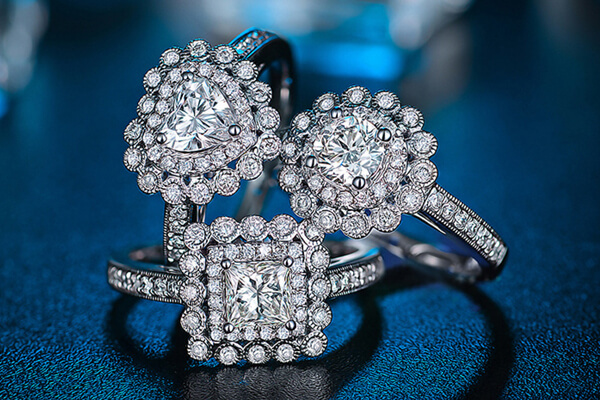
Multi-prong diamond rings
How Ultrasonic Cleaning Technology Works
Ultrasonic cleaning employs high-frequency sound waves transmitted through liquid cleaning solutions creating microscopic cavitation bubbles. These bubbles form and collapse thousands of times per second generating localized pressure waves that dislodge contamination from surfaces.
Cavitation intensity varies throughout cleaning tanks depending on transducer placement, tank geometry, and operating parameters. Maximum cavitation typically occurs at specific distances from transducers and tank walls. Understanding these intensity zones helps position delicate items appropriately.
The mechanical cleaning action removes oils, lotions, dirt, and accumulated residue from jewelry surfaces and the tight spaces between diamonds and settings. This physical process proves far more effective than manual cleaning for accessing intricate crevices characteristic of diamond mountings.
Operating frequencies for jewelry ultrasonic cleaners typically range from 40-80 kHz. For most household jewelry cleaners, 40 kHz is the standard frequency, offering an effective balance between cleaning power and safety for everyday jewelry. Professional jewelers, however, often use ultrasonic cleaners above 40 kHz or multi-frequency systems to provide gentler and more precise cleaning for delicate gemstones, intricate settings, and high-value jewelry.
Transducer construction and placement directly affects cleaning performance and uniformity. Professional ultrasonic tanks often incorporate multiple transducers positioned strategically for even cavitation distribution. Consumer models may use single transducers creating more localized intensity patterns.
Power output measured in watts determines cavitation intensity and cleaning effectiveness. Higher wattage produces stronger cavitation forces. Typical jewelry ultrasonic cleaners range from 30 watts for small consumer units to several hundred watts for professional equipment.
The cleaning solution serves as the transmission medium for ultrasonic energy while providing chemical cleaning assistance. Water-based jewelry cleaning solutions optimize both ultrasonic transmission and contamination dissolution. Solution chemistry selection affects cleaning performance but not the fundamental cavitation mechanics.
Temperature influences cavitation effectiveness and solution cleaning power. Moderate heating to 40-50°C improves performance without creating thermal stress concerns for most jewelry. Excessive temperatures reduce cavitation efficiency as vapor pressure increases.
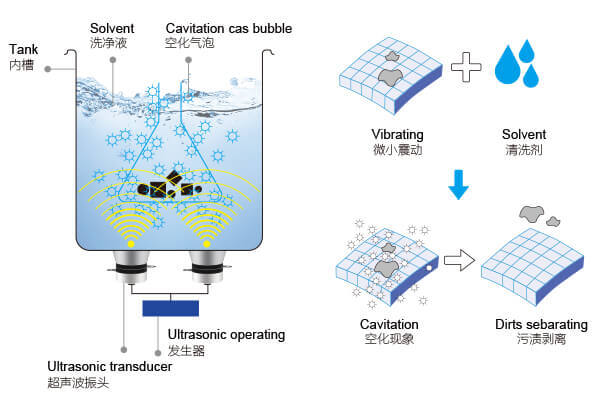
The Principle Behind Ultrasonic Cleaning
Diamond Physical Properties and Durability

Diamonds
Diamond represents the hardest natural material ranking 10 on the Mohs hardness scale. This exceptional hardness results from strong covalent bonding in the crystalline carbon structure. No naturally occurring substance except another diamond can scratch diamond surfaces.
Hardness versus toughness represent distinct material properties often confused. While diamond possesses maximum hardness, its toughness rates only good to fair. The crystalline structure demonstrates directional cleavage planes where fractures propagate more easily. Sharp impacts along cleavage directions can chip or fracture diamonds.
Despite moderate toughness, diamonds possess excellent durability for jewelry applications. Billions of diamond rings experience daily wear for decades without damage. The robust nature makes diamonds ideal for engagement rings and everyday jewelry exposed to continual physical contact.
Ultrasonic vibration generates mechanical stress orders of magnitude below levels required to damage diamond crystal structure. The cavitation bubble collapse produces localized pressure spikes that effectively clean surfaces but cannot affect diamond integrity. Diamond physical properties vastly exceed stresses encountered during ultrasonic cleaning.
Thermal properties of diamond include high thermal conductivity and low thermal expansion. These characteristics provide excellent resistance to thermal shock. Temperature variations during ultrasonic cleaning present no concerns for diamond stability.
Diamond density and specific gravity around 3.52 makes diamonds notably dense among gemstones though less dense than many metals. This density causes diamonds to settle toward tank bottoms during ultrasonic cleaning positioning stones in areas of relatively high cavitation intensity.
The Real Cause of Loose Diamonds After Cleaning
Pre-Existing Setting Damage
Most diamonds discovered loose after ultrasonic cleaning experienced pre-existing setting damage invisible without detailed inspection. Microscopic cracks in prongs, partial mounting failures, or metal fatigue preceded the cleaning process.
Hairline fractures in prongs develop gradually through normal wear, accidental impacts, or manufacturing defects. These tiny cracks remain invisible to casual observation but significantly compromise structural integrity. Ultrasonic vibration may propagate existing cracks to complete failure.
Partial prong detachment from mounting heads occurs occasionally through manufacturing defects or solder joint failure. The affected prong appears normal superficially while lacking proper attachment. Cleaning vibration reveals this hidden defect.
Manufacturing quality varies significantly across jewelry industry price points. Budget jewelry may feature inadequate prong size, poor metal choices, or insufficient construction standards. These quality shortcomings create vulnerabilities becoming apparent during cleaning or normal wear.
Worn Prong Conditions
Prong wear represents the most common cause of diamond loosening discovered during ultrasonic cleaning. Normal jewelry wear gradually erodes prong tips through abrasion against hard surfaces, impact damage, and metal fatigue.
Prong tip thinning reduces the metal mass securing diamond edges. As prongs wear down, effective stone retention decreases. Eventually prongs become too thin to maintain adequate pressure. Ultrasonic vibration may be the first stress exposure revealing this weakened condition.
Visual inspection reveals advanced prong wear but early-stage erosion requires magnification to detect. Prongs worn to half their original thickness retain some holding power but lack proper security margins. These compromised prongs may fail during ultrasonic cleaning despite appearing adequate superficially.
Different metals exhibit varying wear rates affecting prong longevity. Platinum demonstrates superior wear resistance maintaining prong integrity longer than gold alloys. White gold alloys also resist wear better than yellow gold formulations in most cases.
Setting style influences wear patterns and vulnerability. Four-prong settings concentrate wear on fewer contact points accelerating erosion. Six-prong settings distribute stress across more prongs reducing individual wear rates. Bezel settings essentially eliminate prong wear concerns through design differences.
Metal Fatigue and Stress
Repeated stress cycles during normal jewelry wear create cumulative metal fatigue eventually compromising structural integrity. This gradual process occurs regardless of cleaning methods though becomes apparent when additional stress occurs.
Fatigue crack initiation begins at stress concentration points including prong bases, sizing joints, and design transition areas. Microscopic cracks develop and propagate slowly through countless wear cycles. Eventually crack growth reaches critical dimensions where failure becomes imminent.
Ring sizing operations create zones of altered metal properties and sometimes introduce stress risers. Resized rings demonstrate slightly higher failure rates than unmodified jewelry. Multiple sizing operations compound these effects increasing vulnerability.
Work hardening during manufacturing and wear increases metal strength but reduces ductility. Hardened metal becomes more brittle and prone to sudden fracture rather than gradual deformation. This embrittlement affects older jewelry more than recently manufactured pieces.
Setting Types and Vulnerability Levels
Prong Settings
Prong settings represent the most common diamond mounting style featuring metal claws extending over stone edges. This classic design provides excellent light exposure maximizing diamond brilliance while using minimal metal.
Four-prong settings offer traditional appearance with clean lines and maximum diamond visibility. However, fewer prongs mean each bears greater load and wear. Single prong failure in four-prong settings significantly compromises security.
Six-prong settings add security through redundancy. Additional prongs distribute stress reducing individual wear rates. Stone retention remains adequate even if one prong weakens.
Prong height and thickness directly affect durability and stone security. Substantial prongs resist wear and damage better than delicate versions.
Bezel Settings
Bezel settings surround diamonds with continuous metal rims providing maximum protection and security. The complete metal encirclement shields stone edges from impact while securing diamonds firmly.
Full bezel settings demonstrate minimal loosening risk during ultrasonic cleaning. The construction provides inherent stability without reliance on small prongs subject to wear. This superior security makes bezel settings excellent choices for active individuals.
Partial bezel designs combine bezel security advantages with improved light entry. These offer better security than prong settings while maintaining more brilliance than full bezels.
Channel Settings
Channel settings position diamonds between parallel metal walls creating rows of stones without visible prongs. This mounting style suits wedding bands and eternity rings featuring multiple diamonds.
Structural integrity depends on wall construction and stone fit precision. Properly executed channels maintain security indefinitely. Ultrasonic cleaning poses minimal risk to properly constructed channel settings.
Pavé and Micro-Pavé Settings
Pavé settings feature numerous small diamonds secured by tiny metal beads or prongs creating diamond-encrusted surfaces. Micro-pavé uses even smaller diamonds with more delicate securing elements.
Bead security depends on proper metal work and adequate bead size. Well-executed pavé demonstrates good security despite delicate appearance. However, the numerous small securing points each represent potential failure sites.
Ultrasonic cleaning of pavé jewelry requires conservative parameters. Reduced power and shortened cycles minimize stress on delicate beads. Many jewelers prefer gentle manual cleaning for extensive pavé work.
Tension Settings
Tension settings secure diamonds through spring force between mounting ends rather than traditional prongs or bezels. This dramatic modern design creates the illusion of floating diamonds.
The engineered spring tension maintains secure stone retention. Properly executed tension settings demonstrate excellent security despite counterintuitive appearance. Ultrasonic cleaning poses no particular risk to quality tension settings, as the spring force vastly exceeds any vibration forces encountered during cleaning.

Diamond setting methods
Vibration Effects on Jewelry Mountings
Ultrasonic cleaning generates mechanical vibration throughout jewelry transmitted through metal and transmitted into mounting structures. Understanding these vibration effects clarifies why properly secured diamonds remain unaffected.
Vibration amplitude in ultrasonic cleaning measures in micrometers representing extremely small displacement. This minute movement cannot mechanically displace secure diamonds. The prong tips undergo microscopic vibration insufficient to overcome secure mechanical interference with diamond girdles.
Resonance phenomena occur when vibration frequencies match natural frequencies of specific structures. Jewelry components occasionally demonstrate resonance responses to ultrasonic frequencies. However, even resonant amplification produces displacement orders of magnitude below levels threatening secure settings.
Acceleration forces generated by ultrasonic vibration create inertial loads on diamonds. These forces attempt to displace stones against setting retention. For properly secured diamonds, the mechanical interference between stone and metal vastly exceeds acceleration forces. Secure settings experience no loosening tendency.
Comparison with normal wear conditions reveals ultrasonic vibration produces far gentler stress than daily jewelry use. Hand movements, impacts, and normal handling generate acceleration and stress levels exceeding ultrasonic cleaning by factors of 10 to 100 or more. Jewelry surviving normal wear easily tolerates ultrasonic cleaning.
Frequency considerations in standard jewelry ultrasonic cleaners range 40-80 kHz producing vibration cycles far too rapid for mechanical loosening of secure settings. The high-frequency oscillation cannot generate cumulative displacement of properly secured stones.
eler surveys collected data on stone loss incidents and cleaning practices. Results indicated that jewelers performing pre-cleaning inspections and rejecting compromised settings experienced minimal stone loss during ultrasonic processing. Operations skipping inspections encountered higher incident rates.
When Settings Actually Fail During Cleaning
Understanding the specific circumstances of setting failure during ultrasonic cleaning clarifies risk factors and prevention strategies. Most failures share common characteristics indicating predictable vulnerability patterns.
Extremely worn prongs represent the most common failure scenario. Prongs eroded to fractions of original thickness lack adequate strength to retain diamonds against any disturbance. These settings would fail during normal wear if not repaired. Ultrasonic cleaning simply triggers inevitable failure slightly earlier.
Cracked or fractured prongs fail during cleaning when vibration propagates existing damage to complete fracture. Microscopic cracks invisible without magnification grow to failure under stress. The rapid stress cycling during ultrasonic exposure can accelerate crack propagation compared to static loads.
Improperly sized stones sitting too loosely in mountings may shift during vibration. While not technically loosening secured stones, this represents poor initial setting quality. The vibration reveals construction defects that compromise security regardless of cleaning method.
Solder joint failures occasionally occur when prongs or mounting components separate from base structures. These failures indicate poor manufacturing quality or previous repair defects. The joints failed to achieve proper metallurgical bonds creating inherent vulnerabilities.
Jewelry with multiple existing issues demonstrates highest failure probability. Combined factors including worn prongs, metal fatigue, and previous damage create compounded vulnerability. These pieces approach failure threshold where any additional stress triggers loss.
Pre-Cleaning Inspection Requirements
Systematic inspection before ultrasonic cleaning identifies vulnerable jewelry preventing predictable failures. Professional inspection protocols address multiple risk factors.
Visual examination under good lighting reveals obvious problems including severely worn prongs, visible cracks, or apparent looseness. Experienced observers detect subtle indicators like prong asymmetry or unusual angles suggesting damage or wear.
Magnification inspection using 10x loupe provides detailed examination of prong conditions, solder joints, and mounting integrity. This enhanced viewing reveals early-stage wear and microscopic damage invisible to unaided vision. Professional jewelers routinely perform loupe inspection before any service work.
Physical testing involves gently attempting to move diamonds with fingertips or tools. Secure stones show absolutely no movement under reasonable pressure. Any perceptible displacement indicates loose settings requiring repair before cleaning.
Prong thickness measurement at tips quantifies wear progression. New prongs typically measure 0.8-1.2mm depending on design. Prongs worn below 0.5mm approach critical thickness requiring rebuilding. Consistent measurement across multiple prongs identifies uneven wear patterns.
Setting security rating systems help standardize evaluation. Professional jewelers assign condition grades from excellent to poor based on prong wear, mounting integrity, and overall security. Only jewelry rating good or better proceeds to ultrasonic cleaning.
Proper Ultrasonic Cleaning Parameters for Diamond Jewelry
Frequency Selection
Operating frequency affects cleaning action intensity and jewelry stress levels. Most consumer and professional jewelry ultrasonic cleaners operate at fixed frequencies optimized for general applications.
Standard 40 kHz frequency provides excellent cleaning effectiveness for diamond jewelry while maintaining conservative stress levels. This frequency represents industry standard for jewelry cleaning applications. The moderate cavitation intensity cleans effectively without unnecessary aggressiveness.
Lower frequencies around 25-30 kHz produce more intense cavitation suitable for heavily soiled items or industrial applications. Diamond jewelry generally requires only standard frequency cleaning. Lower frequencies offer no significant advantages while potentially increasing stress on marginally secure settings.
Higher frequencies above 60 kHz generate gentler action beneficial for extremely delicate jewelry or maximum caution applications. The reduced intensity extends cleaning time but provides additional safety margin. High-frequency cleaning suits questionable jewelry when cleaning must proceed despite minor concerns.
Power Level Adjustment
Variable power control enables optimization of cleaning intensity for specific jewelry characteristics. Professional ultrasonic equipment typically includes power adjustment while consumer models often operate at fixed intensity.
Medium power settings around 50-70% maximum provide adequate cleaning for most diamond jewelry. This conservative intensity removes typical contamination without maximizing stress on mountings. Starting at moderate power and increasing only if necessary prevents over-aggressive processing.
Maximum power suits heavily soiled jewelry or pieces requiring aggressive cleaning. Diamonds themselves tolerate maximum power without concern. However, mounting stress increases with power level affecting marginally secure settings. Maximum power should follow successful medium-power cleaning verification.
Minimum power below 30% offers extremely gentle cleaning for jewelry with identified concerns. The reduced intensity may require extended cleaning duration or multiple cycles. This conservative approach suits valuable antique jewelry or pieces with minor security questions.
Duration Guidelines
Cleaning cycle duration affects both contamination removal effectiveness and cumulative stress on jewelry. Optimal timing balances thorough cleaning against minimizing unnecessary exposure.
Short cycles of 3-5 minutes remove typical light contamination from regularly maintained jewelry. Brief exposure limits cumulative stress while achieving adequate cleaning results. Frequent short cleanings maintain appearance better than infrequent extended processing.
Standard 5-8 minute cycles handle moderate soil levels typical of jewelry worn several weeks between cleanings. Most automatic ultrasonic cleaner timers default to this range reflecting common requirements.
Extended cleaning beyond 10 minutes becomes necessary only for heavily soiled pieces with stubborn contamination. Multiple short cycles with inspection between stages often proves more effective than single extended exposure. The intermittent approach allows monitoring and prevents over-processing.
Warning Signs of Compromised Settings
Recognizing indicators of setting vulnerability enables proactive maintenance preventing stone loss. Multiple warning signs merit attention.
Visible prong wear including flattened tips, asymmetrical prongs, or obvious thinning indicates advanced deterioration requiring repair. Even without looseness, severely worn prongs approach failure and need rebuilding before further wear or cleaning.
Prong displacement from original positions suggests previous impact damage or metal deformation. Bent prongs may not properly engage diamond edges compromising security. Professional evaluation determines whether reshaping or replacement is necessary.
Diamond movement represents the most obvious concern. Any perceptible looseness indicates immediate service requirement. Loose diamonds should not undergo ultrasonic cleaning or continued wearing until properly secured.
Metal discoloration or corrosion around prong bases sometimes indicates developing problems. Corrosion weakens metal and may indicate moisture penetration between diamond and setting. These conditions merit professional evaluation.
Unusual sounds when diamonds contact surfaces suggest loose settings. Secure diamonds produce characteristic solid tapping. Rattling or altered sounds indicate movement within mountings.
Professional Jeweler Practices and Protocols
Professional jewelers follow established procedures minimizing ultrasonic cleaning risks while maximizing effectiveness. These protocols reflect accumulated industry experience.
Mandatory pre-cleaning inspection represents standard professional practice. Jewelers examine every piece before ultrasonic processing rejecting compromised items for repair. This screening prevents predictable failures.
Professional liability concerns motivate thorough inspection practices. Jewelers understand that processing jewelry with identifiable problems creates unnecessary risk. Conservative rejection criteria protect both customers and business interests.
Documentation practices including condition reports photograph jewelry before service. Written notes describe pre-existing conditions and identified concerns. This documentation protects all parties clarifying jewelry condition at service time.
Repair completion before cleaning represents standard sequencing. Jewelers rebuild worn prongs, tighten settings, and address structural issues before ultrasonic processing. This ordering ensures jewelry can safely tolerate cleaning.
Customer education helps set appropriate expectations regarding service outcomes and jewelry maintenance requirements. Explaining prong wear progression and inspection importance encourages regular maintenance preventing emergency repairs.
Home User Safety Guidelines
Consumer ultrasonic cleaner operation requires understanding basic jewelry assessment and conservative practices. Home users lack professional training but can follow protective protocols.
Learning basic inspection techniques including visual examination and gentle testing enables home users to screen jewelry before cleaning. When questions arise about jewelry condition, professional evaluation provides definitive assessment.
Conservative parameter selection protects marginally secure settings from failure. Using moderate power, standard duration, and avoiding aggressive cleaning protects questionable pieces. Extending cleaning time proves safer than increasing intensity.
Regular professional inspection supplements home maintenance practices. Annual jeweler examination identifies developing problems before home users detect issues. This professional oversight catches wear progression requiring attention.
Avoiding ultrasonic cleaning of obviously worn or damaged jewelry prevents predictable failures. When jewelry shows visible problems, professional service should precede any cleaning attempts.
Liability limitations for home cleaning rest with users. Understanding personal responsibility for jewelry condition and cleaning decisions encourages appropriate caution. Professional service provides recourse unavailable with home processing.
Metal Types and Ultrasonic Compatibility
Different jewelry metals exhibit varying ultrasonic cleaning compatibility and durability characteristics affecting long-term setting security.
Platinum demonstrates superior ultrasonic compatibility and wear resistance. The dense strong metal maintains prong integrity far longer than gold alloys. Platinum settings tolerate ultrasonic cleaning throughout extended service lives with minimal vulnerability development.
14-karat and 18-karat gold alloys provide good ultrasonic compatibility with adequate wear resistance. White gold alloys typically demonstrate better prong durability than yellow gold formulations. Gold jewelry requires more frequent prong maintenance than platinum equivalents.
Sterling silver cleans ultrasonically without concerns for properly constructed jewelry. However, silver’s relative softness compared to gold or platinum creates faster prong wear. Silver diamond jewelry needs frequent inspection and earlier prong rebuilding.
Modern alloys including palladium white gold and various proprietary formulations offer improved properties. These contemporary metals often provide enhanced wear resistance and ultrasonic compatibility compared to traditional alloys.
Rhodium plating common on white gold doesn’t affect ultrasonic compatibility. The thin electroplated layer tolerates standard cleaning without damage. However, aggressive or prolonged ultrasonic exposure may accelerate rhodium wear requiring earlier replating.
Age and Wear Factor in Setting Security
Jewelry age correlates with accumulated wear affecting setting security and ultrasonic cleaning suitability. Understanding age-related vulnerability guides appropriate maintenance.
New jewelry demonstrates maximum security with unworn prongs and pristine construction. These pieces tolerate ultrasonic cleaning without concerns beyond manufacturing quality verification. New jewelry benefits from ultrasonic cleaning removing manufacturing residues.
Jewelry worn 1-3 years shows minimal wear in most cases. Prongs retain most original dimensions though early wear begins at tips. These pieces remain excellent ultrasonic candidates with routine inspection confirmation.
Jewelry 5-10 years old demonstrates noticeable wear requiring attention. Prong tips show measurable erosion and metal fatigue begins accumulating. Professional inspection becomes more critical ensuring adequate security before ultrasonic processing.
Vintage jewelry over 20 years old requires careful evaluation before ultrasonic cleaning. Accumulated wear, potential previous damage, and historical construction standards create higher vulnerability. Conservative cleaning approaches or manual methods suit many vintage pieces.
Antique jewelry exceeding 50-100 years merits maximum caution. Historical manufacturing techniques, unfamiliar metal alloys, and accumulated stress warrant professional evaluation before any cleaning. Many antique pieces require manual cleaning avoiding ultrasonic exposure.
Maintenance Schedule for Diamond Jewelry
Appropriate maintenance frequency balances appearance preservation against cumulative handling and cleaning risks. Recommended schedules vary with wearing patterns and lifestyle factors.
Daily-worn engagement rings benefit from ultrasonic cleaning every 2-4 weeks depending on contamination exposure. Regular cleaning maintains appearance and allows frequent inspection opportunities detecting developing problems early.
Occasional-wear diamond jewelry needs cleaning based on actual wearing time rather than calendar intervals. Cleaning before storage after wearing events maintains appearance without unnecessary processing.
Professional inspection annually or semi-annually regardless of cleaning frequency ensures setting security assessment. Many jewelers provide complimentary inspection with purchases encouraging regular evaluation.
Between ultrasonic cleanings, quick rinses with plain water remove fresh contamination before buildup occurs. This simple maintenance extends intervals between thorough cleaning while preserving appearance.
Prong rebuilding typically becomes necessary every 5-15 years depending on metal type, wearing conditions, and original construction quality. Platinum prongs last longest while gold requires earlier attention. Proactive rebuilding before complete prong wear prevents emergency repairs.
What to Do If a Diamond Becomes Loose
Discovering a loose diamond requires immediate action preventing stone loss and addressing underlying security problems.
Stop wearing the jewelry immediately. Continued wear risks stone loss creating potential recovery difficulties. Remove the piece carefully securing any already-loose stones.
Place loose diamonds and jewelry in secure containers preventing loss during handling or transportation. Small containers or plastic bags protect stones during service transport.
Seek professional repair promptly. Jewelers assess damage extent and recommend appropriate repairs. Delay increases stone loss risk and may allow progressive damage to worsen.
Professional evaluation determines whether simple tightening suffices or complete prong rebuilding becomes necessary. Jewelers consider prong condition, mounting integrity, and long-term reliability.
Review maintenance practices identifying whether inspection frequency proved adequate. Adjusting future inspection intervals prevents recurrence. Consider whether ultrasonic cleaning contributed to detection rather than causation.
Alternative Cleaning Methods for Questionable Settings
When setting condition or jewelry characteristics make ultrasonic cleaning inadvisable, several alternative methods provide safe effective maintenance.
Manual cleaning using lukewarm water, mild soap, and soft brushes offers complete control and minimal mechanical stress. This traditional method suits all diamond jewelry regardless of condition. Soft toothbrushes reach setting crevices removing contamination without vibration risks.
Soaking in warm soapy water loosens contamination before gentle brushing. Extended soaking of 20-30 minutes softens oils and residues facilitating removal. Diamonds tolerate prolonged water exposure without concerns.
Steam cleaning employs high-temperature steam jets removing contamination through thermal and pressure effects. Professional jewelers use steam cleaning frequently as alternative or supplement to ultrasonic processing. Steam cleaning generates less mechanical stress than ultrasonic methods while achieving effective results.
Professional hand cleaning services provide expert contamination removal using appropriate techniques for specific jewelry. Jewelers assess individual pieces selecting optimal methods. Services typically include inspection and minor maintenance.
Polishing cloths impregnated with cleaning compounds remove light contamination and restore metal luster. These cloths suit regular light maintenance between thorough cleanings. Limited effectiveness on heavy soiling restricts use to lightly contaminated jewelry.