 Granbo Sonic











Do Ultrasonic Cleaners Kill Bacteria?
Browse Volume:36 Classify:Support
Microbial contamination control remains critical across healthcare, laboratory, food processing, and manufacturing industries. Questions about ultrasonic cleaning technology’s ability to eliminate bacteria arise frequently, particularly in applications where hygiene standards determine operational compliance. Understanding the distinction between physical cleaning and antimicrobial action provides clarity for selecting appropriate decontamination methods.
The Direct Answer: Limited Bactericidal Effect
Ultrasonic cleaners possess limited inherent ability to kill bacteria through mechanical action alone. The technology primarily functions as a cleaning method rather than a sterilization or disinfection process. While cavitation forces physically remove bacterial cells from surfaces through mechanical dislodgement, this removal differs fundamentally from bacterial destruction or inactivation.
Standard ultrasonic cleaning reduces bacterial load through physical detachment and subsequent removal with the cleaning solution. Studies demonstrate bacterial count reductions ranging from 90% to 99.9% depending on operating conditions, surface types, and initial contamination levels. However, this reduction results from physical removal rather than cellular death.
The distinction carries significant implications for applications requiring sterility or specific microbial reduction targets. Medical device reprocessing, pharmaceutical manufacturing, and food contact surface sanitation demand validated antimicrobial efficacy that standard ultrasonic cleaning alone cannot guarantee. Combining ultrasonic cleaning with chemical disinfectants or subsequent sterilization steps achieves required microbial reduction levels.
Understanding these limitations prevents inappropriate reliance on ultrasonic cleaning for applications where true bactericidal action is necessary. The technology excels at preparing surfaces for subsequent disinfection or sterilization by removing organic matter, biofilms, and protective layers that harbor bacteria.
Understanding Bacterial Contamination and Removal
Bacteria attach to surfaces through complex mechanisms involving adhesion proteins, extracellular polymeric substances, and biofilm formation. Initial attachment occurs when planktonic (free-floating) bacteria contact surfaces and adhere through weak van der Waals forces and electrostatic interactions. Within hours, bacteria produce sticky polymers that strengthen attachment and create protective biofilm matrices.
Biofilms represent organized bacterial communities encased in self-produced extracellular polymeric substances (EPS). These structures provide protection against mechanical forces, chemical agents, and environmental stresses. Mature biofilms contain channels for nutrient distribution and waste removal, creating resilient contamination that resists conventional cleaning.
Surface contamination levels vary from light deposits with 10³ to 10⁵ colony-forming units (CFU) per square centimeter to heavy biofilm accumulation exceeding 10⁸ CFU/cm². Healthcare-associated infections often trace to inadequately cleaned medical devices harboring residual bacterial populations below detection thresholds yet sufficient for infection transmission.
Effective decontamination requires both physical removal of bacterial cells and organic matter plus antimicrobial treatment to inactivate remaining microorganisms. Physical cleaning alone reduces bacterial populations but rarely achieves sterility defined as complete absence of viable microorganisms.
How Ultrasonic Cleaning Technology Works
Ultrasonic cleaners generate high-frequency sound waves through piezoelectric transducers that convert electrical energy into mechanical vibrations. These vibrations propagate through cleaning liquid at frequencies typically ranging from 20 kHz to 80 kHz, creating alternating compression and rarefaction pressure waves.
During rarefaction phases, liquid pressure drops below vapor pressure, causing microscopic cavitation bubbles to form throughout the solution. These bubbles grow rapidly over several acoustic cycles before violently collapsing during compression phases. Bubble implosion generates localized shock waves, high-velocity micro-jets, and extreme conditions including temperatures exceeding 5,000°C and pressures reaching 1,000 atmospheres within nanosecond durations.
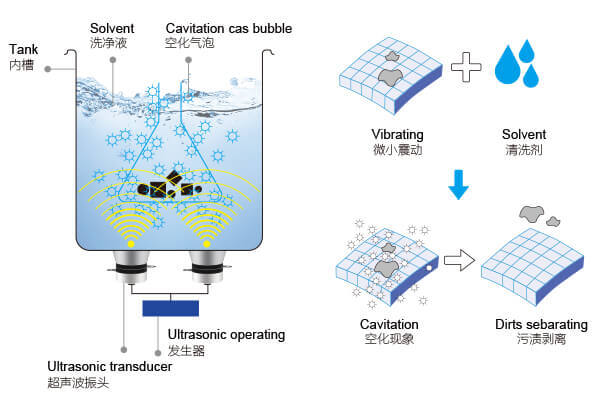
The Principle Behind Ultrasonic Cleaning
The mechanical forces produced by cavitation impact surfaces at microscopic scales, dislodging particles, organic matter, and attached bacteria. Micro-jets measuring 100-400 meters per second penetrate surface irregularities, crevices, and blind holes that manual cleaning cannot reach. This accessibility makes ultrasonic cleaning valuable for complex geometries, threaded connections, and porous materials.
Energy release during cavitation creates localized heating, generates free radicals from water molecule dissociation, and produces turbulent micro-streaming currents. These secondary effects supplement primary mechanical cleaning action. However, the spatial and temporal scales of these phenomena limit their bactericidal effects compared to their cleaning capabilities.
Mechanical Removal vs. Bacterial Killing
Mechanical removal physically detaches bacteria from surfaces and suspends them in cleaning solution. This process reduces surface bacterial populations without necessarily killing the organisms. Removed bacteria remain viable in the cleaning solution unless antimicrobial agents are present or subsequent processing steps provide inactivation.
True bactericidal action requires cellular damage sufficient to prevent reproduction and metabolic function. Mechanisms for bacterial killing include cell membrane disruption, protein denaturation, DNA damage, or metabolic pathway interference. Chemical disinfectants, heat treatment, radiation, and oxidizing agents achieve these effects through different mechanisms.
Ultrasonic cavitation produces mechanical forces capable of cell membrane damage when bacteria experience direct cavitation bubble collapse in their immediate vicinity. The probability of such direct exposure varies with bacterial distribution, solution dynamics, and cavitation field characteristics. Most bacteria experience dislodgement from surfaces rather than direct cavitation impact.
Research using high-speed imaging demonstrates that cavitation bubbles typically form and collapse within 1-10 micrometers of surfaces. Bacteria on surfaces experience dislodgement forces but often detach before experiencing bubble collapse at distances causing membrane rupture. Planktonic bacteria suspended in solution may encounter cavitation zones but the statistical probability of coinciding with collapse events remains relatively low.
The distinction between removal and killing matters for environmental contamination control. Bacteria removed into cleaning solution can cross-contaminate subsequently cleaned items unless solution management protocols include regular replacement, filtration, or antimicrobial treatment. Medical device reprocessing guidelines specifically address this concern through validated cleaning protocols.
Factors That Influence Bacterial Reduction in Ultrasonic Cleaners
Frequency and Power Intensity
Lower ultrasonic frequencies (20-40 kHz) generate larger cavitation bubbles that implode with greater energy release. This aggressive cavitation provides superior cleaning for heavily contaminated surfaces and improves bacterial removal efficiency. However, the same intensity may damage delicate instruments or sensitive surfaces.
Higher frequencies (40-80 kHz) produce smaller bubbles with gentler action suitable for precision instruments. The smaller bubble size increases cavitation event density, potentially improving bacterial contact probability. However, reduced individual bubble energy may decrease biofilm penetration effectiveness.
Power intensity measured in watts per gallon or watts per liter determines overall cavitation violence. Industrial cleaners delivering 50-100 watts per gallon create intense cavitation fields optimizing bacterial removal. Lower power densities reduce mechanical dislodgement forces, requiring longer exposure times for equivalent bacterial reduction.
Studies correlating power density with bacterial removal demonstrate logarithmic relationships where doubling power intensity increases removal efficiency by approximately 0.5-log to 1-log reduction. However, diminishing returns occur beyond optimal thresholds where additional power produces minimal improvement while increasing equipment costs and potential damage risks.
Temperature Effects on Bacteria
Elevated temperatures enhance ultrasonic cleaning effectiveness through multiple mechanisms. Heat reduces cleaning solution viscosity, allowing cavitation bubbles to form and collapse more efficiently. Temperature increase also accelerates chemical reaction rates for enzymatic or chemical cleaning agents present in solution.
Operating temperatures between 50°C and 70°C provide optimal balance between cleaning enhancement and practical constraints. Many ultrasonic cleaners incorporate heating elements maintaining solution temperature within this range. Higher temperatures improve organic matter dissolution and bacterial membrane fluidity changes that facilitate removal.
Temperature alone provides bactericidal effects when sufficiently elevated. Temperatures exceeding 60°C begin causing bacterial protein denaturation, while exposure to 70°C for 10 minutes achieves significant vegetative bacterial kill. However, standard ultrasonic operating temperatures typically remain below thermal disinfection thresholds.
Combining moderate ultrasonic heating (55-65°C) with mechanical cavitation produces synergistic bacterial reduction exceeding either mechanism independently. Research demonstrates 1-log to 1.5-log improvement when comparing room temperature ultrasonic cleaning to heated operation at 60°C. The enhancement results from concurrent mechanical removal and sublethal thermal stress.
Solution Chemistry and Antimicrobial Agents
Cleaning solution composition dramatically influences bacterial reduction outcomes. Water alone provides minimal antimicrobial action beyond physical removal. Adding detergents improves bacterial detachment by disrupting lipid membranes and reducing surface tension but provides limited bactericidal effects.
Enzymatic cleaners containing proteases, lipases, and amylases break down organic contamination including proteins, fats, and carbohydrates that protect bacteria and promote biofilm formation. Enzyme action exposes bacteria to direct mechanical forces and improves removal efficiency. Some enzymes demonstrate mild antimicrobial properties through bacterial cell wall degradation.
Alkaline cleaning solutions (pH 10-12) provide enhanced bacterial reduction through chemical disruption of cell membranes and protein denaturation. However, alkalinity compatibility with cleaned materials requires consideration, as some metals and plastics suffer damage under prolonged alkaline exposure.
Quaternary ammonium compounds, chlorine-based oxidizers, and peroxide formulations deliver true bactericidal action when added to ultrasonic cleaning solutions. These antimicrobial agents kill bacteria through membrane disruption, oxidative damage, or protein inactivation. Combining ultrasonic mechanical action with chemical disinfection achieves logarithmic reductions approaching sterilization levels.
Exposure Duration and Cycle Parameters
Bacterial removal increases with ultrasonic exposure duration following logarithmic reduction kinetics. Initial minutes produce rapid contamination reduction as loosely attached bacteria dislodge easily. Subsequent exposure provides diminishing incremental improvements as remaining bacteria occupy protected locations or possess stronger surface attachment.
Standard cleaning cycles ranging from 3 to 15 minutes balance practical throughput with bacterial reduction effectiveness. Studies demonstrate 5-minute cycles at optimal parameters achieve 90-95% of maximum attainable bacterial reduction. Extending cycles to 20-30 minutes produces marginal additional reduction while increasing costs and reducing operational efficiency.
Pulse or sweep modes alternating ultrasonic activation create dynamic cavitation fields preventing standing wave patterns and dead zones. These advanced operation modes improve bacterial removal uniformity across complex part geometries. Pulse operation at 50% duty cycle maintains effective cleaning while reducing energy consumption and heat generation.
Multiple cleaning cycles with intermediate solution changes provide superior bacterial reduction compared to single extended cycles. Two 5-minute cycles with fresh solution between treatments achieve bacterial reductions exceeding single 15-minute cycles by 0.5-log to 1-log. Fresh solution prevents cross-contamination and removes accumulated debris that shields bacteria.
Ultrasonic Cleaning in Medical and Laboratory Settings
Healthcare facilities employ ultrasonic cleaners as the first step in medical device reprocessing protocols. Regulatory standards including those from the Centers for Disease Control (CDC) and Association for the Advancement of Medical Instrumentation (AAMI) specify ultrasonic cleaning for complex instruments before high-level disinfection or sterilization.
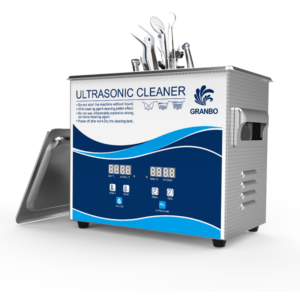
Click to view: Medical instrument ultrasonic washer
Surgical instruments contaminated with blood, tissue, and body fluids require thorough cleaning to remove organic matter that protects bacteria and interferes with subsequent disinfection. Ultrasonic cleaning penetrates hinges, lumens, and serrations that manual cleaning cannot adequately address. Studies demonstrate ultrasonic cleaning removes 99.5% of organic soil compared to 95% for manual methods.
Dental instruments including scalers, mirrors, and explorers benefit from ultrasonic cleaning to remove calculus, blood, and bacterial contamination. Dental protocols specify ultrasonic cleaning before autoclave sterilization, recognizing mechanical removal as preparation for thermal bacterial inactivation rather than primary bactericidal treatment.
Laboratory glassware cleaning utilizes ultrasonic technology to remove bacterial cultures, growth media, and biofilm residues. Research laboratories employ ultrasonic cleaners with detergent solutions followed by autoclaving for items requiring sterility or chemical disinfection for general cleaning applications.
Pharmaceutical manufacturing clean rooms use ultrasonic cleaning for component preparation requiring high cleanliness standards. While pharmaceutical applications demand bacterial control, current Good Manufacturing Practice (cGMP) regulations require validated disinfection or sterilization separate from ultrasonic cleaning processes.
Limitations of Ultrasonic Cleaners for Sterilization
Sterilization requires complete elimination of all microorganisms including bacteria, viruses, fungi, and spores to achieve sterility assurance levels (SAL) of 10⁻⁶, meaning less than one-in-a-million probability of viable microorganisms remaining. Ultrasonic cleaning alone cannot achieve or validate this standard.
Bacterial spores resist ultrasonic mechanical forces due to protective coat structures. Bacillus atrophaeus and Geobacillus stearothermophilus spores used as biological indicators for sterilization validation show minimal reduction from ultrasonic exposure. Achieving sporicidal effects requires heat sterilization (autoclaving at 121-134°C), chemical sterilants (glutaraldehyde, peracetic acid), or radiation (gamma or electron beam).
Viral contamination presents additional challenges. Enveloped viruses including influenza, hepatitis B, and coronaviruses show susceptibility to detergent-based ultrasonic cleaning through lipid membrane disruption. Non-enveloped viruses such as norovirus, rotavirus, and poliovirus possess protein capsids highly resistant to mechanical forces, requiring chemical inactivation or thermal treatment.
Prion contamination, the causative agents of Creutzfeldt-Jakob disease and variant CJD, resists conventional sterilization methods including standard autoclaving. Special reprocessing protocols involving prolonged autoclaving at 134°C or sodium hydroxide treatment apply to instruments potentially exposed to high-risk tissues. Ultrasonic cleaning provides no prion inactivation.
Validation requirements for medical device reprocessing mandate documented efficacy against specific organisms under defined conditions. Ultrasonic cleaning validation typically measures soil removal rather than bacterial kill, acknowledging the technology’s role in cleaning rather than sterilization processes.
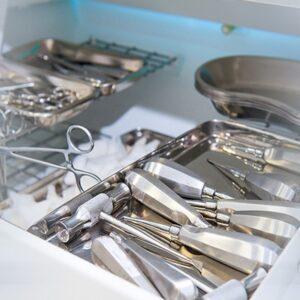
Medical Equipment ultrasonic cleaner
Biofilm Removal Capabilities
Biofilms represent the most challenging bacterial contamination for removal and inactivation. Mature biofilms contain bacterial populations encased in extracellular polymeric matrices providing protection against mechanical forces and chemical agents. Medical device-associated infections frequently involve biofilm contamination that resists standard cleaning.
Ultrasonic cavitation disrupts biofilm structure through mechanical forces that penetrate EPS matrices and fragment bacterial aggregates. The technology accesses biofilm colonies in surface irregularities, dead-end channels, and porous materials where manual cleaning proves ineffective. Micro-jets generated by cavitation bubble collapse dislodge biofilm fragments from surfaces.
However, complete biofilm removal remains difficult. Studies using standardized biofilm models demonstrate 2-log to 3-log reductions in biofilm-associated bacterial populations with standard ultrasonic treatment. Residual biofilm fragments retain viable bacteria capable of rapid regrowth when conditions permit.
Enzymatic cleaning solutions enhance biofilm disruption by degrading EPS components. Protease enzymes break down protein structures while DNases cleave extracellular DNA contributing to biofilm matrices. Combining enzymatic action with ultrasonic mechanical forces achieves superior biofilm removal compared to either approach alone.
Early-stage biofilms (less than 24 hours old) show greater susceptibility to ultrasonic cleaning than mature biofilms (greater than 48 hours). This relationship emphasizes regular cleaning frequency importance in preventing biofilm establishment. Cleaning intervals maintaining biofilm age below maturation thresholds optimize contamination control effectiveness.
Combining Ultrasonic Cleaning With Disinfection Methods
Effective bacterial contamination control protocols layer multiple treatment methods exploiting different inactivation mechanisms. Ultrasonic cleaning serves as the critical first step removing organic matter, particles, and loosely attached bacteria that interfere with subsequent disinfection effectiveness.
Chemical disinfection following ultrasonic cleaning provides validated bactericidal action. High-level disinfectants including glutaraldehyde, ortho-phthalaldehyde (OPA), and peracetic acid achieve 6-log bacterial reductions within 10-20 minutes. The combination of ultrasonic cleaning plus chemical disinfection meets regulatory requirements for semi-critical medical devices.
Heat disinfection at temperatures of 90°C for 1 minute or 75°C for 30 minutes provides thermal bacterial inactivation after ultrasonic cleaning. Automated washer-disinfectors combine both steps in validated cycles. Heat disinfection offers advantages including no chemical residues and broad-spectrum antimicrobial effectiveness.
Sterilization methods including steam autoclaving (121-134°C), ethylene oxide gas, hydrogen peroxide plasma, or vaporized peracetic acid achieve complete microbial elimination for critical medical devices. Thorough ultrasonic cleaning before sterilization ensures effective sterilant contact with all surfaces by removing protective organic matter.
UV-C irradiation at 254 nm wavelength provides supplementary disinfection for ultrasonic-cleaned items. UV light causes DNA damage preventing bacterial reproduction. However, UV effectiveness requires direct line-of-sight exposure and does not penetrate shadows or organic residues, limiting application to surface disinfection of cleaned items.
The cleaning-then-disinfection sequence optimizes both processes. Ultrasonic cleaning removes contamination that would consume disinfectant capacity or shield bacteria. Subsequent disinfection inactivates remaining bacteria that mechanical cleaning did not remove. This layered approach achieves bacterial reductions exceeding either process independently.
Proper Protocols for Bacterial Contamination Control
Validated cleaning protocols specify standardized procedures ensuring consistent bacterial reduction. Written instructions include ultrasonic cleaner preparation, solution selection and concentration, temperature settings, loading configurations, cycle duration, and post-cleaning handling to prevent recontamination.
Pre-cleaning immediately after use prevents blood, tissue, and organic matter from drying onto surfaces. Point-of-use treatment with enzymatic spray or immersion in transport solution maintains moisture and begins enzymatic digestion. This step improves subsequent ultrasonic cleaning effectiveness and bacterial removal.
Solution management maintains cleaning effectiveness and prevents cross-contamination. Regular solution changes based on contamination load or time intervals prevent bacterial accumulation in cleaning baths. Studies demonstrate bacterial counts in used ultrasonic solution can reach 10⁵ to 10⁷ CFU/mL after cleaning multiple contaminated items.
Basket loading affects cleaning uniformity and bacterial removal. Instruments should be positioned to allow solution access to all surfaces. Overlapping or tightly packed items create shadowed areas receiving inadequate ultrasonic exposure. Loading guidelines specify maximum basket fill percentages ensuring effective cleaning coverage.
Post-cleaning rinsing removes residual cleaning solution and dislodged contamination. Multiple rinse cycles with fresh water prevent redeposition of suspended bacteria and organic matter. Automated systems incorporate validated rinse sequences as integral protocol steps.
Inspection and testing verifies cleaning effectiveness before proceeding to disinfection or sterilization. Visual inspection under magnification detects residual soil. Chemical indicators detecting protein or blood residues provide objective cleaning verification. ATP bioluminescence testing quantifies organic residue and bacterial contamination levels.
Applications Requiring Bacterial Reduction
Food processing equipment cleaning relies on ultrasonic technology for complex components including valve assemblies, filling nozzles, and homogenizer parts. Bacterial contamination control in food production prevents spoilage and foodborne illness. However, food safety protocols require sanitization following ultrasonic cleaning to achieve regulatory bacterial reduction targets.
Restaurant and food service smallwares benefit from ultrasonic cleaning for intricate items including graters, meat slicers, and utensils with complex geometries. Health department regulations mandate sanitization through chemical agents or heat treatment following cleaning. Ultrasonic technology prepares items for effective sanitization by removing food residues and bacterial accumulations.
Pharmaceutical manufacturing employs ultrasonic cleaning for equipment, containers, and components requiring high cleanliness standards. Bacterial contamination in pharmaceutical products can cause patient infections or product degradation. USP guidelines and cGMP regulations require validated cleaning and sterilization protocols separate from but often incorporating ultrasonic cleaning steps.
Cosmetic and personal care manufacturing uses ultrasonic cleaning for processing equipment and packaging components. While cosmetics face less stringent microbial standards than pharmaceuticals, bacterial contamination causes product degradation and potential customer infections. Preservation systems and antimicrobial formulation components provide primary bacterial control with ultrasonic cleaning supporting equipment hygiene.
Beverage production including breweries, wineries, and soft drink manufacturers employ ultrasonic cleaning for filling equipment, transfer lines, and filtration systems. Bacterial contamination affects product flavor, shelf life, and safety. Cleaning protocols combine ultrasonic mechanical action with chemical sanitizers achieving bacterial reductions meeting industry standards.
Common Misconceptions About Ultrasonic Disinfection
The misconception that ultrasonic cleaners sterilize items persists despite clear technical limitations. Marketing materials occasionally overstate antimicrobial capabilities, contributing to unrealistic expectations. Understanding that ultrasonic cleaning excels at contamination removal rather than bacterial killing prevents inappropriate applications.
Some users believe prolonged ultrasonic exposure achieves sterilization through cumulative bacterial damage. While extended cycles improve removal efficiency, they cannot achieve sporicidal effects or sterility assurance levels required for medical applications. Regulatory standards explicitly prohibit relying on ultrasonic cleaning alone for sterilization.
The assumption that all bacteria die during cavitation misrepresents the statistical probability of direct bacterial exposure to bubble collapse events. Most bacteria experience dislodgement forces rather than lethal mechanical damage. Viable bacteria removed into cleaning solution can cross-contaminate subsequently processed items without proper solution management.
Claims that ultrasonic frequencies possess inherent bactericidal properties beyond mechanical cavitation lack scientific support. While specific frequency ranges optimize cleaning effectiveness, no evidence suggests ultrasonic frequencies kill bacteria through resonance, vibration absorption, or electromagnetic effects independent of cavitation mechanical forces.
Believing hot water ultrasonic cleaning provides adequate disinfection underestimates temperature requirements for thermal bacterial inactivation. While operating temperatures of 60-70°C enhance cleaning and cause sublethal bacterial stress, achieving thermal disinfection requires temperatures exceeding 75°C maintained for specified durations incompatible with standard ultrasonic cleaner operation.
Alternative Methods for Bacterial Elimination
When ultrasonic cleaning proves insufficient for bacterial control requirements, validated disinfection and sterilization methods provide necessary antimicrobial effectiveness. Selection depends on material compatibility, throughput requirements, regulatory compliance, and contamination risks.
Autoclave sterilization using saturated steam at 121-134°C remains the gold standard for heat-stable instruments and equipment. The process achieves complete microbial elimination including bacterial spores through thermal protein denaturation and membrane disruption. Cycle validation ensures reliable sterilization for critical medical devices.
Chemical sterilization using glutaraldehyde, peracetic acid, or hydrogen peroxide accommodates heat-sensitive items including plastics, electronics, and optical instruments. Extended exposure times (3-12 hours depending on agent) achieve sporicidal effects. However, chemical sterilization requires careful handling due to solution toxicity and specific neutralization or aeration before use.
Ethylene oxide gas sterilization treats temperature-sensitive and moisture-sensitive items through alkylation reactions damaging bacterial DNA and proteins. The process requires specialized equipment and lengthy aeration periods removing toxic residues. ETO sterilization remains essential for complex electronic medical devices and implantable materials.
Hydrogen peroxide vapor or plasma provides low-temperature sterilization suitable for heat-sensitive instruments. The process generates reactive oxygen species destroying microorganisms without toxic residues. Cycle times of 30-75 minutes offer advantages over traditional ETO sterilization for compatible materials.
Ozone treatment produces powerful oxidizing conditions effective against bacteria, viruses, and spores. Aqueous ozone systems combine oxidative antimicrobial action with cleaning solution preparation. Gaseous ozone chambers provide sterilization for items tolerating oxidative environments. However, material compatibility limitations restrict applications.
Medical device reprocessing, pharmaceutical manufacturing, and food safety applications demanding validated bacterial elimination require appropriate disinfection or sterilization methods beyond ultrasonic cleaning capabilities. Ultrasonic technology provides essential cleaning preparing items for subsequent antimicrobial treatment rather than serving as standalone bacterial control. Understanding these limitations ensures proper protocol selection achieving required microbial reduction while maximizing ultrasonic cleaning benefits for contamination removal, biofilm disruption, and surface preparation. Combining ultrasonic cleaning with validated disinfection methods creates layered contamination control strategies optimizing both cleaning effectiveness and bactericidal outcomes for critical applications requiring reliable bacterial elimination