 Granbo Sonic











How Safe Are Ultrasonic Cleaners for Jewellery?
Browse Volume:79 Classify:Support
Jewellery carries emotional and financial value that goes far beyond its sparkle. Whether it is a wedding band, heirloom necklace, or an everyday pair of earrings, keeping it clean matters. Over time, oils, dust, skin cells, and soap scum dull the shine of metal and gemstones. That’s where ultrasonic jewellery cleaners come in. Promising deep cleaning without harsh scrubbing, they’ve become a popular choice for both professional jewellers and home users.
But despite their convenience and widespread use, a common question still arises: are ultrasonic jewellery cleaners safe? The answer depends on the type of jewellery, how the cleaner is used, and whether you understand the limitations of the technology. For many pieces, ultrasonic cleaning is both safe and effective. For others, it may pose risks you want to avoid.
What Is Ultrasonic Cleaning and How Does It Work?
Ultrasonic cleaning relies on a science-backed process called cavitation. When high-frequency sound waves, typically around 40kHz for jewellery, pass through a liquid cleaning solution, they create thousands of tiny bubbles. These microscopic bubbles form and collapse rapidly, generating enough force to dislodge dirt and grime from even the most inaccessible places.
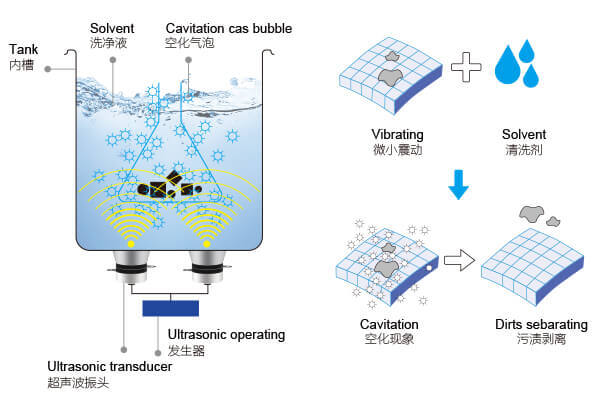
The Principle Behind Ultrasonic Cleaning
Because cavitation reaches inside prong settings, crevices, and under gemstone mountings, it is far more thorough than brushing or wiping. Many professional jewellers use ultrasonic machines because they speed up cleaning and deliver a more consistent result.
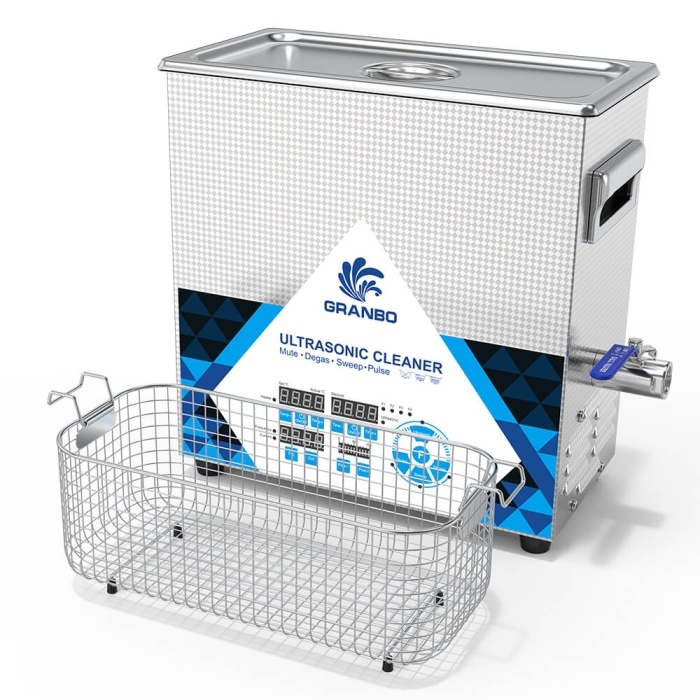
Jewellery-safe ultrasonic cleaners usually feature:
- A stainless steel tank
- Adjustable timer
- Heating control (typically up to 60°C)
- A fine mesh basket or tray to prevent scratching
For everyday gold rings or diamond earrings, ultrasonic cleaning can restore sparkle in just a few minutes. However, that same power can cause issues for delicate or poorly constructed jewellery.
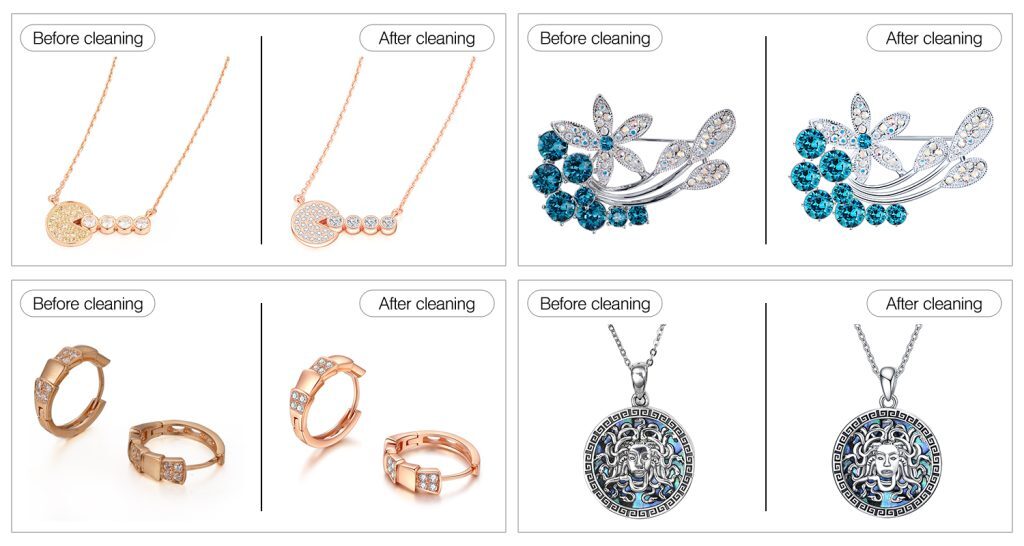
granbo ultrasonic Jewelry Cleaning effect
What Types of Jewellery Can Be Safely Cleaned Ultrasonically?
Most solid gold, platinum, and silver jewellery responds well to ultrasonic cleaning. In fact, it is one of the best ways to restore a like-new finish to metal jewellery that has no porous stones or adhesives.
Hard gemstones such as:
- Diamonds
- Rubies
- Sapphires
- Spinel
- Chrysoberyl
…are generally safe in ultrasonic cleaners if they are natural and untreated. These stones rank high on the Mohs hardness scale and can handle the energy generated during cavitation.
Jewellery with solid construction, including secure bezels, strong prongs, and quality soldering, also tends to withstand ultrasonic cleaning without issue. Well-made pieces from trusted brands usually go through quality control tests that account for these conditions.
Jeweller tip: A professional once shared that ultrasonic cleaning is their go-to for cleaning solid diamond engagement rings that come in for inspection. As long as the prongs are tight and no fracture-filling treatments have been used, ultrasonic brings out a brilliance that brushing alone cannot match.
Still, even among safe categories, caution is advised. If the item has loose stones, hairline cracks, or is very old, other methods may be better suited.
What Jewellery Should NOT Be Put in an Ultrasonic Cleaner?
While ultrasonic cleaning is effective for many jewellery types, it is not safe for all pieces. Certain materials and construction methods do not respond well to the intensity of ultrasonic energy. In some cases, cleaning these pieces in an ultrasonic bath can cause irreversible damage.
Jewellery you should avoid placing in ultrasonic cleaners includes:
- Soft or porous gemstones:
Stones like opals, turquoise, malachite, lapis lazuli, amber, and pearls are sensitive to moisture, vibration, and temperature changes. Their porous nature allows liquids to seep in, which may lead to cracking or clouding. - Treated gemstones:
Many sapphires, emeralds, or diamonds are treated with oils, resins, or fracture-fillers to enhance clarity and color. Ultrasonic vibrations can break down these treatments, leaving the stone looking worse than before. - Organic materials:
Coral, shell, ivory, and bone should never be subjected to ultrasonic cleaning. These materials are sensitive to both the cleaning solution and cavitation pressure. - Vintage or antique jewellery:
Older pieces may contain glue or adhesives in settings that weaken over time. Ultrasonic energy can dissolve adhesives or loosen fragile mountings, especially in filigree or art deco designs. - Jewellery with loose or invisible settings:
If a stone is already loose, ultrasonic vibrations will likely shake it free. Invisible settings, which rely on precise tension and hidden rails, may not be able to withstand the subtle but repetitive energy pulses. - Plated jewellery:
Items that are gold- or rhodium-plated may lose their finish over time in an ultrasonic bath. The process can strip or peel thin coatings.
Pro insight: Many professional jewellers inspect stones and settings under magnification before using ultrasonic cleaning. If there’s any sign of instability, they’ll opt for gentler methods to avoid risking a customer’s sentimental piece.
Common Risks and Misconceptions About Ultrasonic Cleaning
One of the most persistent myths about ultrasonic jewellery cleaners is that they can “crack” gemstones simply by turning them on. While ultrasonic machines can dislodge delicate or damaged stones, they don’t exert enough pressure to shatter a healthy diamond or ruby on their own.
Still, there are real risks when misused:
- Vibration loosening: Repeated ultrasonic use can gradually loosen settings, especially in rings worn daily. The impact is cumulative, not instant.
- Adhesive breakdown: Many costume and antique pieces rely on glue to hold stones in place. Ultrasonic energy and heated liquid dissolve glue quickly.
- Surface damage: Overuse or improper cleaning solution can cloud gemstones, strip coatings, or cause micro-abrasions on soft metals like gold.
- Overheating: Some cheaper ultrasonic machines lack temperature controls. Heat build-up can harm thermally sensitive stones and adhesives.
However, with the right precautions and knowledge, these risks can be mitigated. Most damage occurs not from the technology itself but from lack of understanding about what it’s cleaning.
Key Factors That Affect Safety During Ultrasonic Cleaning
Not all ultrasonic machines are created equal, and not all jewellery responds the same way. Several variables influence the safety and outcome of ultrasonic cleaning.
1. Machine Frequency
Most home ultrasonic cleaners for jewellery operate around 40kHz, which balances cleaning power with gentleness. Higher frequencies (60–80kHz) are safer for delicate items but less aggressive. Lower frequencies (25–30kHz) can be too harsh for jewellery.
2. Cleaning Solution
Always use a cleaning solution designed for jewellery. Harsh chemicals, strong acids, or industrial degreasers may strip finishes or interact with metals and stones. A gentle detergent with a neutral pH is ideal.
3. Temperature Settings
Warm water (30–50°C) improves cleaning efficiency but can damage heat-sensitive materials. Make sure your cleaner includes temperature control, and never leave items in a heated solution for too long.
4. Cleaning Time
Start with short cycles (2–3 minutes) and check the jewellery. Some dirtier pieces may require multiple short sessions instead of one long one.
5. Jewellery Construction
Pay attention to how your jewellery is built. Loose prongs, cracked stones, or mixed materials (like leather and metal) should not go in an ultrasonic cleaner.
6. Jewellery Condition
Inspect your piece closely before cleaning. If you’re unsure whether a stone is treated or secure, consult a jeweller.
Recommended Ultrasonic Cleaning Machine for Fine Jewellery
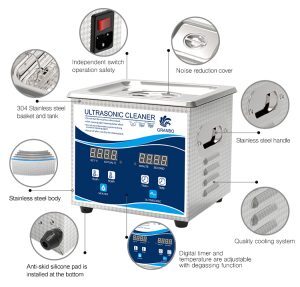
Granbo GS0101 ultrasonic cleaner
This ultrasonic cleaner makes it easy to clean items like hardware, fasteners, small metal parts – even jewelry.
It would be a nice ultrasonic cleaner for precious belongings with portable size, and digital timer heater adjustment with degassing function.
Specifications:
Model GS0101
Capacity: 1.3L
Features: Digital control panel + Timer + Heater + Degassing
Cleaning Appliance Type: For Jewelry
Tank size: 150×135×65 mm
Unit size: 175×165×160 mm
Ultrasonic power: 60W, 1 piece transducer
Heating power: 150W
Ultrasonic frequency: 40Khz
Heater: 20~80°C
Timer: 0-30mins
Voltage: AC 100~120V, 60Hz; AC 220~240V, 50Hz
Material:SUS304 Stainless steel tank and basket has resistance to wear and long work life.
Click Here to Buy: Granbo GS0101 Ultrasonic Cleaner
How to Use an Ultrasonic Cleaner Safely at Home
For jewellery that is safe to clean ultrasonically, using the machine properly is key to getting great results without damaging your items. Even the best machine can cause harm if used without care.
Here’s how to clean jewellery safely at home:
Inspect the Jewellery First
Before placing any piece in the ultrasonic bath, examine it closely. Check for loose stones, cracks, missing prongs, or visible glue. If anything looks unstable, avoid using the cleaner.
Use a Jewellery-Specific Cleaning Solution
Do not use household soaps, bleach, or industrial cleaners. These can react with metals or stones. Instead, purchase a cleaner labeled safe for jewellery. Most are mild, water-based, and pH-neutral.
Fill the Tank Properly
Pour water into the tank first, then add the cleaning solution as instructed. Do not overfill. Make sure the liquid covers the jewellery completely but does not spill over the edges.
Use a Basket or Tray
Always place jewellery inside the mesh basket or tray provided. Never allow it to sit directly on the tank bottom. Direct contact can cause scratches due to vibrations.
Set the Correct Temperature and Timer
If your ultrasonic cleaner has heat, keep it below 50°C for jewellery. Start with a cycle of 2 to 3 minutes. For particularly dirty items, allow a short rest, then run a second cycle.
Rinse and Dry Properly
After the cleaning cycle, remove your jewellery using tweezers or a gloved hand. Rinse thoroughly under clean, lukewarm water. Pat dry with a lint-free cloth and allow it to air dry fully before wearing or storing.
Test Before Committing
If you’re unsure how a piece will react, test a similar, low-value item first. This provides confidence without risk.
Experienced jeweller tip: One expert recommends checking the basket placement and solution clarity before each cleaning. Cloudy solution or direct metal contact with the tank are common beginner mistakes that lead to unnecessary wear.
Professional vs Home Use: When to Leave It to the Experts
Even with careful home use, there are times when professional cleaning is the safer choice. Jewellers have access to specialized equipment, training, and inspection tools that can prevent issues before they occur.
What professionals do differently:
- Pre-cleaning inspection: They examine every piece under magnification to spot cracks, loose prongs, or treatments.
- Solution control: Jewellery professionals use industry-approved cleaners that are safe for various metals and stones.
- Advanced tools: Steam cleaners, pressure testers, and ultrasonic units with frequency modulation allow safer cleaning at scale.
- Post-cleaning care: Polishing, rechecking settings, and reapplying protective coatings are often included in the service.
For heirloom jewellery, fragile vintage pieces, or stones of high value, professional cleaning offers peace of mind. It also preserves the condition and resale value of fine items.
Cost comparison: Home ultrasonic cleaners range from $30 to $200, while professional cleanings may cost $20 to $50 per session. Over time, owning a machine is more economical, but only if you know how to use it wisely.
What Do Real Users Say? Insights From Reviews and Forums
Online forums like Reddit and jewellery care communities offer plenty of real-world feedback. These user stories offer a balanced look at the pros and cons of ultrasonic jewellery cleaning.
Positive experiences often highlight:
- Sparkling results after just one cycle
- Restoration of shine in dull rings and necklaces
- Ease of use once familiar with settings
Negative experiences typically involve:
- Stones falling out due to loose settings
- Clouding or etching of soft stones
- Incorrect solution damaging delicate finishes
One user described using an ultrasonic cleaner on their wedding ring weekly for over a year without issues, until one small diamond popped out, revealing a previously unnoticed loose prong. The lesson is to inspect before and after every cleaning.
Another common regret is overconfidence. Beginners sometimes clean every piece they own without checking for treatments or material compatibility. Caution, they later advise, is the better route.
Safer Alternatives to Ultrasonic Cleaning
If you’re unsure whether ultrasonic cleaning is right for a specific piece, there are safer options that can still keep your jewellery looking beautiful.
Manual cleaning techniques include:
- Warm water and mild dish soap: Use a soft toothbrush to gently scrub jewellery. Rinse and dry thoroughly.
- Jewellery polishing cloths: These are great for tarnish removal on silver or gold, especially flat surfaces.
- Jewellery wipes: Pre-moistened, disposable cloths are handy for quick surface cleaning.
- Spray-on jewellery cleaners: Apply the solution, let it sit, and rinse away dirt without scrubbing.
These methods may not clean as deeply as ultrasonic cavitation, but they carry little risk. They’re ideal for sensitive gemstones, vintage jewellery, or anything you’d hesitate to place in a vibrating tank.
FAQs About Ultrasonic Jewellery Cleaner Safety
Is ultrasonic cleaning safe for wedding rings?
Yes, if the ring is made from solid metals like gold or platinum and contains hard gemstones like diamonds or sapphires. However, always inspect the setting first. If there are any signs of loose stones or previous repairs, opt for manual cleaning or have it checked by a jeweller.
Can ultrasonic cleaning damage diamonds?
While diamonds themselves are extremely hard, ultrasonic cleaning can damage them if the stone is fracture-filled or has internal flaws. The biggest risk is not to the stone, but to its setting. Loose prongs or invisible mountings can fail during vibration, especially with repeated cleaning.
What solution should I use?
Use a cleaning solution labeled specifically for jewellery. It should be non-acidic, ammonia-free, and safe for metals and gemstones. A mix of warm water with a few drops of mild, phosphate-free dish soap is a good DIY alternative. Avoid harsh chemicals like bleach or alcohol-based cleaners.
How often can I clean my jewellery in an ultrasonic cleaner?
For jewellery that is safe, ultrasonic cleaning can be done once every few weeks or after visible buildup. Avoid daily use. Overcleaning can weaken settings over time, especially for rings worn every day. Always check for signs of wear between sessions.
Do ultrasonic cleaners remove tarnish?
Ultrasonic cleaning helps remove surface dirt and grime but does not effectively remove heavy tarnish from silver. For tarnish, use a designated silver polish or polishing cloth for better results.
What Experts Say About Long-Term Use and Wear
Experienced jewellers and gemologists stress the importance of context when using ultrasonic cleaners. The technology itself is safe, but only when used with a clear understanding of materials, settings, and limitations.
What professionals recommend:
- Use ultrasonic cleaning for durable, untreated jewellery only.
- Limit the frequency of use, especially on older or daily-wear items.
- Check each piece under magnification before and after cleaning.
- Replace cleaning solution regularly to prevent residue buildup.
- Avoid shortcuts. If in doubt, clean manually or ask a jeweller.
Data from jewellery service centers shows that most repairs related to cleaning damage involve worn or loose settings, not the ultrasonic cleaner itself. This reinforces the idea that ultrasonic cleaners are tools, not miracles. They require careful use to deliver safe results.