 Granbo Sonic












Do Ultrasonic Mouthguard Cleaners Work?
Browse Volume:16 Classify:Support
Yes, ultrasonic mouthguard cleaners can work effectively for removing saliva residue, plaque film, food particles, and odor-causing buildup from suitable removable mouthguards. Their main advantage is the ability to clean curved surfaces, grooves, edges, and recessed areas that may be difficult to reach with a toothbrush alone.
The cleaning effect comes from acoustic cavitation. Ultrasonic transducers generate high-frequency pressure waves in the liquid, causing microscopic bubbles to form and collapse. The collapse of these bubbles produces localized liquid movement and shear forces that help loosen contamination from the mouthguard surface.
An ultrasonic mouthguard cleaner does not automatically sterilize the appliance, repair cracks, remove permanent stains, or restore a mouthguard that has become distorted. The final result depends on the mouthguard material, cleaning solution, water temperature, operating time, acoustic output, and condition of the appliance.
A laboratory study reported by the American Dental Association found that rinsing with cold tap water removed 91% of tested salivary proteins from sport mouthguards, while a soluble effervescent tablet removed 99%. The findings support the value of routine rinsing and an appropriate cleaning solution, but they do not establish that every ultrasonic cleaner provides the same result. See New study identifies proper methods to clean sport mouthguards (American Dental Association).
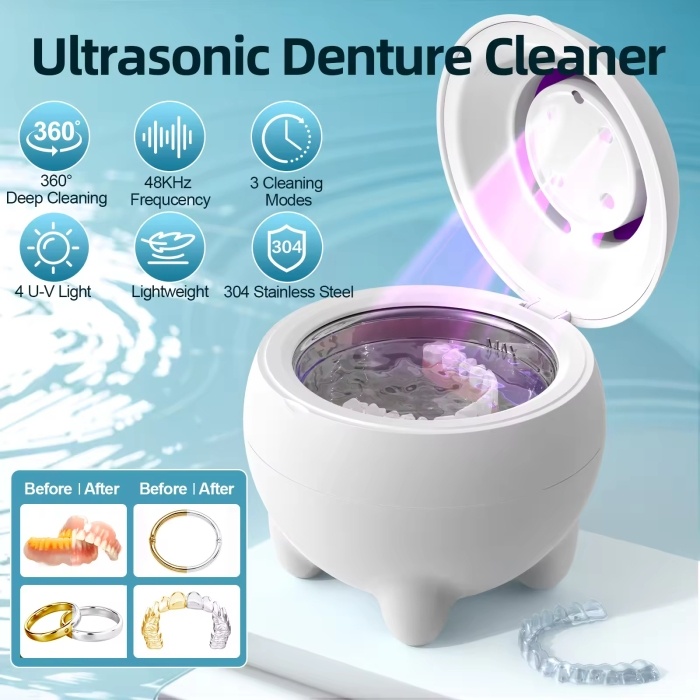
Ultrasonic Denture cleaner
How Ultrasonic Mouthguard Cleaners Help
Removing Saliva, Plaque, and Surface Debris
Mouthguards are exposed to saliva, plaque, food particles, proteins, and oral bacteria during use. If the appliance is not rinsed and cleaned regularly, organic deposits can dry on the surface and create unpleasant odors, staining, and a rough film.
A properly selected ultrasonic cycle can loosen contamination from the inside and outside surfaces of a mouthguard. This is useful because a mouthguard may contain curved channels, bite surfaces, thin edges, and textured areas that are difficult to clean evenly by hand.
Ultrasonic cleaning is most effective against contamination that is attached to the surface but can still be loosened. It may remove:
- Saliva proteins
- Food particles
- Soft plaque film
- Skin and lip oils
- Odor-causing residue
- Loose deposits around grooves and edges
- Residue from sports drinks or flavored beverages
It is less effective against hardened tartar, deep discoloration, permanent material changes, and deposits trapped inside cracks. A cleaning machine cannot restore a mouthguard that has already become brittle, torn, or permanently stained.
Acoustic Cavitation and Recessed Areas
An ultrasonic cleaner converts electrical energy into mechanical vibration through ultrasonic transducers. The transducers generate high-frequency pressure waves that pass through the cleaning liquid.
When the pressure conditions are suitable, microscopic bubbles form and collapse. This process is called acoustic cavitation. Bubble collapse produces localized turbulence, shear forces, and liquid microjets near solid surfaces. These forces help loosen deposits and allow the cleaning solution to reach areas that are difficult to contact with a brush.
Acoustic cavitation is the operating principle of ultrasonic cleaning. It should not be described as mechanical stirring. If a mouthguard cleaner also includes a separate pump, spray, or mechanical circulation system, that function operates independently from the ultrasonic cleaning process.
The acoustic field is not perfectly uniform throughout every tank. Mouthguard position, liquid level, tank geometry, transducer placement, and loading arrangement can affect the result. A mouthguard pressed against the tank bottom or folded inside the reservoir may not receive uniform cleaning.
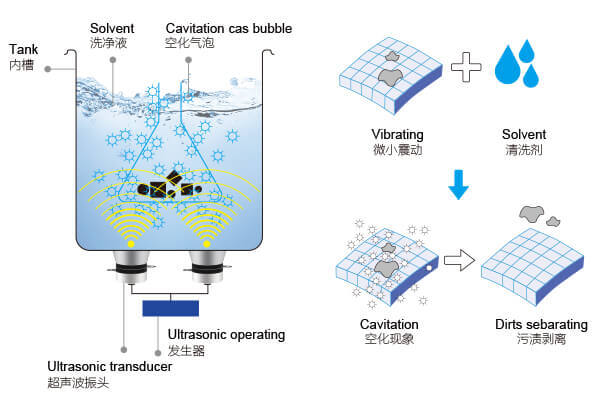
The Principle Behind Ultrasonic Cleaning
Cleaning Compared with Disinfection
Ultrasonic cleaning and disinfection are different processes. Cleaning removes or loosens physical contamination. Disinfection requires a validated chemical or physical process that reduces specified microorganisms under defined conditions.
An ultrasonic mouthguard cleaner may help remove material that supports bacterial growth, but it should not automatically be described as a sterilizer or disinfectant. Claims about bacteria reduction depend on the specific appliance, solution, exposure time, temperature, organism, and test method.
A cleaning solution formulated for dental appliances may provide additional antimicrobial performance. The product label should be checked for its intended use and claims. A plain-water ultrasonic cycle should be described as a cleaning process rather than a sterilization process.
What Affects Cleaning Performance?
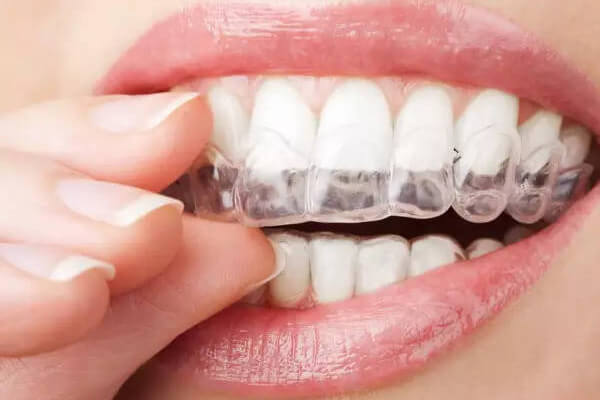
Braces
Mouthguard Material and Design
Mouthguards may be made from different thermoplastic or elastomeric materials. Custom sports mouthguards, boil-and-bite mouthguards, orthodontic mouthguards, nightguards, and laboratory-made occlusal appliances may not have identical resistance to heat, chemicals, or acoustic exposure.
Material thickness also affects cleaning. Thin edges and flexible sections may move during the cycle, while thicker bite surfaces may retain deposits in grooves. A mouthguard with internal reinforcement, bonded sections, or a soft lining may require more careful handling than a single-material appliance.
The appliance design should be checked before ultrasonic cleaning. The process is more predictable when the mouthguard is intact, fully immersed, and supported without folding or pressing against the tank.
Cleaning Solution and Water Temperature
Plain water can remove loose debris and support acoustic cavitation. A compatible dental-appliance cleaning solution may improve the removal of plaque, odor, and organic residue.
The solution should be low-foaming and approved for the mouthguard material. Household bleach, strong solvents, abrasive powders, alcohol-based products, and unapproved disinfectants may damage the appliance or leave residue that irritates the mouth.
The American Association of Orthodontists recommends cleaning mouthguards with cool water, a soft toothbrush, and mild soap. It also warns against hot water because heat can warp plastic. See Orthodontic FAQs: Your Questions Answered (American Association of Orthodontists).
Warm water may be suitable for some cleaning products, but hot water should be avoided unless the mouthguard manufacturer specifically allows it. Ultrasonic operation can also raise the liquid temperature, even when the cleaner’s heater is not activated.
Cycle Time and Loading
The correct cycle depends on the equipment and cleaning product. A short cycle is generally preferable for a mouthguard because extended exposure can increase heat, chemical contact, and mechanical stress.
Longer cleaning does not necessarily remove more contamination. If the mouthguard remains dirty after a normal cycle, the cause may be an unsuitable solution, heavy deposits, poor loading, or a damaged surface.
The mouthguard should be placed loosely in the cleaning reservoir or basket. It should not be folded, compressed, stacked with another appliance, or positioned directly against an active tank surface.
Which Mouthguards Can Be Cleaned Ultrasonically?
Sports Mouthguards
Many sports mouthguards can be cleaned with an ultrasonic device when the material and equipment are compatible. Routine rinsing after use is still important because dried saliva and food deposits become more difficult to remove later.
The American Dental Association has reported research on cleaning sport mouthguards with cold tap water and a soluble effervescent tablet. Both methods removed tested salivary proteins, although the effervescent tablet produced the higher removal result in the study. See New study identifies proper methods to clean sport mouthguards (American Dental Association).
Ultrasonic cleaning can provide an additional mechanical cleaning step, but it should not replace rinsing after every use. A mouthguard should be rinsed before organic residue dries on the surface.
Nightguards and Occlusal Appliances
Nightguards may accumulate saliva proteins, plaque, and odor-causing deposits during extended wear. Ultrasonic cleaning may help clean the inner surface and bite areas, particularly when the appliance has grooves or complex contours.
Nightguards should be inspected for cracks, sharp edges, thinning, and changes in fit. A nightguard that has become damaged may irritate the gums or no longer protect the teeth as intended.
Cleaning cannot compensate for wear-related damage. If the appliance no longer fits securely, a dental professional should assess whether it needs adjustment or replacement.
Orthodontic Mouthguards
Orthodontic mouthguards may be designed to fit over braces or other dental appliances. Their shape and material may differ from standard sports mouthguards, and the appliance may contain areas that trap debris around brackets or wires.
The mouthguard manufacturer and orthodontist’s instructions should take priority. The presence of an ultrasonic cleaner does not remove the need to check clearances around brackets, bonded components, and soft tissue.
If the mouthguard becomes distorted, it may press against orthodontic components or fail to provide the intended protection. A damaged appliance should not be reshaped at home with hot water.
How to Use an Ultrasonic Mouthguard Cleaner
Ultrasonic Denture cleaner
Inspection Before Cleaning
Remove the mouthguard from the mouth and rinse it under cool or lukewarm water. Inspect it for cracks, tears, sharp edges, soft spots, discoloration, and changes in fit.
Do not place a damaged mouthguard in an ultrasonic cleaner. Acoustic cavitation and liquid movement may worsen an existing crack or separate a weakened section.
Check the equipment manual and cleaning-solution instructions before filling the reservoir. The cleaner should be intended for removable dental appliances, and the solution should be approved for the specific mouthguard material where possible.
Solution Preparation
Fill the cleaner to the marked level with clean water. Add only the recommended amount of a compatible cleaning solution. More chemical does not necessarily produce a cleaner mouthguard and may increase foam, taste, residue, or material exposure.
Do not mix cleaning tablets, mouthwash, bleach, dish detergent, vinegar, or other chemicals unless the product and equipment instructions explicitly permit the combination. A dissolved tablet or solution should not be reused unless the product instructions specifically state otherwise.
If plain water is used, the mouthguard may still require brushing or a separate cleaning solution to remove persistent plaque and odor. Water supports ultrasonic cleaning but does not provide the same chemical action as a purpose-designed cleanser.
Cleaning, Rinsing, and Drying
Place the mouthguard so that the cleaning solution contacts both the inner and outer surfaces. Do not fold or compress the appliance. Close the lid if the equipment is designed to operate with the lid closed.
Run the recommended cycle. Avoid extending the cleaning time without a specific reason because prolonged exposure may increase heat and stress on the material.
After cleaning, rinse the mouthguard thoroughly under clean running water. This removes loosened deposits and cleaning-solution residue. The mouthguard should be air-dried in a ventilated case or on a clean surface before storage.
The American Association of Orthodontists recommends allowing mouthguards to air-dry in a ventilated case and avoiding closed, damp storage conditions that can support bacterial growth. See Orthodontic FAQs: Your Questions Answered (Professional Organization Guidance).
Limitations and Common Problems
Odor, Staining, and Residue
Persistent odor may indicate organic buildup, inadequate rinsing, poor drying, or small cracks in the material. Ultrasonic cleaning can remove some deposits, but it cannot eliminate odor that is coming from internal damage or contamination trapped below the surface.
Staining may result from coffee, tea, tobacco, sports drinks, food dyes, or material aging. A cleaning cycle may reduce surface staining but cannot restore the original appearance when the material has permanently discolored.
A strong chemical taste or slippery film after cleaning usually indicates incomplete rinsing, excessive solution concentration, or an unsuitable product. The mouthguard should be rinsed again before use.
Warping and Material Damage
Warping is most commonly associated with excessive heat, but chemical incompatibility and repeated mechanical exposure can also affect some materials. A distorted mouthguard may no longer fit correctly or protect the teeth as intended.
Hot water, direct sunlight, heaters, dishwashers, and hot vehicles should be avoided. The American Association of Orthodontists warns that heat can warp mouthguard plastic. See Orthodontic Mouthguards: Sports Protection for Braces (American Association of Orthodontists).
Cracks, Tears, and Poor Fit
A cracked or torn mouthguard should be replaced or professionally assessed. Continued use may reduce protection, irritate oral tissue, or allow bacteria to collect inside the damaged area.
Fit changes may result from material wear, heat exposure, tooth movement, or damage. Ultrasonic cleaning cannot restore the original fit. A mouthguard that no longer fits snugly should not be forced into place.
Cross-Contamination
A dirty cleaning tank can transfer residue and microorganisms to a mouthguard. This risk increases when the same solution is reused or when the tank is also used for jewelry, tools, or other objects.
Use fresh water and solution for each cleaning session when required by the product instructions. Empty, rinse, and dry the reservoir after use. Do not store a wet mouthguard in a closed case.
Ultrasonic Cleaning Compared with Manual Cleaning
Manual cleaning remains suitable for routine mouthguard care. Cool water, a soft toothbrush, and mild soap can remove fresh saliva and surface debris without requiring specialized equipment. The American Association of Orthodontists recommends this type of cleaning for mouthguards. See Orthodontic Mouthguards: Sports Protection for Braces (American Association of Orthodontists).
Ultrasonic cleaning provides an additional benefit when contamination collects in grooves, bite surfaces, edges, or areas that are difficult to brush. It may reduce the need for aggressive manual brushing, which can scratch or wear some appliance materials.
The two methods can be used as part of the same care routine. Rinse the mouthguard after each use, brush it gently as needed, and use an ultrasonic cleaner or purpose-designed cleaning solution as a periodic deep-cleaning step when the appliance and equipment instructions permit it.
An ultrasonic cleaner is not essential for every mouthguard. It is most useful when routine manual cleaning does not adequately remove odor, plaque film, or debris and when the appliance is compatible with the process.
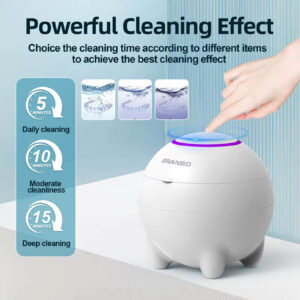
Powerful ultrasonic cleaning designed for dentures and retainers
Equipment Selection and Maintenance
A suitable ultrasonic mouthguard cleaner should provide controlled cycle timing, moderate temperature, a smooth cleanable reservoir, and clear instructions for dental appliances. The equipment should not expose the mouthguard to excessive heat or uncontrolled acoustic power.
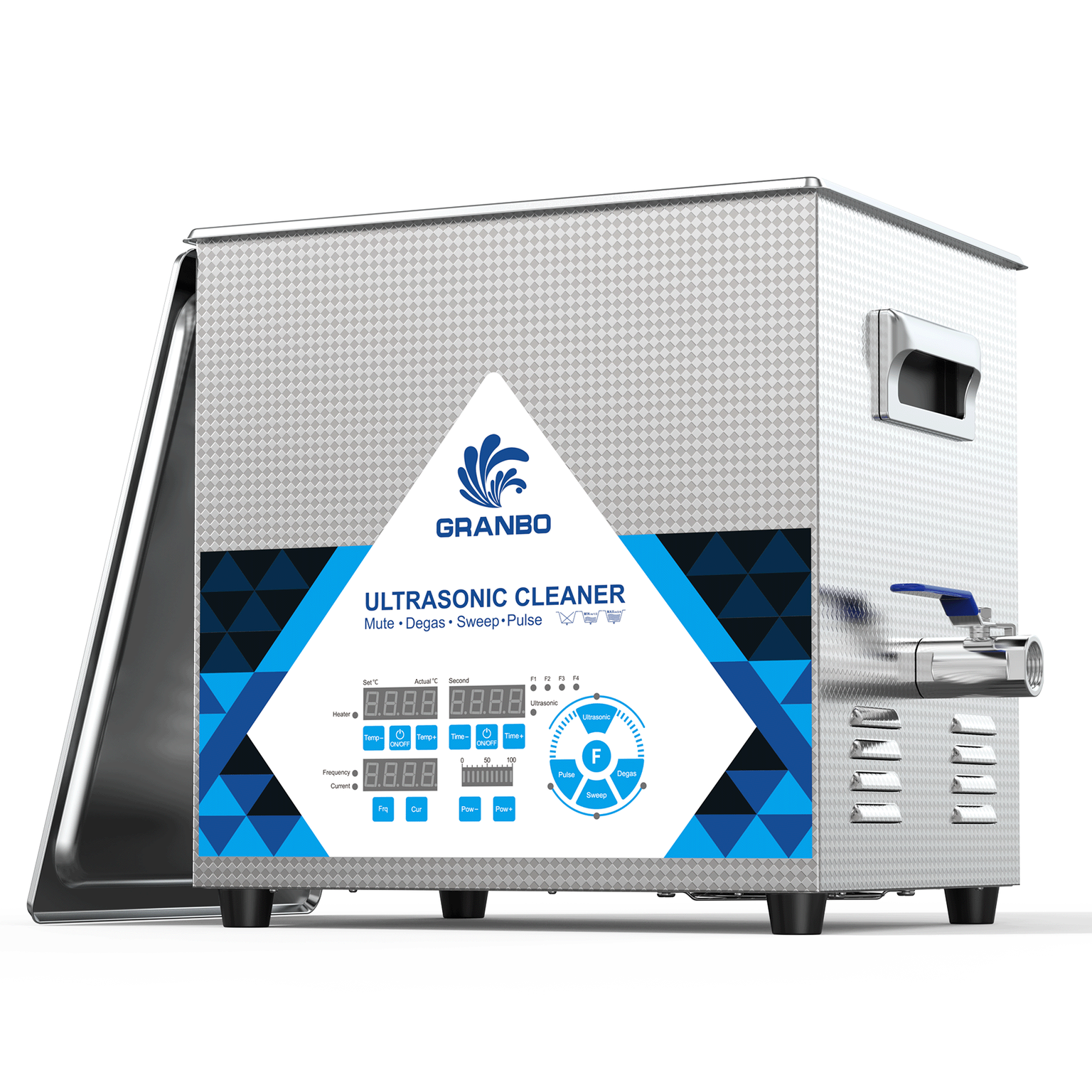
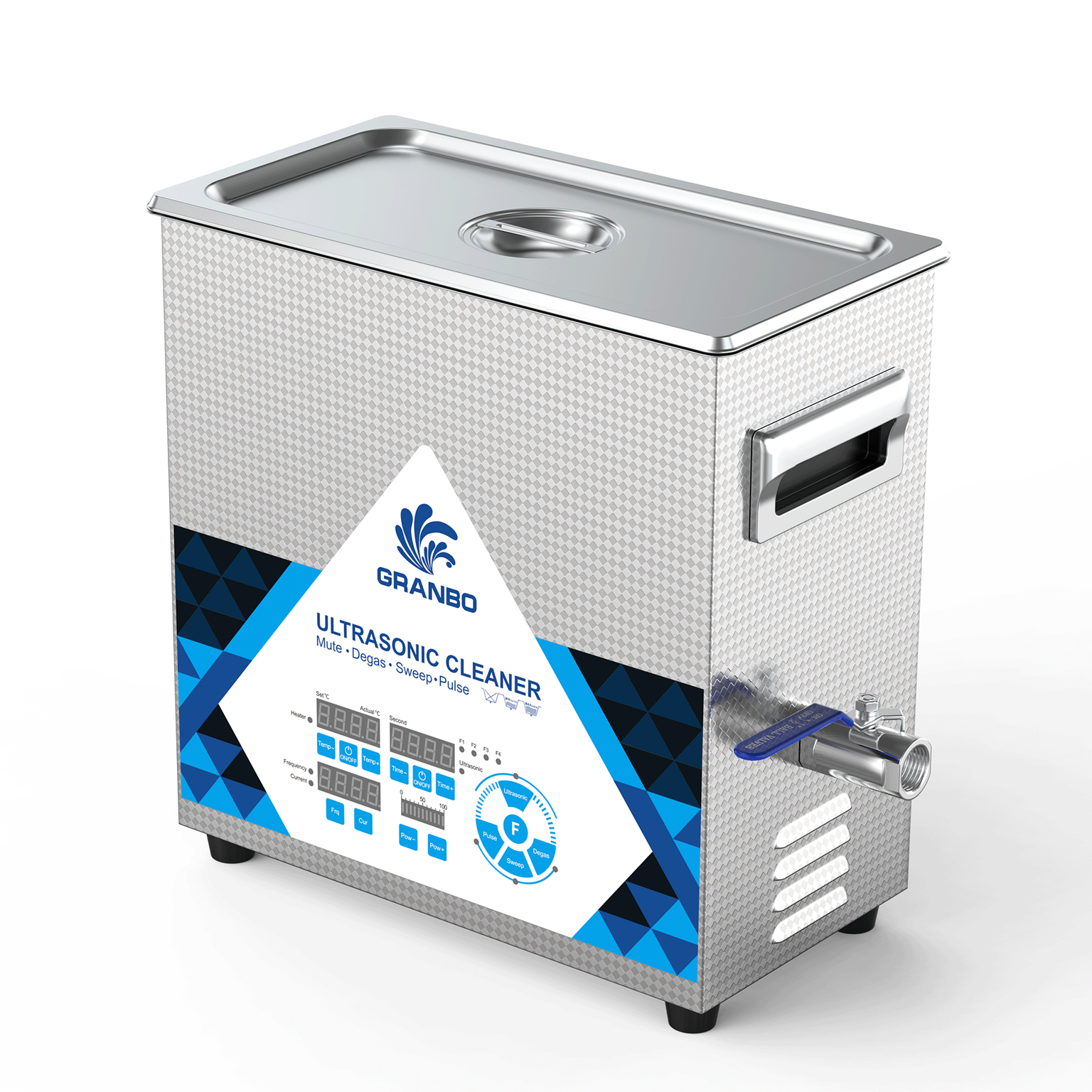
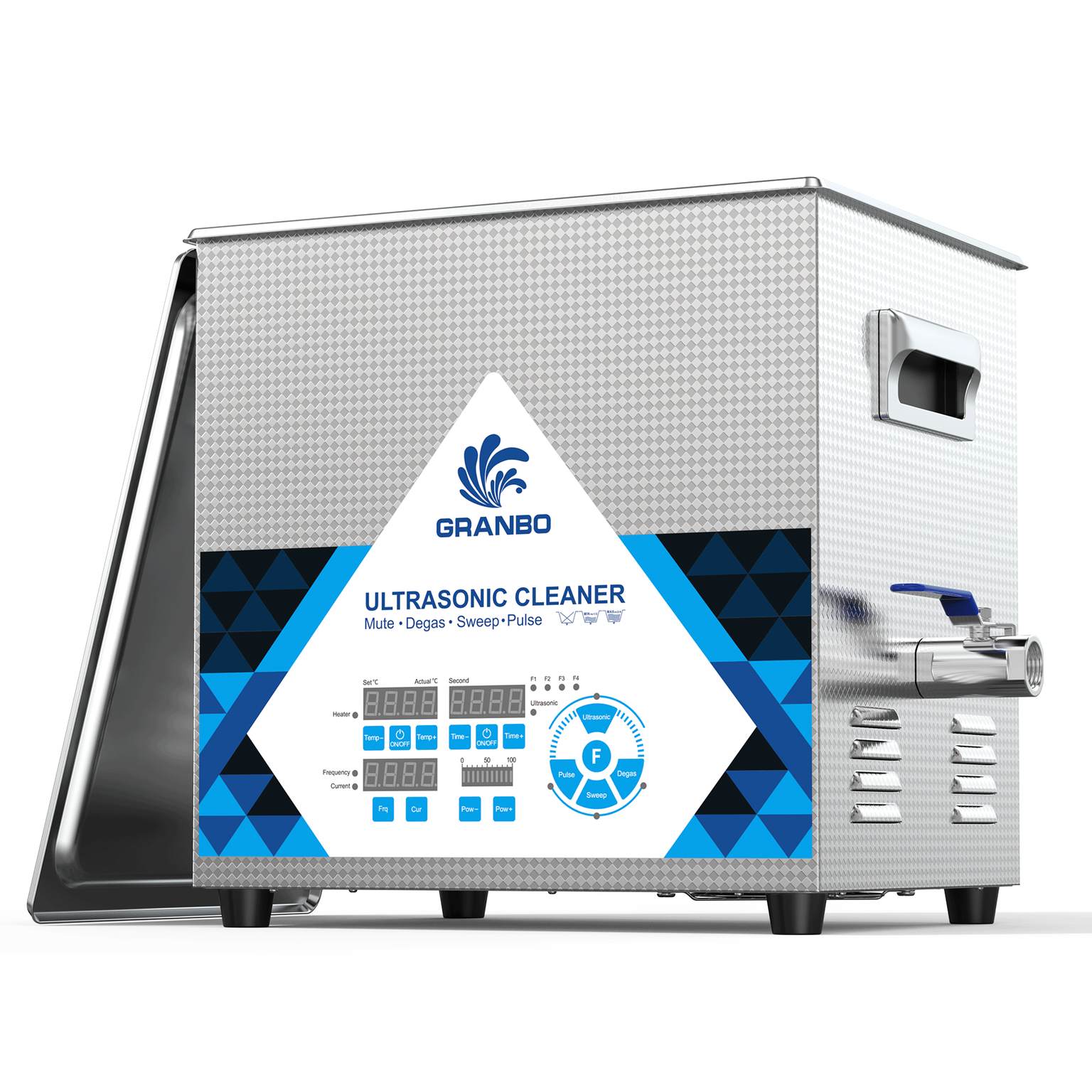
Dental-specific ultrasonic cleaners may be designed for dentures, retainers, and aligners, used alongside compatible cleaning tablets. Ultrasonic cleaner instructions typically specify placing one cleaning tablet in the reservoir, adding warm rather than hot water, cleaning the dentures or retainers, and rinsing them along with the reservoir after use.
A generic ultrasonic cleaner may also be suitable, but compatibility should be confirmed before use. Frequency, acoustic power, reservoir size, liquid temperature, and approved solutions may differ between models.
Important maintenance practices include:
- Emptying the reservoir after each cleaning session
- Rinsing the tank, lid, and basket with clean water
- Removing residue from corners, drains, and supports
- Allowing the equipment to dry between uses
- Checking for overheating, unusual noise, or reduced performance
- Keeping the electrical housing dry
- Following the manufacturer’s descaling instructions
- Using fresh solution according to the product instructions
The cleaner should be reserved for dental appliances when possible. Using the same tank for jewelry, tools, solvents, or industrial parts can introduce residues that are not suitable for an appliance placed in the mouth.
References
- New study identifies proper methods to clean sport mouthguards (American Dental Association)
- Orthodontic FAQs: Your Questions Answered (American Association of Orthodontists)
- Orthodontic Mouthguards: Sports Protection for Braces (American Association of Orthodontists)