 Granbo Sonic










Do Ultrasonic Fruit Cleaners Work? A Technical Guide
Browse Volume:13 Classify:Support
Ultrasonic fruit cleaners can work as a supplementary washing technology, particularly for loosening soil, dust, small particles, surface films, and some residues from the external surfaces of fruits and vegetables. Their performance comes from high-frequency sound waves transmitted through water, not from a chemical disinfectant or a special “detoxifying” effect.
The most accurate answer to the question “Do ultrasonic fruit cleaners work?” is therefore conditional: they can improve mechanical cleaning in some situations, but they do not make contaminated produce sterile, remove every pesticide residue, or replace safe food-handling practices. The FDA states that washing fresh produce can reduce bacteria present on the surface, but it will not eliminate all bacteria. The agency also does not recommend washing fruits and vegetables with soap, detergent, or commercial produce washes. (fda.gov)
For consumers and equipment designers, the important distinction is between surface cleaning and food safety validation. An ultrasonic bath may help detach contamination from uneven surfaces, crevices, and textured skins. It cannot confirm that pathogens have been removed to a defined safety level unless the complete process has been tested and validated for a particular product, water quality, loading condition, and operating cycle.
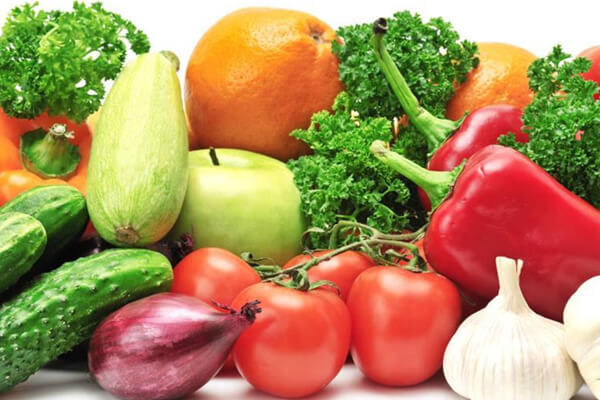
Fruits And Vegetables
Do Ultrasonic Fruit Cleaners Work?
Yes, ultrasonic fruit cleaners can improve the removal of some surface contamination, but results depend heavily on the machine design and the condition of the produce. They are most effective when used with clean water, suitable ultrasonic intensity, sufficient treatment time, and a load that does not overcrowd the tank.
Ultrasonic cleaning is based on a physical process called acoustic cavitation. When ultrasonic waves pass through water, they create alternating high-pressure and low-pressure cycles. Under suitable conditions, microscopic bubbles form, grow, and collapse. The movement and collapse of these bubbles generate localized liquid motion, microjets, and shear forces that can disturb particles attached to a product surface. This is the same basic principle used in many industrial ultrasonic cleaning systems. (onlinelibrary.wiley.com)
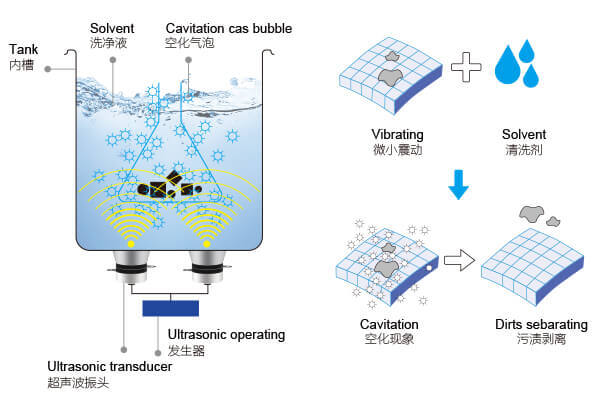
The Principle Behind Ultrasonic Cleaning
On a smooth apple or cucumber, this action may help release dust, soil particles, and loosely attached residues. On a rough melon rind, leafy vegetable, or berry cluster, ultrasonic agitation can improve water contact with small surface gaps that are difficult to reach by hand. However, the cleaning effect is not uniform across all products. A heavily contaminated item may still require pre-rinsing, gentle rubbing, brushing, or trimming of damaged areas.
What Ultrasonic Cleaners Can Remove
An ultrasonic fruit cleaner may assist with the removal of:
- Loose soil and dust
- Small insects or insect fragments on the surface
- Some waxy or oily surface films
- Debris trapped in shallow crevices
- Particles attached to textured skins
- Some microorganisms that are only loosely attached to the surface
The actual result depends on whether the contamination is physically attached, absorbed into the produce, or protected inside a crack or damaged area. Ultrasonic energy is generally more useful for loosening and dispersing surface contamination than for chemically breaking down residues.
Some laboratory and food-processing studies have examined ultrasound for microbial reduction and pesticide or residue removal. These studies often use controlled conditions, including specific ultrasonic power, frequency, treatment time, water temperature, and sometimes an additional sanitizer or chemical treatment. Results from an industrial test system should not automatically be applied to a small countertop device. (onlinelibrary.wiley.com)
What Ultrasonic Cleaners Cannot Guarantee
An ultrasonic fruit cleaner cannot guarantee the removal of:
- All bacteria, viruses, parasites, or mold
- Internal contamination beneath damaged skin
- Pesticide residues absorbed into plant tissue
- All commercial wax coatings
- Heavy contamination without water replacement
- Pathogens transferred from dirty water to clean produce
Produce is porous and may contain cracks, stems, folds, or damaged areas where contamination can persist. The FDA recommends cutting away bruised or damaged portions and discarding produce that appears rotten. Washing should take place before peeling or cutting so that surface contamination is not transferred by a knife into the edible portion. (fda.gov)
How Ultrasonic Fruit Cleaners Work
Ultrasonic Transducers and Acoustic Cavitation
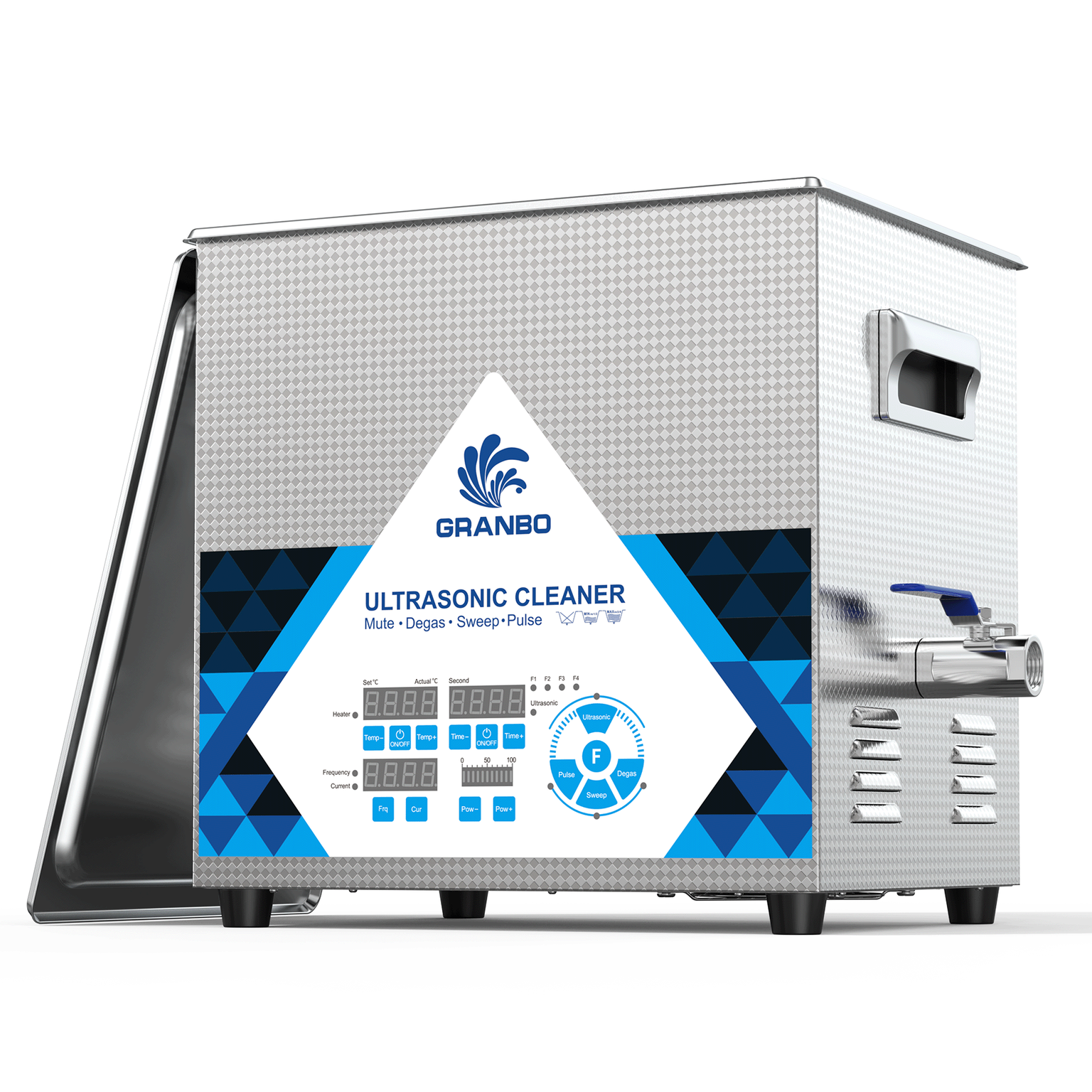
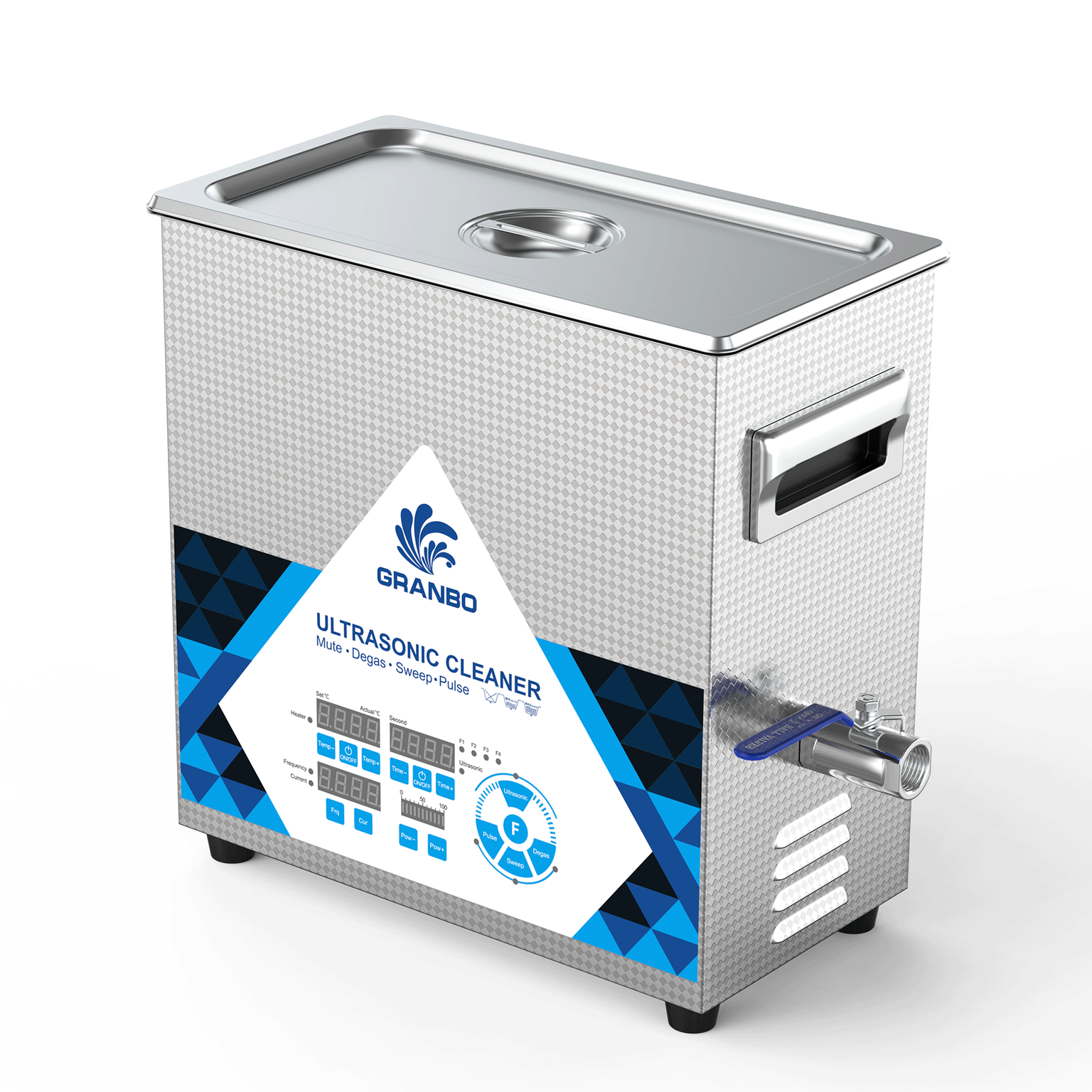
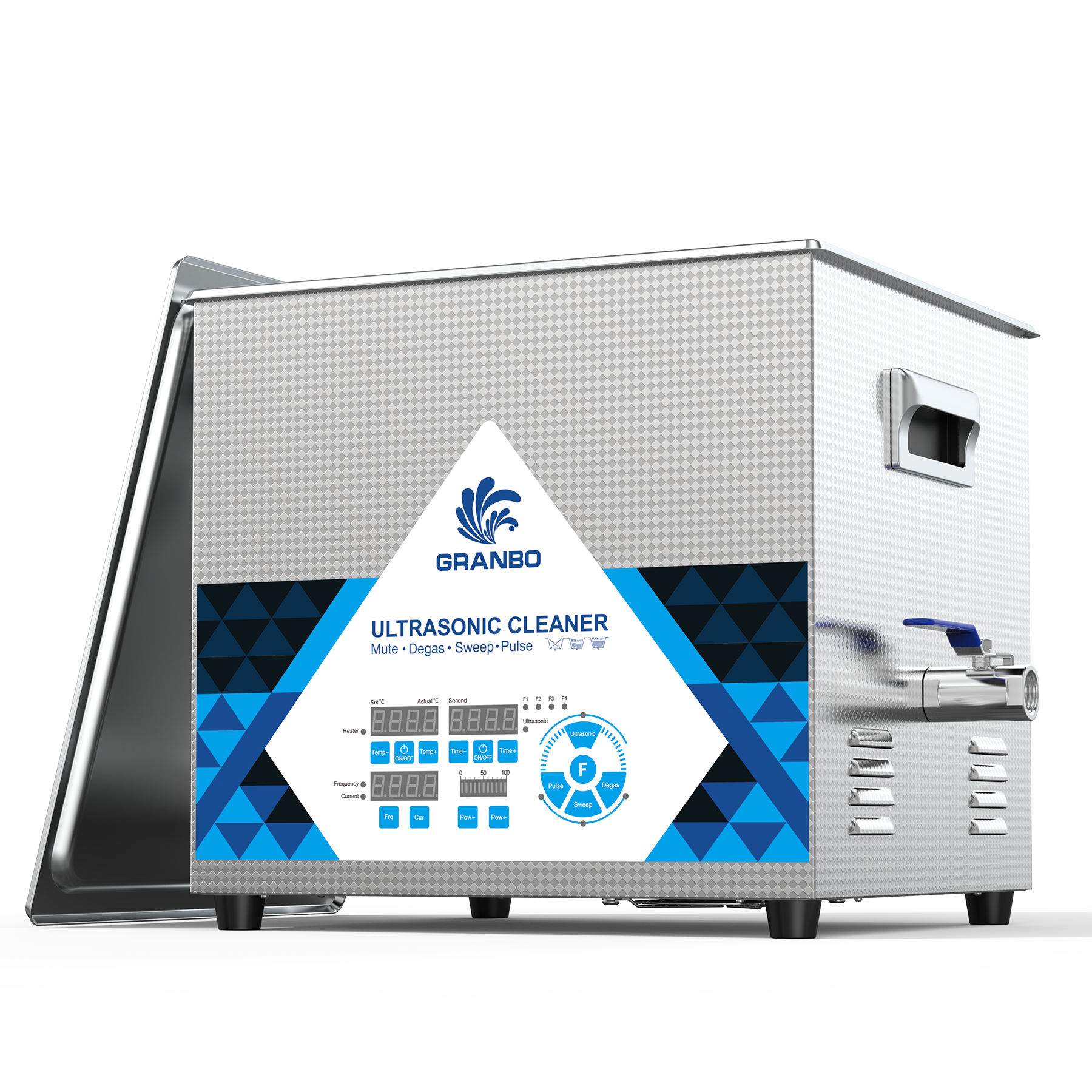
The main components of an ultrasonic fruit cleaning system are the tank, ultrasonic transducers, generator, control system, and drainage or filtration arrangement. The generator converts electrical energy into a high-frequency electrical signal. The transducers then convert that electrical signal into mechanical vibration, which is transferred into the water inside the tank.
Consumer devices commonly operate in the ultrasonic frequency range used for general cleaning, often around several tens of kilohertz. Lower frequencies usually produce larger and more energetic cavitation bubbles, while higher frequencies can produce smaller bubbles and a gentler cleaning action. The best operating frequency depends on the produce surface, tank geometry, water depth, and target contamination.
Frequency alone does not determine cleaning performance. Two machines labeled with the same frequency may produce very different results because of differences in transducer arrangement, electrical matching, tank shape, power distribution, and control quality.
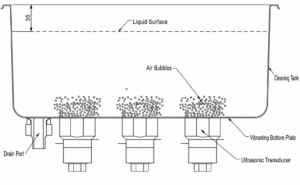
Ultrasonic Cleaning Principle Diagram
Mechanical Cleaning Action
Cavitation bubbles are not distributed perfectly evenly throughout a tank. Areas directly above or near transducers may receive greater acoustic energy, while corners, surface zones, and shadowed areas may receive less. Product orientation also matters. A strawberry placed directly against another berry may shield part of its surface from the water movement.
For this reason, professional equipment design focuses on acoustic uniformity rather than maximum nominal power. A well-designed tank may use several transducers distributed across the base or sidewalls. The system may also include circulation pumps, gentle water movement, rotating baskets, or controlled agitation to expose different surfaces without bruising the produce.
Excessive power can be counterproductive. Strong cavitation may damage soft fruit, loosen skins, cause bruising, or accelerate quality loss. In food applications, the objective is normally a controlled balance between cleaning intensity and product preservation.
The Role of Water Temperature and Cleaning Time
Water temperature affects cavitation, viscosity, surface tension, residue solubility, and product quality. Warmer water may help loosen oily or waxy materials, but excessive temperature can soften produce, increase microbial growth during poor handling, or reduce freshness. For household washing, plain cool or moderately cool potable water remains the safest general approach unless the equipment has a validated process.
Treatment time is also important. A short cycle may not provide enough cavitation exposure, while an excessively long cycle may offer little additional cleaning and increase the risk of tissue damage. A practical consumer cycle often involves a few minutes of treatment, followed by draining and rinsing. Exact settings should be based on the machine manufacturer’s instructions and the sensitivity of the produce.
What Affects Cleaning Performance?
Frequency, Power Density, and Tank Design
Ultrasonic cleaning performance is influenced by several interconnected parameters:
- Ultrasonic frequency: Affects bubble size and cavitation behavior.
- Acoustic power density: Determines the energy delivered to a specific water volume.
- Transducer placement: Influences the distribution of cavitation zones.
- Tank geometry: Creates areas of stronger or weaker acoustic activity.
- Water depth: Changes wave propagation and resonance conditions.
- Cycle control: Determines how frequency, power, and treatment time are managed.
- Load arrangement: Affects contact between water and produce surfaces.
A machine with a high advertised wattage is not automatically more effective. If the tank is poorly matched to the transducers, much of the energy may be lost as heat or vibration in the structure rather than producing useful cavitation in the cleaning zone.
From a manufacturing perspective, repeatability is more important than a single impressive test result. Equipment evaluation should measure cleaning performance at different tank positions, water levels, produce loads, and operating cycles.
Produce Type, Surface Texture, and Contamination
Produce geometry has a major effect on results. Smooth, firm items such as apples, pears, tomatoes, and cucumbers are relatively easy to expose to ultrasonic water movement. Leafy vegetables present a different challenge because folds and overlapping leaves can create shaded areas.
Soft berries require particular care. Strawberries, raspberries, blackberries, and similar products may be damaged by excessive agitation or prolonged soaking. Their surface structure can retain water, and their quality can decline quickly if they are stored wet.
Root vegetables may carry more soil and should generally be rinsed or brushed before ultrasonic treatment. Melons and squash have firm rinds that tolerate mechanical cleaning, but the surface should still be rinsed before cutting. Otherwise, contaminants on the outside can be transferred through the skin by the knife.
Water Quality and Loading Conditions
The water itself becomes part of the cleaning process. If the bath is visibly dirty or heavily loaded with soil, ultrasonic energy may help suspend contamination but cannot remove it from the system. Without draining or filtration, particles can settle back onto the produce.
Produce should not be packed tightly into the tank. Overloading creates acoustic shadowing and restricts water circulation. A basket or rack can help maintain separation, but it must not block the active cavitation zone.
For commercial or institutional applications, process water should be managed according to applicable food-safety requirements. The FDA’s produce-safety framework emphasizes hygienic handling, water quality, and control of food-contact surfaces because washing can become a source of cross-contamination when water is reused without proper control. (fda.gov)
Can Ultrasonic Cleaning Remove Pesticides and Microorganisms?

Pesticide and Wax Residues
Ultrasonic treatment may help remove some residues located on the outside surface, especially when the residue is loosely attached or present in a removable film. It is less reliable for systemic pesticides or residues that have penetrated the skin or plant tissue.
The type of pesticide matters. Some compounds are water-soluble, while others are oil-soluble or strongly bound to wax layers. Plain water, even when combined with ultrasonic agitation, will not behave as a universal solvent. A process that improves removal of one compound may have little effect on another.
Commercial wax coatings also vary in composition and adhesion. Ultrasound may loosen part of a coating, but complete removal is not assured. Excessive treatment can affect the natural protective layer of some fruits and may reduce storage life.
Claims such as “removes all pesticides” or “eliminates 99.9% of chemicals” should be treated cautiously unless supported by independent testing using defined compounds, controlled concentrations, validated analytical methods, and clearly specified operating conditions.
Bacteria, Mold, and Biofilm
Ultrasonic cavitation can disrupt some microbial attachment and may contribute to microbial reduction. Research has investigated ultrasound as a food-processing aid because cavitation can create mechanical stress and localized chemical effects. However, microbial inactivation is strongly dependent on treatment intensity, exposure time, organism type, temperature, and whether ultrasound is used alone or combined with another validated intervention. (onlinelibrary.wiley.com)
A countertop ultrasonic fruit cleaner should not be described as a sterilizer unless it has been specifically validated for that purpose. Even then, “sterilization” is a highly technical claim requiring defined biological indicators and process controls.
Mold growing inside damaged fruit cannot be solved by surface cleaning. Similarly, bacteria in cuts, bruises, or internal tissue may remain after washing. Produce that is visibly rotten or heavily damaged should be discarded rather than processed in an ultrasonic bath.
How to Use an Ultrasonic Fruit Cleaner Correctly
Begin by washing hands and cleaning the tank, basket, lid, and any food-contact accessories. Use potable water and inspect the produce. Remove visibly rotten items, cut away damaged sections where appropriate, and separate produce types that may require different handling.
A practical operating procedure is:
- Fill the tank to the manufacturer’s indicated level.
- Pre-rinse produce under running water to remove heavy soil and loose debris.
- Place produce loosely in the basket without overloading the tank.
- Select a gentle or standard cycle according to the produce type.
- Avoid adding dish soap, household detergent, bleach, or unapproved chemicals.
- Drain the used water after the cycle.
- Rinse the produce under clean running water.
- Dry firm produce with a clean towel or allow it to air-dry on a clean surface.
- Refrigerate cut or highly perishable produce promptly.
The FDA recommends gently rubbing produce under plain running water and using a clean brush for firm items such as melons and cucumbers. Washing and drying can reduce surface contamination, but these steps should not be interpreted as a complete pathogen-removal process. (fda.gov)
Washing produce immediately before use is often preferable to washing large quantities before storage, especially for berries and leafy vegetables. Excess moisture can accelerate spoilage when produce is stored without adequate airflow or drying.
Applications for Different Fruits and Vegetables
Ultrasonic systems are generally most suitable for firm, intact produce with external contamination. Apples, pears, citrus fruits, cucumbers, peppers, tomatoes, and similar items may benefit from improved contact between water and the surface.
Leafy greens can be processed, but the load should be light and the cycle gentle. The machine cannot reliably clean every folded or overlapping section unless the leaves are separated. For delicate berries, ultrasonic treatment should be brief and carefully controlled. In many cases, gentle rinsing immediately before consumption is more appropriate than long soaking.
Root vegetables such as potatoes, carrots, and beets may require a pre-wash or brush because soil can adhere strongly to their surfaces. Melons should be washed and scrubbed before cutting, regardless of whether ultrasonic equipment is used.
Advantages of Ultrasonic Fruit Cleaners
The main technical advantages include improved water movement, reduced manual scrubbing, and better access to irregular external surfaces. Ultrasonic action can also clean small parts of a product that are difficult to reach with a sponge or hand rubbing.
Other possible advantages include:
- Lower dependence on manual brushing for firm produce
- More consistent treatment than casual soaking
- Ability to process multiple small items at once
- Compatibility with water-only cleaning
- Potential integration with filtration, circulation, or automated controls
- Reduced need for aggressive mechanical contact on textured surfaces
These advantages are most meaningful when the system is correctly sized and operated. A poorly designed appliance may generate vibration without producing useful cavitation throughout the tank.
Limitations and Common Problems
One common problem is uneven cleaning. Produce may look clean in one area but retain soil near the stem, underside, or overlapping surfaces. Rotating or repositioning items can help, but the best solution is a tank and transducer layout that produces relatively uniform acoustic coverage.
Another problem is cross-contamination. If dirty produce is placed in a small amount of water and the same bath is used repeatedly, microorganisms and particles can spread through the water. Changing the water between loads and cleaning the tank are basic controls.
Softness, bruising, skin peeling, and loss of freshness may indicate excessive treatment intensity. The operating cycle should be reduced for delicate items, and produce should not be allowed to strike hard tank surfaces or remain submerged longer than necessary.
Foam can also reduce performance. Detergents, natural plant compounds, and residues from previous cleaning may alter water properties and interfere with cavitation. The tank should be rinsed thoroughly, and household cleaning chemicals should never be added to food-washing water unless the process is specifically designed and legally approved for that use.
Maintenance and Product Design Considerations
A food-contact ultrasonic cleaner should use corrosion-resistant materials, smooth internal surfaces, accessible drain points, and components that can be cleaned without trapping debris. Stainless steel is commonly selected for professional tanks because of its durability and cleanability.
Key maintenance tasks include:
- Emptying and rinsing the tank after each use
- Removing organic debris from corners and drains
- Cleaning the basket and lid
- Inspecting seals, cables, and transducer connections
- Preventing water from entering the generator housing
- Checking for unusual noise, overheating, or reduced vibration
- Descaling the tank when mineral deposits accumulate
In commercial environments, maintenance should be documented through sanitation schedules and equipment inspections. Performance testing may include acoustic output checks, water-temperature monitoring, visual inspection of cavitation distribution, and microbiological or residue testing when the process is used as part of a validated food-washing line.
Practical Buying Criteria
When comparing ultrasonic fruit cleaners, evaluate the complete system rather than focusing only on marketing terms. Important specifications include:
- Tank capacity and usable water volume
- Ultrasonic frequency and adjustable power
- Transducer configuration and acoustic coverage
- Cycle duration and temperature control
- Drainage and water-replacement design
- Food-contact material compatibility
- Basket size and produce loading guidance
- Noise, vibration, and electrical safety features
- Cleaning and descaling requirements
- Availability of independent performance data
A useful product specification should explain the intended produce types, recommended load, operating cycle, water level, and limitations. Claims about pesticide or pathogen removal should identify the test method and target contaminant. Without this information, performance claims are difficult to compare.
Final Assessment: Are Ultrasonic Fruit Cleaners Worth Using?
Ultrasonic fruit cleaners do work as enhanced mechanical washing devices, especially for loosening surface dirt and improving water contact with firm or irregularly shaped produce. Their value is greatest when the equipment provides uniform cavitation, uses clean potable water, avoids overloading, and is followed by a fresh-water rinse.
They should not be treated as sterilizers or as a guaranteed solution for pesticide removal. Running water, gentle rubbing, clean food-contact surfaces, proper storage, and removal of damaged produce remain essential. The FDA and USDA recommend plain running water rather than soap or detergent for routine consumer produce washing, and both emphasize that washing reduces contamination without eliminating all harmful microorganisms. (ask.fsis.usda.gov)
For household use, an ultrasonic cleaner may provide additional convenience and surface-cleaning action, but it is not necessary for safe preparation of most fruits and vegetables. For food processors, the technology may be useful as one stage in a broader, validated washing system, provided that water management, process controls, equipment sanitation, and product quality are evaluated together.