 Granbo Sonic











Ultrasonic Cleaning Technology for Orthodontic Retainers: Performance and Safety Guidelines
Browse Volume:16 Classify:Support
Orthodontic retainers accumulate bacterial biofilm, mineral deposits, and organic debris daily through normal wear. These contaminants create hygiene concerns and affect retainer longevity if not properly addressed. Ultrasonic cleaning technology offers a non-abrasive method for removing buildup from retainer surfaces and hard-to-reach areas that manual brushing cannot effectively clean.
The cavitation process generated by ultrasonic cleaners creates microscopic cleaning action capable of penetrating crevices, wire bends, and textured surfaces common in orthodontic appliances. Understanding how this technology interacts with different retainer materials and contamination types helps users maximize cleaning effectiveness while protecting delicate components from potential damage.
Effectiveness of Ultrasonic Cleaning on Retainers
Cavitation Action on Biofilm and Deposits
Ultrasonic cleaners generate millions of microscopic bubbles through high-frequency sound waves, typically operating at 40 kHz to 68 kHz for dental applications. These bubbles form and collapse rapidly in the cleaning solution, creating localized pressure waves and micro-jets that dislodge contaminants from surfaces. The process reaches into microscopic surface irregularities where bacteria colonize and biofilm forms.
Bacterial biofilm, the primary contaminant on retainers, consists of microorganisms embedded in a protective matrix of proteins and polysaccharides. This matrix resists simple rinsing or soaking but responds to the mechanical disruption of cavitation. The bubble collapse energy breaks biofilm adhesion without requiring harsh scrubbing that could scratch plastic surfaces or bend wire components.
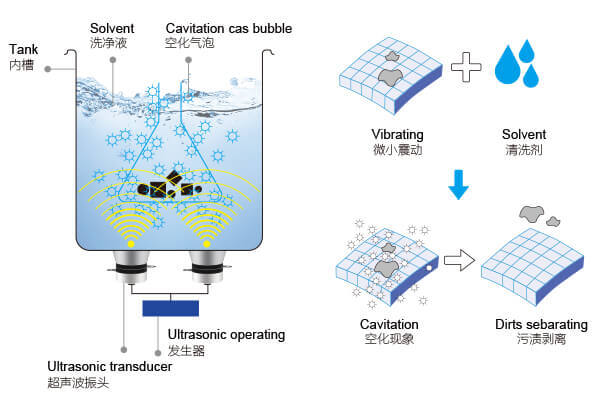
The Principle Behind Ultrasonic Cleaning
Mineral deposits from saliva, primarily calcium phosphate and calcium carbonate, accumulate on retainer surfaces over time. These deposits create rough, whitish areas that harbor additional bacteria and cause aesthetic concerns. Ultrasonic cavitation combined with appropriate cleaning solutions breaks down mineral bonds and lifts deposits from plastic and metal surfaces effectively.
Comparison with Manual Cleaning Methods
Manual brushing provides surface-level cleaning but struggles to reach areas between wires and acrylic, around clasps, and within textured regions molded to fit tooth surfaces. Bristles cannot penetrate tight spaces without potentially damaging delicate structures. Studies on dental appliance cleaning show ultrasonic methods remove significantly more bacteria from complex geometries compared to brushing alone.
Soaking retainers in cleaning tablets or solutions softens deposits and provides some antimicrobial action but lacks mechanical cleaning force. The chemical action works slowly and incompletely on established biofilm. Combining soaking with ultrasonic cavitation accelerates cleaning and enhances overall effectiveness, particularly for retainers with heavy buildup.
The non-contact nature of ultrasonic cleaning eliminates wear from repeated brushing. Plastic retainers maintain optical clarity longer when cleaned ultrasonically since the process avoids the micro-scratching that occurs with brush bristles, even soft ones. This preservation of surface smoothness also reduces future bacterial adhesion since roughened surfaces provide more colonization sites.
Cleaning Performance Across Retainer Types
Different retainer designs respond variably to ultrasonic cleaning based on their construction and materials. Hawley retainers, featuring metal wires embedded in molded acrylic, benefit extensively from ultrasonic cleaning since cavitation reaches around wire bends and into the junction between metal and plastic where manual cleaning proves difficult. The rigid construction withstands cavitation forces without damage.
Clear plastic retainers, typically vacuum-formed from thermoplastic material, also clean effectively in ultrasonic units. The smooth surfaces release biofilm readily under cavitation, and the material thickness provides adequate structural strength. However, very thin sections near edges may require gentler cleaning parameters to prevent stress-related cracking in aged or previously damaged retainers.
Bonded retainers, permanently fixed to teeth with dental adhesive, cannot undergo ultrasonic cleaning in portable devices since removal remains impossible. These fixed appliances require professional cleaning during dental visits using specialized ultrasonic scalers designed for intraoral use.
Retainer Material Compatibility
Hawley Retainers and Metal Components
Hawley retainers combine stainless steel wire components with heat-cured acrylic resin. Both materials demonstrate excellent compatibility with ultrasonic cleaning. Stainless steel resists corrosion from water-based cleaning solutions and withstands cavitation forces indefinitely. The acrylic resin used in orthodontic appliances possesses sufficient hardness and chemical resistance for repeated ultrasonic exposure.
The metal-acrylic interface, where wire embeds into the molded plastic, represents a potential vulnerability. Poor manufacturing may leave microscopic gaps where bacteria accumulate. Ultrasonic cleaning effectively flushes these interface regions, but excessive heat or aggressive cleaning solutions could potentially weaken the mechanical bond over extended time periods. Using appropriate temperatures and retainer-safe detergents prevents these issues.
Adjustment clasps and springs made from stainless steel wire maintain their tension and shape through normal ultrasonic cleaning cycles. The cavitation forces remain far below the mechanical stress levels these components handle during daily use. Proper retainer design accounts for substantially higher forces than those encountered in cleaning applications.
Clear Plastic Retainers
Clear retainers manufactured from polyethylene terephthalate glycol (PETG), polypropylene, or polyurethane materials all tolerate ultrasonic cleaning when appropriate temperature limits are observed. These thermoplastics soften at elevated temperatures, with transition points typically between 60°C and 80°C depending on specific formulation.
Operating ultrasonic cleaners at or below 40°C ensures plastic retainers maintain dimensional stability. Higher temperatures accelerate cleaning but risk warping thin sections or causing overall deformation that affects fit. Most portable ultrasonic cleaners designed for personal use lack heating elements, operating at room temperature and eliminating heat-related risks.
The optical clarity of clear retainers depends on maintaining smooth, scratch-free surfaces. Ultrasonic cleaning preserves transparency better than abrasive cleaning methods. The gentle, non-contact cleaning action prevents the clouding that develops when micro-scratches scatter light. Retainers cleaned regularly with ultrasonic methods maintain aesthetic appearance longer than those subjected to repeated brushing.
Bonded and Permanent Retainers
Fixed lingual retainers bonded to the tongue-side of anterior teeth cannot be removed for cleaning in tabletop ultrasonic units. These permanent retainers require different maintenance approaches, primarily professional cleaning with intraoral ultrasonic scalers during dental hygiene appointments.
Attempting to clean fixed retainers with standard ultrasonic jewelry cleaners or personal devices proves impossible due to tank size limitations and the need for the appliance to be fully immersed. Home care for bonded retainers relies on manual cleaning with specialized floss threaders, interdental brushes, and water flossers to maintain hygiene between professional cleanings.
How Ultrasonic Technology Addresses Retainer Contamination
Bacterial Biofilm Removal
Oral bacteria colonize retainer surfaces within hours of placement, forming complex biofilm communities. Species commonly found include Streptococcus mutans, Lactobacillus, and Candida albicans. These microorganisms produce acids and enzymes that can degrade retainer materials while contributing to oral health issues if the contaminated appliance reintroduces bacteria continuously.
Ultrasonic cavitation disrupts biofilm structure mechanically, separating bacterial cells from surfaces and from each other. The protective extracellular matrix that makes biofilm resistant to antimicrobials becomes vulnerable to physical disruption. Research on dental appliance cleaning demonstrates that ultrasonic treatment reduces bacterial counts by 95% to 99% when combined with appropriate antimicrobial solutions.
The three-dimensional cleaning action reaches all exposed surfaces simultaneously. Unlike directional brushing that cleans only where bristles contact, cavitation bubbles form throughout the liquid medium, creating uniform cleaning pressure on all immersed surfaces. This complete coverage ensures bacteria have no protected refuges where colonies can persist and regenerate.
Calcium and Mineral Deposit Elimination
Salivary minerals precipitate onto retainer surfaces, particularly in areas of lower saliva flow where concentration increases through evaporation. These deposits create rough, porous surfaces that accelerate bacterial colonization and appear unsightly. The deposits bond tenaciously to both plastic and metal components, resisting removal by simple rinsing.
Ultrasonic cavitation combined with mildly acidic or chelating cleaning solutions breaks the ionic bonds securing mineral deposits to retainer surfaces. The cavitation provides mechanical energy while the chemical solution weakens deposit structure. This combination removes established calculus that would otherwise require scraping with dental instruments, a process unsuitable for home care.
Regular ultrasonic cleaning prevents heavy deposit formation by removing minerals before they accumulate into thick layers. Daily or every-other-day ultrasonic treatment maintains retainers in near-original condition, while less frequent cleaning allows deposits to harden and become progressively more difficult to remove.
Food Particle and Debris Extraction
Food particles lodge in retainer crevices despite rinsing after meals. These particles decompose, providing nutrients for bacterial growth and causing odors. The complex geometry of retainers, especially Hawley types with multiple wire bends and acrylic textures, creates numerous sites where debris becomes trapped.
Cavitation bubbles form and collapse in all liquid-filled spaces, creating turbulent micro-currents that flush debris from confined areas. This action dislodges particles wedged between wires and acrylic, stuck in textured regions molded to tooth anatomy, or adhering to surfaces through protein films. The loosened debris floats free into the cleaning solution for disposal.
The effectiveness of debris removal depends partly on particle size and lodging force. Firmly impacted material may require pre-rinsing or initial manual removal before ultrasonic cleaning can extract remaining fragments. Combining a preliminary rinse with ultrasonic cleaning optimizes debris removal across all particle sizes.
Optimal Operating Parameters for Retainer Cleaning
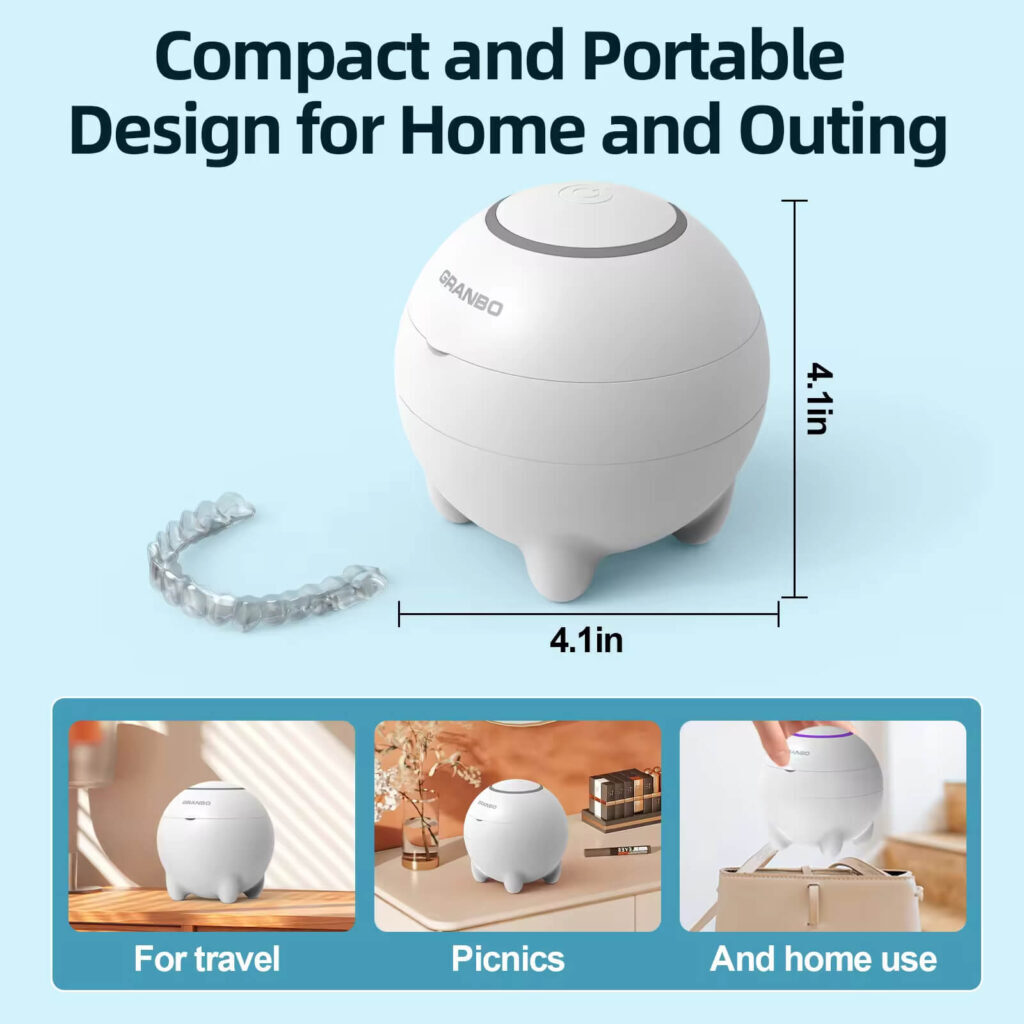
Click to view: UV Ultrasonic Cleaner for Dental Appliances – 360° Deep Clean for Dentures, Jewelry & Household Items, 48kHz Frequency, 3 Modes
Frequency Selection for Dental Appliances
Ultrasonic cleaners designed for retainers and other dental appliances typically operate at frequencies between 48 kHz and 68 kHz. This frequency range generates cavitation bubbles sized appropriately for cleaning orthodontic appliances, creating effective cleaning action while remaining gentle enough to protect delicate plastic and metal components. The smaller bubbles produced at these frequencies penetrate intricate retainer geometries without causing material stress.
Lower frequencies around 40 kHz produce larger, more aggressive cavitation bubbles better suited to industrial cleaning applications or heavily soiled robust parts. While these frequencies clean effectively, the more vigorous cavitation may pose unnecessary risks to thinner plastic sections in retainers over extended use periods.
Higher frequencies above 68 kHz create even smaller bubbles with extremely gentle action, used primarily for delicate optical components or precision instruments requiring minimal cleaning force. While completely safe for retainers, these higher frequencies may clean less efficiently for typical biofilm and mineral deposit removal compared to the 48 kHz to 68 kHz range optimal for dental appliances.
Some professional-grade dental ultrasonic cleaners offer frequency modulation or sweep functions, varying the output across a narrow range to prevent standing wave formation. This technology provides more uniform cleaning throughout the tank volume but offers minimal practical advantage for small items like retainers compared to fixed-frequency units operating within the recommended dental appliance range.
Temperature Requirements
Room temperature operation, approximately 20°C to 25°C, provides safe and effective cleaning for all retainer types. The cavitation process generates slight temperature increase during operation, typically raising solution temperature by 5°C to 10°C over a 10-minute cleaning cycle. This modest warming enhances cleaning effectiveness without approaching temperatures that could deform thermoplastic materials.
Heated ultrasonic cleaners offering temperature control should be limited to 35°C to 40°C maximum when cleaning plastic retainers. Higher temperatures accelerate chemical cleaning action and reduce solution viscosity for improved cavitation, but the risk of plastic deformation increases substantially above 40°C. Stainless steel components tolerate higher temperatures without issue, but plastic elements determine safe operating limits.
Cold water cleaning remains effective but requires slightly longer cycle times to achieve results equivalent to warm operation. Users without heated units can pre-warm cleaning solution using hot tap water, allowing cooling to safe temperatures before starting the ultrasonic cycle. This approach provides temperature benefits without requiring specialized equipment.
Cleaning Cycle Duration
Standard cleaning cycles of 3 to 8 minutes provide thorough cleaning for retainers with normal daily accumulation. This duration allows sufficient time for cavitation to reach all surfaces and dislodge typical contamination. Retainers removed and cleaned daily require shorter cycles than those worn continuously for multiple days between cleaning sessions.
Heavily soiled retainers with visible deposits or strong odors benefit from extended cycles up to 10 to 12 minutes, possibly repeated after changing to fresh cleaning solution. The first cycle removes loosened surface contamination, while a second cycle with clean solution addresses underlying deposits. This two-stage approach prevents removed contamination from redepositing onto partially cleaned surfaces.
Excessive cleaning duration provides no additional benefit and may unnecessarily expose retainers to prolonged cavitation stress. Cycles beyond 15 minutes offer diminishing returns for standard contamination levels. Retainers requiring such extended cleaning likely need professional evaluation for damage or degradation affecting cleanability.
Cleaning Solution Selection
Water-Only Cleaning Limitations
Plain water provides the medium necessary for cavitation bubble formation and allows mechanical cleaning action to occur. Water-only ultrasonic cleaning removes loosely attached debris, some biofilm, and light surface contamination. However, water lacks antimicrobial properties and cannot chemically break down protein films, dissolve mineral deposits, or neutralize odors effectively.
The cleaning performance of water alone decreases significantly for retainers worn beyond a single day or those with established contamination. Bacterial biofilm in particular requires either antimicrobial chemical action or more aggressive mechanical disruption than water-based cavitation provides. Mineral deposits remain largely unaffected by water-only cleaning.
Water serves adequately for post-cleaning rinse cycles, where the objective involves removing cleaning solution residues rather than addressing contamination. Final rinses with fresh water ensure no chemical residues remain on retainers before reinsertion into the mouth.
Retainer-Safe Detergent Formulations
Specialized retainer cleaning solutions formulated for ultrasonic use combine antimicrobial agents, proteolytic enzymes, and mild chelating compounds. These products address the specific contamination types found on dental appliances while maintaining compatibility with both plastic and metal components. The formulations include surfactants selected for low-foaming characteristics under ultrasonic agitation.
Enzyme-based cleaners break down protein films and organic matter that bind bacteria to surfaces. Proteases target proteins, amylases address starches, and lipases work on fats and oils. This multi-enzyme approach handles the diverse organic contamination present in the oral environment. Enzymes function optimally at moderate temperatures, making them well-suited to room-temperature ultrasonic cleaning.
Antimicrobial ingredients including cetylpyridinium chloride, chlorhexidine, or sodium hypochlorite at appropriate concentrations reduce bacterial viability during and after cleaning. The combination of mechanical biofilm disruption through cavitation and chemical antimicrobial action provides superior sanitization compared to either method alone.
Solutions to Avoid
Strongly acidic cleaners like vinegar or CLR can attack metal components and degrade certain plastics used in retainer construction. While diluted vinegar shows antimicrobial properties, its acidity may weaken plastic over repeated exposures. The acetic acid can also corrode solder joints in some Hawley retainer designs, though modern construction typically uses more resistant materials.
Highly alkaline solutions including strong detergents or bleach concentrations above recommended levels can cause plastic crazing, discoloration, or brittleness. Bleach-based cleaners require careful dilution and limited exposure time to prevent material damage. Following manufacturer recommendations for dilution ratios ensures safety when using products containing sodium hypochlorite.
Abrasive additives or cleaning compounds designed for hard surface cleaning should never be used in ultrasonic retainer cleaning. These products may contain particles that scratch plastic surfaces or chemicals incompatible with oral appliances. Only solutions specifically labeled for dental appliance or retainer cleaning guarantee appropriate formulation for safe use.
Proper Cleaning Procedures
Pre-Cleaning Preparation
Rinsing retainers under running water before ultrasonic cleaning removes loose debris and surface residues. This preliminary step prevents gross contamination from immediately fouling the cleaning solution, allowing the ultrasonic cycle to focus on bonded biofilm and deposits rather than free-floating particles. A 30-second rinse under lukewarm water suffices for daily-worn retainers.
Inspecting retainers for damage before cleaning identifies cracks, loose wires, or other issues that might worsen during cleaning. While ultrasonic cleaning generates relatively gentle forces, pre-existing damage could propagate under repeated cavitation stress. Damaged retainers require professional repair before continuing use or cleaning.
Preparing cleaning solution according to product instructions ensures proper concentration. Over-dilution reduces effectiveness, while excessive concentration wastes product and may leave residues. Most retainer cleaning solutions require dilution ratios between 1:10 and 1:20, creating sufficient cleaning power while maintaining economy and safety.
Positioning Retainers in the Tank
Placing retainers in the ultrasonic cleaning basket or directly in the tank requires attention to positioning. Retainers should remain fully immersed in solution with all surfaces exposed to liquid. Placing items flat on the tank bottom or leaning against walls creates areas shielded from cavitation where cleaning effectiveness decreases.
Using the provided cleaning basket suspends retainers in the solution’s active zone where cavitation intensity peaks. The basket prevents items from vibrating against the tank bottom, reducing wear on both the retainer and tank surfaces. Baskets also simplify removal after cleaning cycles complete, particularly when handling multiple items.
Avoid overcrowding the tank when cleaning multiple retainers simultaneously. Items touching each other receive reduced cleaning at contact points and may transfer contamination between appliances. Spacing items to prevent contact ensures complete exposure to cavitation action and prevents cross-contamination.
Post-Cleaning Rinsing and Drying
Thoroughly rinsing retainers after ultrasonic cleaning removes residual cleaning solution and dislodged contamination. Running water rinse for 30 to 60 seconds under lukewarm tap water flushes away chemical residues that could cause taste issues or oral irritation. Some users prefer a final rinse with distilled water to prevent mineral spotting on clear retainers in hard water areas.
Air drying on a clean towel allows complete moisture evaporation before storage or reinsertion. Storing damp retainers in closed cases promotes bacterial and fungal growth, defeating the cleaning purpose. Allowing 10 to 15 minutes drying time typically suffices for complete evaporation from smooth plastic surfaces.
Inspecting cleaned retainers under good lighting confirms contamination removal and identifies any remaining problem areas. Persistent deposits or staining may indicate need for professional cleaning or replacement. Clean retainers should appear clear or uniform in color without visible debris, films, or rough deposits.
Safety Considerations and Limitations
Potential Risks to Retainer Materials
Excessive ultrasonic exposure could theoretically stress plastic materials, particularly at stress concentration points like sharp corners or thin sections. However, normal cleaning cycle durations pose negligible risk to properly manufactured retainers. The mechanical stress from daily wear and insertion/removal far exceeds ultrasonic cleaning forces.
Temperature represents a greater risk than cavitation for plastic retainers. Operating heated ultrasonic cleaners above recommended temperature limits can cause warping or dimensional changes affecting retainer fit. Following temperature guidelines prevents heat-related damage while allowing safe effective cleaning.
Aged or previously damaged retainers may show reduced tolerance to any cleaning method, including ultrasonic. Retainers beyond their intended service life or showing visible deterioration require gentle handling and potentially replacement rather than aggressive cleaning attempts to extend use.
Heat-Sensitive Component Protection
Retainers containing bonded attachments, elastic components, or decorative elements require temperature monitoring during ultrasonic cleaning. Some decorative additions use adhesives or materials with lower heat tolerance than the primary retainer structure. Maintaining cleaning solution below 35°C protects these sensitive elements.
Retainers custom-colored or personalized with embedded designs generally tolerate standard ultrasonic cleaning without color fading or design degradation. The pigments and decorative materials orthodontic manufacturers use account for cleaning requirements. However, aftermarket modifications or repairs using non-standard materials may not withstand repeated cleaning.
Frequency of Ultrasonic Cleaning
Daily ultrasonic cleaning provides optimal hygiene without excessive wear on retainer materials. The gentle cleaning action allows frequent use without accumulating damage over the typical retainer service life of 1 to 3 years. Cleaning after each day’s wear prevents contamination buildup and minimizes the aggressive cleaning needed for established deposits.
Less frequent ultrasonic cleaning, perhaps 2 to 3 times weekly, combined with daily rinsing or manual brushing, provides adequate hygiene for most users. This reduced schedule may extend cleaning solution life and reduce overall maintenance while maintaining acceptable appliance condition. Individual factors including saliva composition and wearing duration influence optimal cleaning frequency.
Excessive cleaning, multiple times daily, offers no hygiene advantage and unnecessarily shortens cleaning solution life. The protective effect of a morning cleaning persists throughout the day when retainers remain in the mouth or stored properly. Reserve multiple daily cleanings for special circumstances like visible contamination or after consuming particularly messy foods.
Maintenance and Long-Term Care
Daily vs. Deep Cleaning Protocols
Daily ultrasonic cleaning using moderate cycle times of 3 to 5 minutes with standard retainer cleaning solution maintains baseline hygiene. This routine prevents contamination accumulation and keeps retainers fresh-smelling and visually clean. Daily protocols require minimal time investment while providing maximum long-term benefit.
Weekly deep cleaning using extended 8 to 10 minute cycles, potentially with specialized descaling solutions for mineral deposit removal, addresses contamination that gradually accumulates despite daily maintenance. Deep cleaning tackles established deposits in hard-to-reach areas and thoroughly sanitizes all surfaces. This periodic intensive treatment maintains retainers in like-new condition.
Monthly professional evaluation, ideally during routine dental visits, ensures retainers remain in serviceable condition and identifies developing issues before they compromise appliance integrity. Dental professionals can assess fit, check for stress fractures, and provide specialized cleaning if necessary. Professional oversight optimizes retainer lifespan and function.
Combining Ultrasonic with Other Methods
Brushing retainers gently with soft-bristled toothbrushes and non-abrasive toothpaste provides supplemental cleaning between ultrasonic cycles. Light brushing addresses visible surface contamination and gives users tactile feedback about retainer condition. Avoiding excessive force prevents scratching while maintaining appliance appearance.
Soaking retainers in antimicrobial solutions overnight, separate from ultrasonic cleaning, provides extended chemical sanitization. Products containing chlorhexidine or other antimicrobials reduce bacterial counts through prolonged exposure. Combining overnight soaking 1 to 2 times weekly with daily ultrasonic cleaning offers comprehensive contamination control.
Regular professional cleaning during dental hygiene appointments complements home ultrasonic maintenance. Dental professionals can access stronger cleaning agents and specialized equipment inappropriate for home use. This combination of home and professional care maximizes retainer hygiene and longevity.
Signs of Retainer Degradation
Cloudiness or loss of optical clarity in clear plastic retainers indicates surface damage from scratching, chemical exposure, or material degradation. While some cloudiness results from micro-scratches that cleaning cannot reverse, sudden changes in clarity may signal incompatible cleaning products or excessive temperatures during ultrasonic cleaning.
Cracks, particularly near stress concentration points like wire embedment locations or sharp corners, indicate structural failure. Continuing to use or clean damaged retainers risks complete fracture and potential aspiration hazards. Cracks warrant immediate professional evaluation and likely retainer replacement.
Persistent odors despite thorough cleaning suggest material degradation allowing bacterial infiltration into the retainer structure, or damage creating impossible-to-clean contamination traps. Odorous retainers that remain malodorous after multiple ultrasonic cleanings require replacement regardless of structural integrity.
Frequently Asked Questions
Do ultrasonic cleaners actually clean retainers effectively?
Yes, ultrasonic cleaners effectively clean orthodontic retainers by using cavitation bubbles to remove bacterial biofilm, mineral deposits, and food debris from all surfaces including areas manual brushing cannot reach. The technology provides superior cleaning compared to brushing alone, removing 95% to 99% of bacteria when combined with appropriate antimicrobial cleaning solutions. The cavitation action penetrates wire bends, textured surfaces, and tight spaces characteristic of retainer designs.
Can ultrasonic cleaning damage my retainer?
Ultrasonic cleaning will not damage retainers when operated within appropriate temperature limits and using retainer-safe cleaning solutions. The cavitation forces remain well below the mechanical stresses retainers withstand during normal use. The primary risk involves excessive heat, which can warp plastic retainers. Maintaining cleaning solution below 40°C and using non-abrasive, pH-neutral solutions formulated for dental appliances ensures safe operation.
How often should I ultrasonic clean my retainer?
Cleaning retainers ultrasonically once daily provides optimal hygiene maintenance. This frequency prevents contamination buildup while avoiding excessive cleaning that offers no additional benefit. Alternatively, ultrasonic cleaning 2 to 3 times weekly combined with daily manual rinsing maintains adequate hygiene for most users. Individual factors including wearing duration and saliva characteristics may warrant more frequent cleaning.
What solution should I use to clean retainers in an ultrasonic cleaner?
Use cleaning solutions specifically formulated for dental appliances or retainers. These products contain antimicrobial agents, proteolytic enzymes, and mild chelating compounds designed to remove biofilm and deposits while remaining safe for plastic and metal retainer components. Avoid strongly acidic cleaners like vinegar or harsh alkaline products that could damage materials. Water alone provides minimal antimicrobial benefit though it supports mechanical cleaning action.
How long should I run the ultrasonic cleaner for retainers?
Run ultrasonic cleaning cycles for 3 to 8 minutes for daily cleaning of retainers with normal contamination. Heavily soiled retainers may benefit from extended cycles up to 10 to 12 minutes or repeated cleaning with fresh solution. Cycles beyond 15 minutes provide no additional cleaning benefit for typical contamination levels and unnecessarily expose retainers to prolonged cavitation stress.
Can I clean Hawley and clear retainers the same way?
Yes, both Hawley retainers with metal wire components and clear plastic retainers can undergo ultrasonic cleaning using identical procedures. Both retainer types tolerate the same frequency ranges, cleaning solutions, and cycle durations. The primary consideration remains temperature control to prevent plastic deformation, which applies to the acrylic base of Hawley retainers and the thermoplastic material of clear retainers equally.