 Granbo Sonic












Budget Ultrasonic Cleaners: Performance Reality Check
Browse Volume:51 Classify:Support
Budget ultrasonic cleaners flooding online marketplaces promise professional cleaning results at a fraction of premium model costs. These devices typically retail between $20 and $80, compared to professional units priced from $200 to several thousand dollars. The fundamental question for consumers weighing this purchase centers on whether these affordable alternatives deliver meaningful cleaning capability or represent wasted money on ineffective technology.
The ultrasonic cleaning market has expanded dramatically over the past decade. Consumer models now account for millions of units sold annually through Amazon, eBay, and direct-from-China platforms. This proliferation creates genuine confusion about performance expectations. Understanding what budget cleaners can and cannot accomplish helps buyers make informed decisions aligned with their actual needs.

Click to View: Ultrasonic Cleaner for Dental Appliances – 360° Cleaning for Dentures, Jewelry & Household Items, Simple Operation, Affordable Home Use
What Defines a Cheap Ultrasonic Cleaner
Price Ranges in the Market
The ultrasonic cleaner market segments into distinct price tiers reflecting substantial differences in construction quality and performance capability. Entry-level models under $30 typically feature the most basic components and minimal power output. Mid-range budget units between $30 and $80 incorporate slightly better transducers and digital controls. Professional-grade machines starting around $200 employ superior materials, multiple transducers, and precise electronic controls.
Price strongly correlates with manufacturing standards and component quality. A $25 ultrasonic cleaner from an unknown brand uses completely different internal components compared to a $300 unit from an established manufacturer. The cheapest models often originate from factories prioritizing cost reduction over performance consistency. These production facilities may skip quality control testing that ensures every unit meets specified power output.
Geographic manufacturing origin significantly impacts reliability. Chinese factories dominate budget ultrasonic cleaner production, with quality varying enormously between reputable manufacturers and operations cutting every possible corner. Some budget brands source components from the same suppliers serving premium manufacturers but reduce costs through simplified designs and automated assembly with minimal inspection.
Construction and Component Quality Differences
Tank construction represents the most visible quality difference between cheap and professional cleaners. Budget models typically use thin stainless steel or even plastic tanks that flex during operation. This flexing absorbs ultrasonic energy, reducing cleaning effectiveness. Premium units feature thick-gauge stainless steel tanks with properly welded seams that efficiently transmit vibration.
Transducer quality varies dramatically across price points. Cheap cleaners often use single transducers with inconsistent bonding to the tank bottom. Professional models employ multiple transducers positioned to create uniform ultrasonic fields throughout the cleaning chamber. Poor transducer bonding causes premature failure and creates dead zones where items receive minimal cleaning action.
Electronic controls in budget models rely on basic timing circuits and simple power regulation. More expensive units incorporate microprocessor controls that maintain stable frequency output and precise temperature management. These sophisticated electronics compensate for voltage fluctuations and adjust power delivery as solution conditions change during operation.
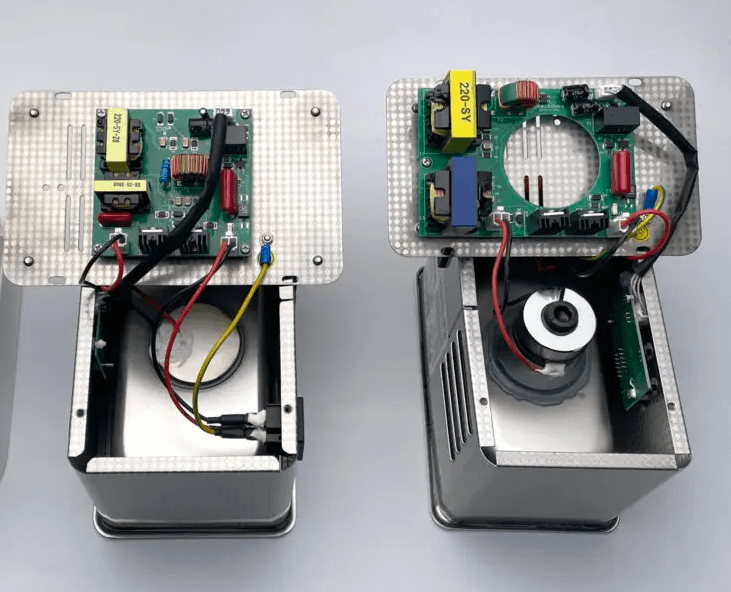
Internal structure comparison of ultrasonic cleaners
Core Performance Factors That Matter
Transducer Power and Configuration
Actual ultrasonic power output determines cleaning effectiveness more than any other factor. Manufacturers of cheap cleaners frequently exaggerate power specifications or cite electrical consumption rather than actual ultrasonic output. A budget cleaner claiming 50 watts might deliver only 15 to 20 watts of actual ultrasonic energy to the cleaning solution. Premium models provide honest specifications verified through laboratory testing.
Testing methodology reveals the truth about power output. Filling a cleaner with water and measuring temperature rise over a specific time period indicates actual energy transfer. Budget models typically show much lower heating rates compared to their advertised specifications. Professional units consistently meet or exceed their stated power ratings.
Single-transducer designs concentrate ultrasonic energy in limited areas while leaving dead zones with minimal cleaning action. Items positioned in these dead zones emerge partially cleaned regardless of cycle duration. Multi-transducer professional cleaners distribute energy more uniformly throughout the tank. This uniform distribution ensures consistent results for all items in a batch.
Transducer mounting quality affects both performance and longevity. Cheap cleaners sometimes use adhesive bonding that fails within months of regular use. Professional models employ brazed or welded transducer attachment that survives years of continuous operation. Failed transducers render the cleaner useless, transforming it into an expensive paperweight.
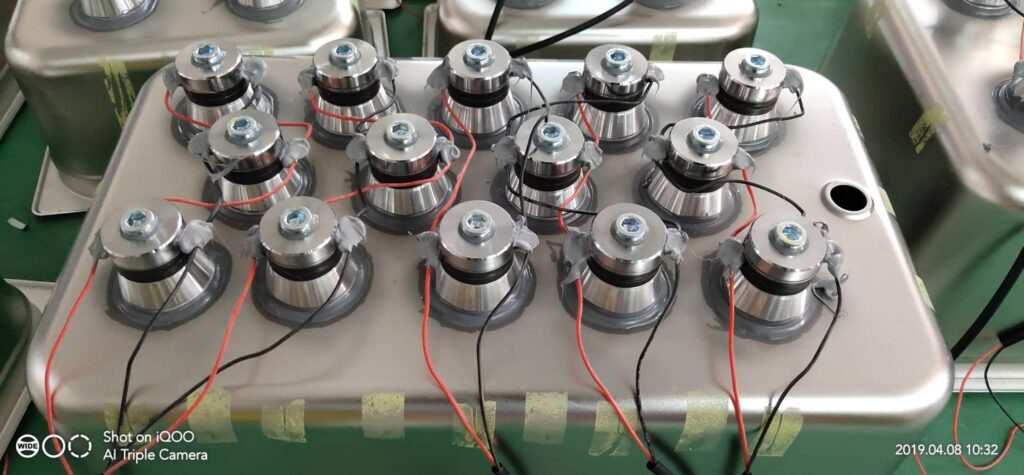
Ultrasonic cleaning machine transducer
Frequency Output and Stability
Most ultrasonic cleaners operate at 40 kHz, suitable for general-purpose cleaning applications. Budget models struggle to maintain stable frequency output during operation. Frequency drift reduces cleaning efficiency and causes uneven results between cycles. Professional units incorporate frequency-locked circuitry that holds output within tight tolerances regardless of load conditions.
Lower-quality ultrasonic cleaners may exhibit frequency instability due to simpler generator designs, causing the operating frequency to drift from the nominal value (e.g., 40 kHz) under varying loads and temperatures. This can reduce cavitation efficiency and increase energy loss as heat. In contrast, higher-quality units use more stable drive circuits to maintain tighter frequency control and more consistent cleaning performance.
Some budget cleaners use mechanical timers that introduce electrical noise into the ultrasonic circuit. This noise further degrades frequency stability and power consistency. Digital controls in better models eliminate timer-induced interference. The resulting clean power delivery maximizes cavitation intensity throughout the cleaning cycle.
Frequency stability becomes critical for sensitive items like electronic components or delicate jewelry. Unstable frequency output can damage fragile items through excessive localized cavitation. Professional cleaners used in electronics manufacturing must meet strict frequency tolerance specifications. Budget units cannot reliably meet these requirements.
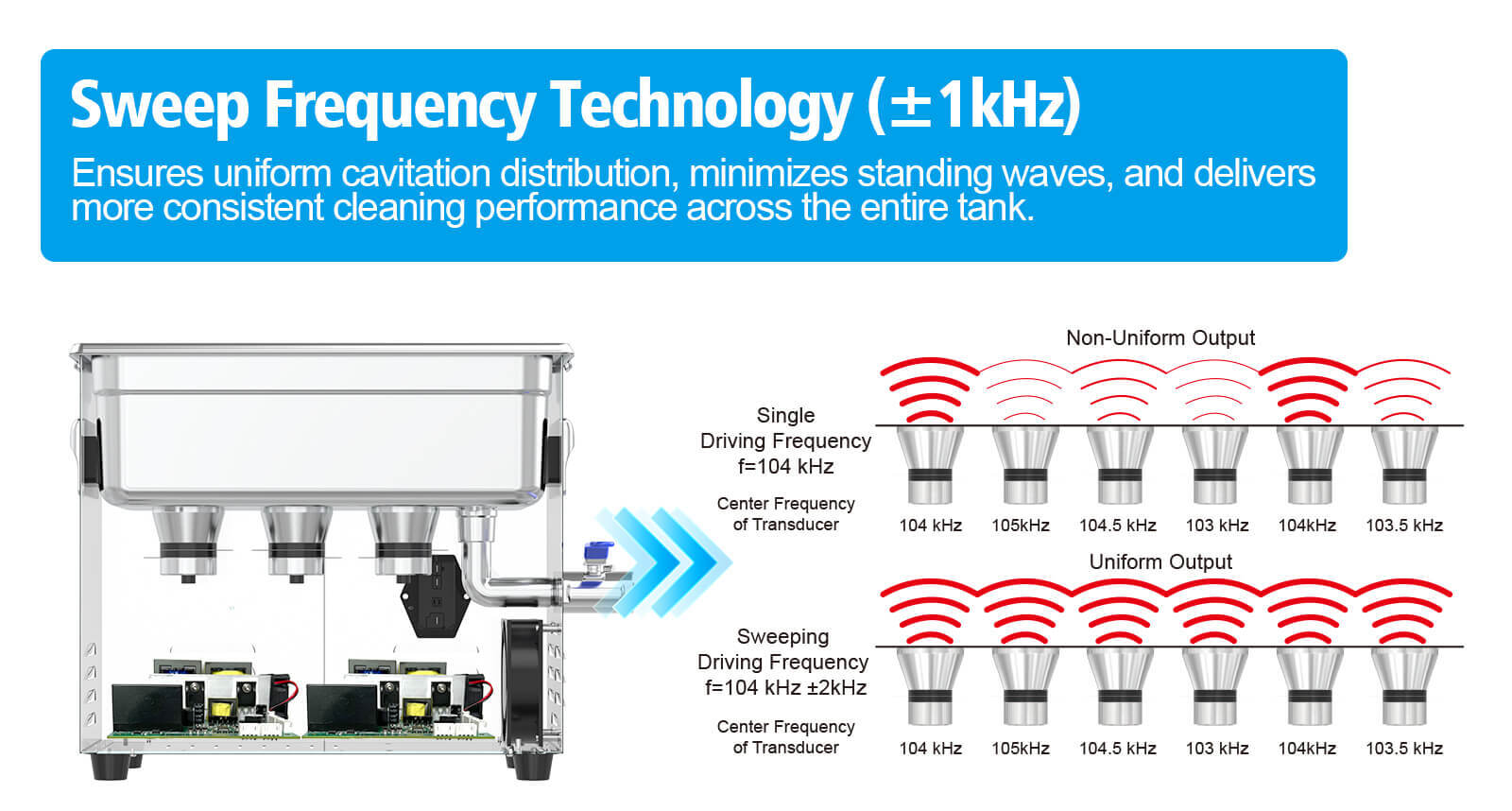
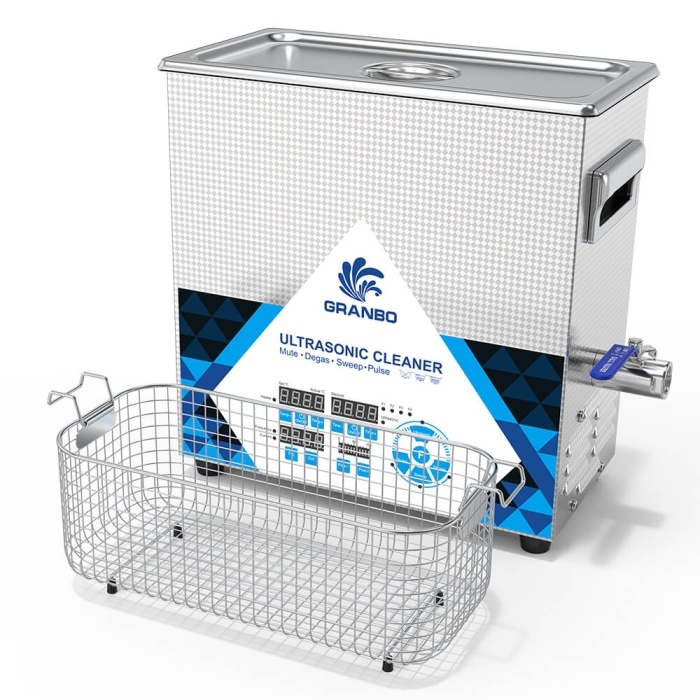
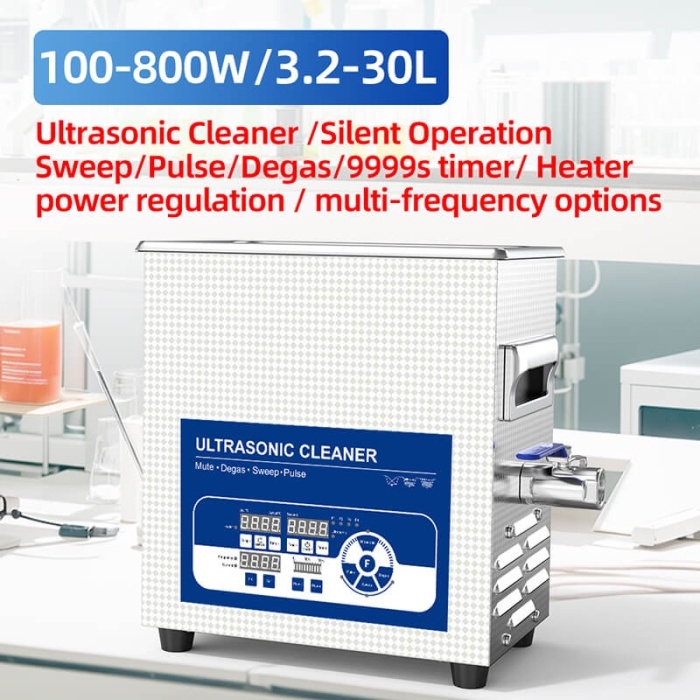
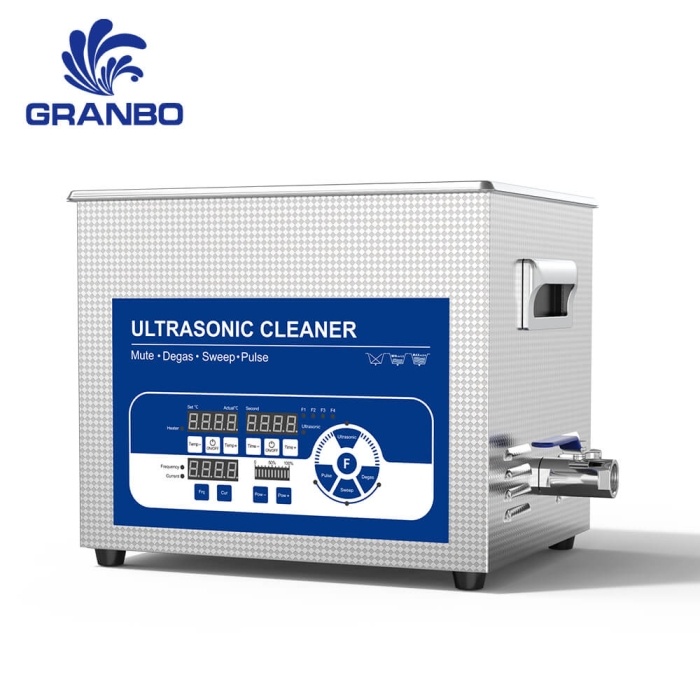
Granbo GL Series Ultrasonic Cleaner with Sweep Frequency Technology (±1 kHz) ensures uniform cavitation, eliminates standing waves, and delivers consistent cleaning performance throughout the tank.
Tank Construction and Durability
Tank capacity and geometry influence cleaning effectiveness independent of power output. Shallow rectangular tanks common in cheap cleaners create limited depth for proper ultrasonic field development. Professional tanks feature greater depth and optimized dimensions that enhance cavitation intensity. The ratio between tank dimensions and operating frequency affects performance substantially.
Stainless steel quality varies between grades with different corrosion resistance and acoustic properties. Budget cleaners often use 201 stainless steel, which corrodes more readily than the 304 grade found in professional equipment. Corrosion pitting on internal surfaces disrupts ultrasonic transmission and creates cleaning inconsistencies. The cost difference between steel grades is minimal but impacts long-term performance.
Seam welding quality determines tank longevity under ultrasonic stress. Cheap cleaners sometimes exhibit pinhole leaks along seams after several months of use. These leaks result from inadequate weld penetration or improper seam preparation during manufacturing. Professional tanks feature continuous welds with full penetration that survive years of daily operation.
Tank capacity specifications can mislead buyers about practical cleaning volume. A 600ml tank cannot effectively clean items filling the entire volume. Proper ultrasonic cleaning requires items to occupy roughly 60% of tank capacity for adequate solution circulation. Budget cleaner marketing often ignores this limitation when promoting capacity claims.

Ultrasonic Cleaning Tank
Testing Budget Models Against Real Cleaning Tasks
Jewelry Cleaning Results
Consumer jewelry represents the most common application for budget ultrasonic cleaners. Testing cheap models with tarnished silver rings, grimy gold chains, and dirty diamond earrings reveals both capabilities and limitations. Light soil removal from recently worn jewelry shows acceptable results after 1 to 3 minute cycles using proper jewelry cleaning solution.
Heavily tarnished silver pieces present greater challenges for budget cleaners. A sterling silver bracelet neglected for months showed only partial tarnish removal after three consecutive cleaning cycles in a $30 ultrasonic unit. The same item emerged completely clean after a single cycle in a professional jewelry cleaner. The power difference becomes obvious when confronting stubborn contamination.
Diamond rings with accumulated soap scum and lotion residue in prong settings respond moderately well to budget cleaners. The ultrasonic action reaches into crevices better than manual brushing but lacks the intensity to remove truly baked-on deposits. Users often need to pre-soak items or run multiple cycles to achieve satisfactory results.
Gold chains with intricate links clean more effectively in budget units compared to solid pieces. The numerous surfaces and complex geometry benefit from ultrasonic penetration even at lower power levels. Chains emerge noticeably brighter after proper cleaning cycles. This application represents one of the better success stories for cheap ultrasonic technology.
Electronics and Small Parts Performance
Circuit board flux removal tests reveal significant performance gaps between budget and professional cleaners. A motherboard with moderate rosin flux residue showed incomplete cleaning after 10 minutes in a budget ultrasonic cleaner with isopropyl alcohol. Flux remained visible around component leads and under surface-mount packages. The weak cavitation intensity could not dislodge stubborn flux deposits.
Small mechanical parts like watch screws, springs, and gears demonstrate mixed results in cheap cleaners. Loose dirt and oil film remove adequately given sufficient time. Baked-on grease or corrosion products resist the weak ultrasonic action even after extended cycles. Watchmakers using budget cleaners for hobby work report acceptable results for routine maintenance but acknowledge limitations for serious restoration projects.
Eyeglass frames and lenses represent appropriate applications for budget ultrasonic cleaners. The relatively easy cleaning task matches well with limited power output. Frames emerge clean after 3 to 5 minute cycles using eyeglass cleaning solution. Users report satisfaction with results comparable to professional optical shop cleaning. This application represents the sweet spot for budget cleaner capability.
Dental retainers and orthodontic appliances clean reasonably well in budget units using denture cleaning tablets dissolved in warm water. The combination of chemical and ultrasonic action removes daily accumulation of plaque and food particles. Dental professionals still recommend professional cleaning equipment for thorough sanitization, but budget models serve adequately for daily maintenance between professional cleanings.
Eyeglasses and Personal Items
Eyeglasses represent ideal items for budget ultrasonic cleaners due to their simple cleaning requirements. Fingerprints, skin oils, and dust remove easily under even modest ultrasonic action. Testing multiple cheap cleaners with various eyeglass types showed consistently good results. Frames with nose pads and intricate temples benefited particularly from ultrasonic penetration into tight spaces.
Shaver heads and electric toothbrush components respond well to budget ultrasonic cleaning. Hair clippings and dried toothpaste dissolve readily in warm soapy water enhanced with ultrasonic agitation. Users report extended appliance life through regular ultrasonic maintenance. The convenience factor makes budget cleaners worthwhile for this application despite their limitations elsewhere.
Coins and small collectibles present mixed results depending on contamination severity. Lightly soiled modern coins emerge clean after short cycles. Heavily oxidized coins or those with mineral deposits show minimal improvement even after extended cleaning. Serious numismatists recognize that budget cleaners cannot replace professional conservation techniques for valuable specimens.
Razor blades and small tools benefit from quick cleaning cycles that remove cutting residues and extend usable life. The ultrasonic action reaches into blade serrations and tool crevices better than rinsing alone. This represents practical everyday use where budget cleaners provide genuine value despite their performance limitations on more demanding tasks.
Where Budget Cleaners Actually Succeed
Appropriate Use Cases for Low-Cost Units
Budget ultrasonic cleaners perform adequately when cleaning requirements align with their limited capabilities. Personal jewelry maintenance between professional cleanings represents the most appropriate application. Users cleaning their wedding rings or everyday jewelry once or twice weekly find budget models entirely sufficient. The light soil accumulation matches well with modest power output.
Hobby electronics work tolerates budget cleaner limitations when expectations remain realistic. Hobbyists cleaning a few circuit boards monthly accept that multiple cycles or manual follow-up might be necessary. The cost savings compared to professional equipment justify the performance compromise for non-critical applications.
Home users cleaning small quantities of items occasionally benefit from budget models despite performance gaps. Someone cleaning their eyeglasses and watch weekly, plus occasional jewelry pieces, gains genuine utility from a $40 cleaner. The limited usage frequency means reduced reliability concerns, and the modest cleaning requirements suit available power output.
Retail environments like optical shops or jewelry stores using ultrasonic cleaners only for quick customer service find budget models marginally acceptable. These businesses must balance equipment costs against infrequent usage. A budget cleaner serving three to five customers daily might survive several years before requiring replacement, making the economics work despite inferior performance.
Realistic Expectations for Home Users
Home users purchasing budget ultrasonic cleaners should expect cleaning times 50% to 100% longer than professional equipment for equivalent results. What cleans in three minutes with professional equipment might require six to eight minutes in a budget unit. This extended time proves acceptable for occasional home use but becomes frustrating in commercial settings.
Pre-treatment and manual assistance often supplement budget cleaner performance. Users learn to pre-soak heavily soiled items, brush visible debris before ultrasonic cleaning, or run multiple cycles for stubborn contamination. These workarounds enable acceptable results despite equipment limitations. Professional equipment minimizes or eliminates such supplementary efforts.
Temperature management represents another realistic expectation adjustment. Budget cleaners lack heating elements, relying on ultrasonic energy to gradually warm the solution. Users achieve better results by starting with warm tap water rather than cold. Some add near-boiling water to maintain optimal temperature throughout cleaning cycles. Professional heated units eliminate this manual temperature management.
Cleaning solution selection becomes more critical with budget equipment. Premium cleaning solutions engineered for ultrasonic applications partially compensate for weak cavitation intensity through enhanced chemical action. Users investing in quality solutions improve budget cleaner performance significantly. Generic dish soap provides poor results compared to purpose-formulated ultrasonic cleaning concentrates.
Occasional Use Scenarios
Seasonal or occasional cleaning applications suit budget ultrasonic cleaners better than daily use requirements. Someone cleaning their skiing goggles three times per winter, plus occasional jewelry cleaning, experiences adequate performance without durability concerns. The limited duty cycle prevents premature failure common with continuous operation.
Hobbyists engaging in activities requiring occasional parts cleaning find budget models economically sensible. Model builders cleaning airbrush components monthly or rock collectors preparing mineral specimens quarterly use ultrasonic cleaners too infrequently to justify professional equipment investment. The performance limitations matter less than the substantial cost savings.
Vacation home or recreational vehicle applications work well with budget cleaners. Equipment stored unused most of the year faces minimal wear despite potentially marginal build quality. Owners clean items when needed without concerns about equipment sitting idle for extended periods. Professional models would represent over-investment for such limited usage.
Gift purchases for family members with modest cleaning needs make budget ultrasonic cleaners appropriate. Someone buying a cleaner for elderly parents to maintain their eyeglasses and dentures finds a $35 unit perfectly adequate. The recipients gain convenience without requiring high-performance cleaning capability or bearing the cost of professional equipment.
Critical Limitations of Cheap Units
Power Output Deficiencies
Real-world power output testing reveals budget cleaner weaknesses most dramatically. Laboratory measurements using calorimetry methods show many cheap models delivering 40% to 60% of advertised power. A cleaner marketed as 50 watts might produce only 20 to 25 watts of actual ultrasonic energy. This substantial shortfall directly impacts cleaning effectiveness.
Cavitation intensity in budget cleaners often proves insufficient for removing stubborn contamination. Visual observation of aluminum foil erosion tests demonstrates this limitation clearly. Professional cleaners perforate foil within 30 seconds through intense cavitation. Budget models require three to five minutes to achieve similar erosion patterns, indicating substantially weaker cavitation intensity.
Dead zones within cleaning tanks become more pronounced in cheap cleaners using single transducers. Items positioned in tank corners or edges receive minimal ultrasonic exposure regardless of cycle duration. Users must reposition items and run additional cycles to achieve complete cleaning. Professional multi-transducer designs eliminate this frustrating limitation.
Power consistency degrades as budget cleaners age. Transducer bonding failures and electronic component drift reduce output over time. A unit that initially produced adequate results might clean progressively worse after six months of regular use. Professional equipment maintains performance specifications across years of service life.
Temperature Control Issues
Absence of temperature control in budget models creates significant performance variability. Solution temperature dramatically affects cleaning chemical activity and cavitation intensity. Professional units maintain optimal temperatures between 50°C and 65°C automatically. Budget cleaners rely on ambient temperature and ultrasonic heating, producing inconsistent results.
Cold solution temperatures reduce cleaning effectiveness substantially. A budget cleaner starting with cold tap water requires 10 to 15 minutes of operation before reaching temperatures that enable effective cleaning. Professional heated units reach optimal temperature within two to three minutes. This time difference matters enormously for commercial applications.
Overheating represents the opposite concern with budget cleaners lacking temperature monitoring. Extended operation without thermal protection can raise solution temperatures above safe limits for certain items or cleaning solutions. Plastic components may deform and some cleaning solutions lose effectiveness or release harmful vapors at excessive temperatures. Professional units incorporate thermal cutoffs preventing dangerous overheating.
Seasonal temperature variations affect budget cleaner performance more than premium models. Winter operation in unheated spaces produces notably worse results than summer performance. Users often fail to recognize temperature as the variable causing inconsistent cleaning outcomes. Professional equipment compensates automatically for ambient temperature differences.
Durability and Lifespan Concerns
Component failure rates in budget ultrasonic cleaners significantly exceed professional equipment. Consumer reviews frequently report failures within six to twelve months of regular use. Common failure modes include transducer detachment, timer malfunction, and power supply failure. These reliability issues transform apparent savings into false economy when replacement becomes necessary.
Transducer bonding represents the most common failure point in cheap cleaners. The adhesive or mechanical attachment between transducer and tank weakens through thermal cycling and vibration stress. Failed transducers cannot be economically repaired, requiring complete unit replacement. Professional brazed or welded transducer mounting survives indefinitely under normal operating conditions.
Electronic component quality in budget models uses consumer-grade parts rated for minimal duty cycles. Capacitors, switches, and circuit boards deteriorate rapidly under continuous operation or harsh environmental conditions. Professional cleaners employ industrial-rated components designed for years of daily operation. The component cost difference measures pennies but impacts reliability substantially.
Tank leakage develops in some budget cleaners after months of operation. Pinhole leaks along seams or at transducer mounting points render units unusable. Repair proves impractical given the low original purchase price. Professional tanks feature superior welding and leak testing during manufacturing, eliminating this frustrating failure mode.