 Granbo Sonic











Ultrasonic Cleaners and Jewelry: Technical Performance Analysis
Browse Volume:28 Classify:Support
Ultrasonic cleaning equipment demonstrates measurable effectiveness in removing surface contaminants from jewelry through high-frequency sound wave application. The technology operates through cavitation, a physical process where microscopic bubbles form and collapse within cleaning solution, generating localized pressure and temperature changes that dislodge tarnish, oils, and particulate matter from metal surfaces and intricate details. Understanding the underlying mechanisms and proper application parameters determines cleaning success while preventing potential damage to valuable pieces.
Understanding Ultrasonic Cleaning Technology
Cavitation Process and Mechanism
Granbo Ultrasonic Jewelry Cleaning
The fundamental cleaning action occurs when ultrasonic transducers convert electrical energy into mechanical vibrations at frequencies beyond human hearing range. These vibrations propagate through liquid cleaning solution, creating alternating zones of compression and rarefaction. During rarefaction phases, liquid pressure drops below vapor pressure threshold, forming microscopic vacuum bubbles. When these bubbles encounter compression zones milliseconds later, they collapse violently, producing localized forces exceeding 10,000 psi and momentary temperatures reaching several hundred degrees Celsius.
This implosion phenomenon generates intense scrubbing action at microscopic scale. Unlike manual cleaning methods that rely on macroscopic brush contact, cavitation reaches into crevices, chain links, prong settings, and engraved details where traditional tools cannot access. The bubble collapse occurs within microseconds, creating cleaning forces that break molecular bonds between contaminants and substrate surfaces without requiring physical abrasion.
Cavitation intensity correlates directly with frequency selection and power density. Bubble size inversely relates to operating frequency, with lower frequencies producing larger, more energetic bubbles and higher frequencies generating smaller, gentler cavitation events. This relationship necessitates careful frequency matching to substrate materials and contamination types.
Frequency Parameters and Their Effects
Operating frequency represents the most critical specification affecting jewelry cleaning outcomes. Standard ultrasonic cleaners designed for jewelry applications operate between 40 kHz and 68 kHz, with 40 kHz serving as the industry standard. This frequency range produces cavitation bubbles measuring approximately 70-90 micrometers in diameter, sized appropriately for penetrating jewelry details while maintaining gentle action on precious metal surfaces.
Lower frequencies between 25 kHz and 35 kHz generate larger bubbles that collapse with greater force. While this aggressive action proves effective for industrial degreasing and heavy-duty parts cleaning, the intensity may damage soft gemstones, loosen prong settings, or accelerate wear on antique pieces with thin metal sections. Equipment operating below 35 kHz typically targets industrial applications rather than delicate jewelry cleaning.
Higher frequencies above 80 kHz produce extremely fine cavitation suitable for semiconductor wafer cleaning and optical component processing. These gentle frequencies lack sufficient energy for effective tarnish removal from oxidized silver or for dislodging embedded dirt from ring settings. Some dual-frequency units offer both 40 kHz and 80 kHz operation, allowing frequency selection based on item fragility, though most jewelry cleaning occurs at the lower frequency setting.

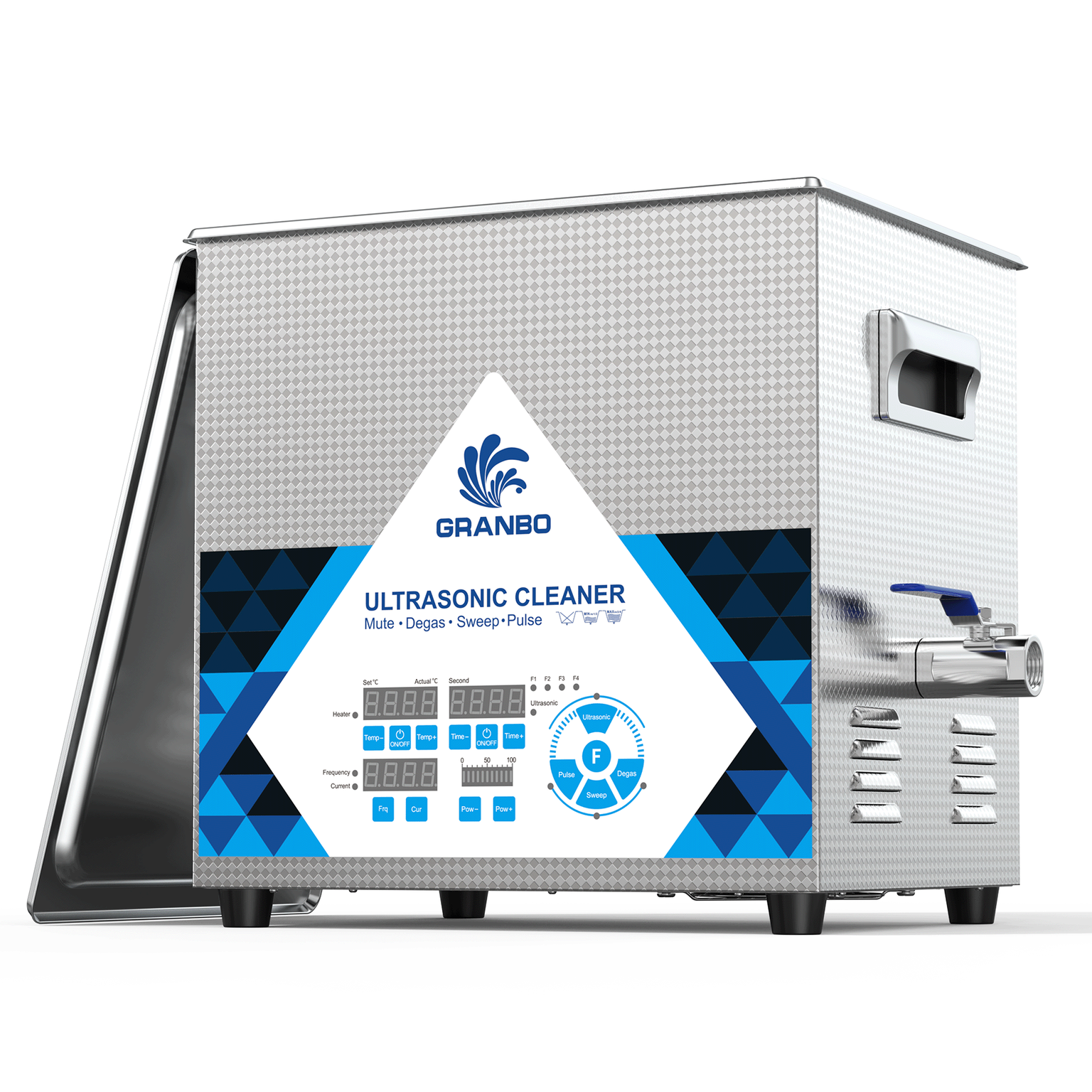
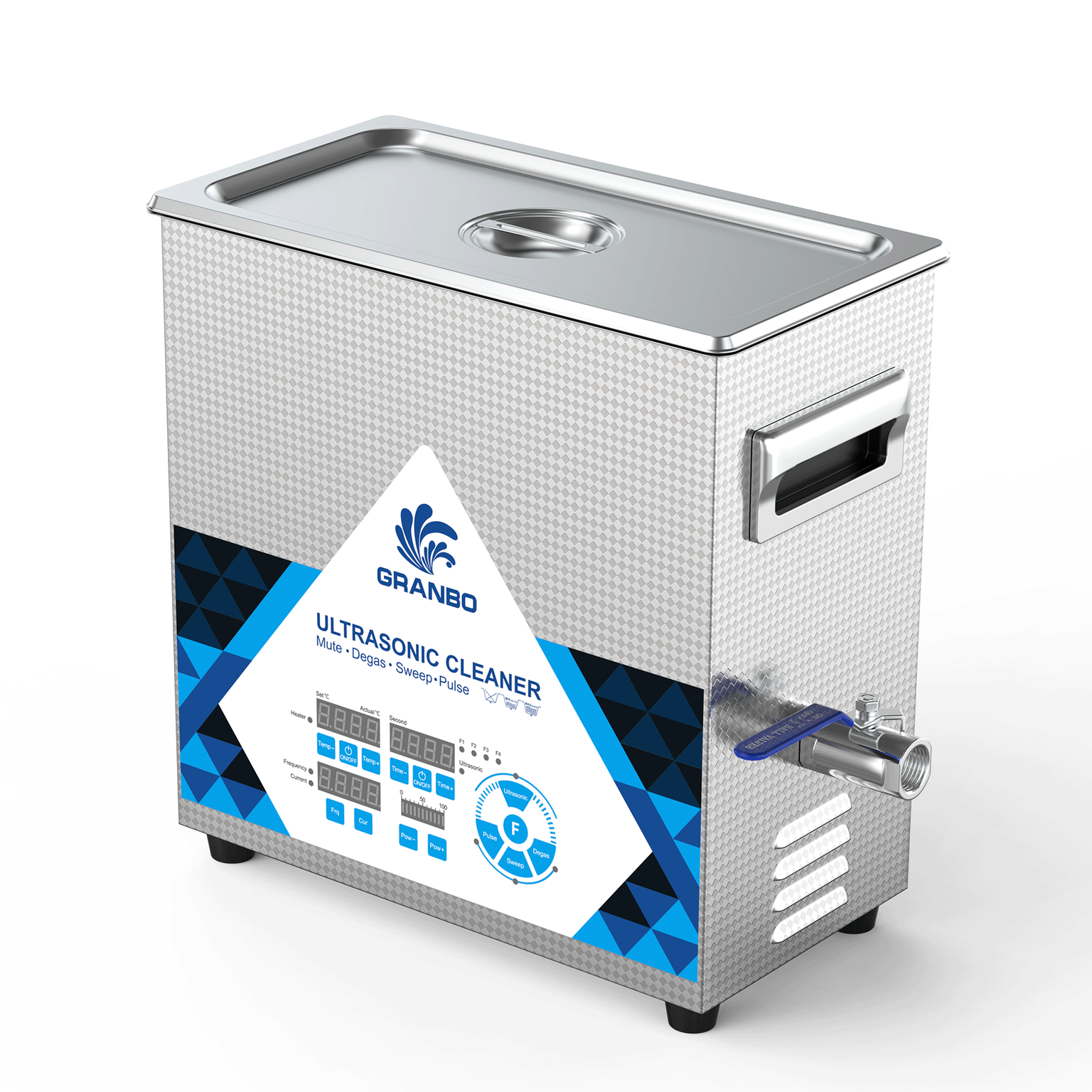
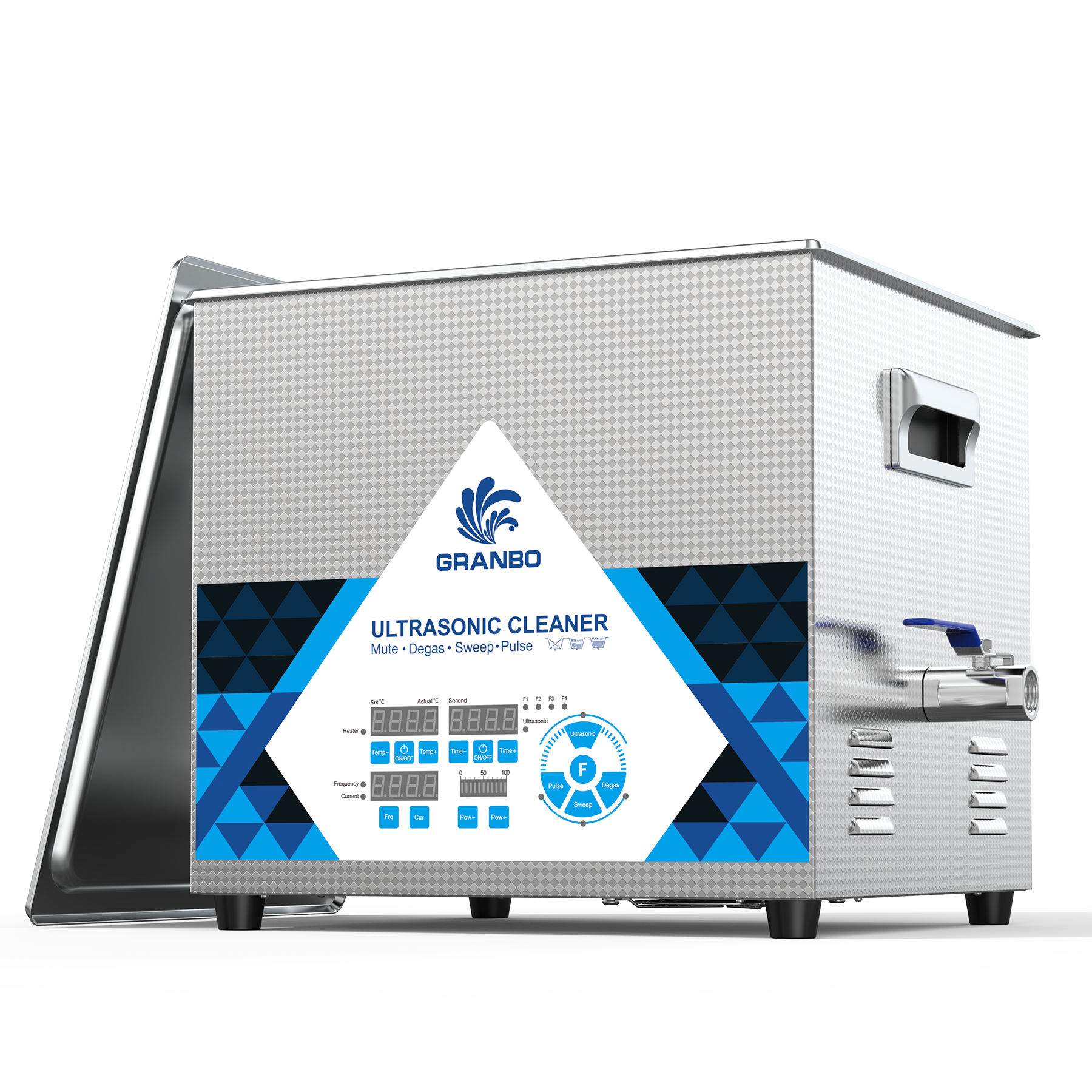
Click to view : Granbo GL Series Multi-Frequency Switchable Ultrasonic Cleaner
Performance on Different Jewelry Types
Sterling Silver and Precious Metals
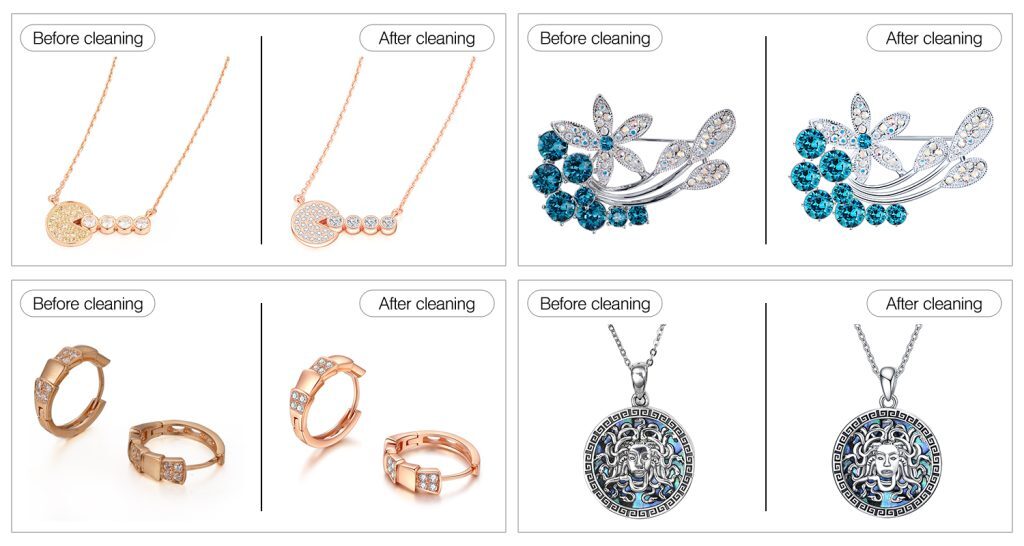
Ultrasonic cleaning demonstrates exceptional performance on sterling silver items affected by tarnish formation. Silver sulfide, the black compound forming when silver reacts with atmospheric sulfur, bonds chemically to metal surfaces. Cavitation forces effectively break these bonds when combined with appropriate cleaning solutions, restoring original luster without requiring abrasive polishing that gradually removes metal.
The porous nature of tarnish layers allows cleaning solution and cavitation bubbles to penetrate beneath contamination, lifting deposits from the substrate. Treatment duration of 3-8 minutes typically suffices for moderate tarnish removal, while heavily oxidized pieces may require solution replacement and secondary cycles. The process proves particularly effective for ornate silver pieces with filigree work, chain links, or detailed engraving where manual polishing proves impractical.
Solid gold jewelry responds similarly well to ultrasonic treatment. Gold’s chemical inertness prevents tarnish formation, but body oils, lotions, and environmental residues accumulate in settings and textured surfaces. These organic contaminants dissolve readily in mild detergent solutions when subjected to cavitation action. Gold’s hardness and malleability make it resistant to cavitation damage, allowing safe cleaning at standard frequencies.
Gold Alloys and Platinum
Alloy composition affects cleaning outcomes and safety margins. Yellow gold typically contains copper and silver as alloying elements, creating durable materials resistant to ultrasonic cleaning stress. White gold incorporates palladium or nickel with rhodium plating for color enhancement. The rhodium surface layer, while hard and durable, may show accelerated wear with excessive ultrasonic exposure if plating thickness falls below optimal specifications.
Platinum jewelry, valued for density and durability, tolerates ultrasonic cleaning exceptionally well. The metal’s natural white color requires no plating, eliminating concerns about surface coating degradation. Platinum’s hardness exceeds gold alloys, making it highly resistant to cavitation erosion. Professional jewelers routinely use ultrasonic cleaning for platinum pieces, including those with complex settings and multiple gemstones.
Vermeil items, consisting of sterling silver with gold plating, require cautious treatment. Plating thickness typically ranges from 1.5 to 2.5 micrometers, creating vulnerability to wear from repeated ultrasonic exposure. While single cleaning cycles pose minimal risk, frequent processing or extended duration may gradually thin plating. Lower power settings and reduced cycle times help preserve plated surfaces.
Gemstone Compatibility Considerations
Gemstone durability determines ultrasonic cleaning suitability. The Mohs hardness scale provides initial guidance, but crystalline structure, cleavage planes, and existing fractures prove equally important. Diamonds, sapphires, and rubies demonstrate excellent ultrasonic compatibility due to crystalline strength and hardness exceeding 9 on the Mohs scale. These stones withstand cavitation forces without structural damage, and the cleaning process effectively removes dirt accumulation around pavilion facets that diminish brilliance.
Emeralds present complications despite hardness ratings around 7.5 to 8. Most natural emeralds contain internal fractures filled with oils or resins during manufacturing processes. Ultrasonic vibrations may dislodge these fillers, revealing the underlying fissures and diminishing stone appearance. Reputable equipment manufacturers explicitly warn against ultrasonic cleaning of emeralds, recommending gentle manual cleaning with soft brushes instead.
Organic gemstones including pearls, coral, amber, and ivory suffer damage from ultrasonic treatment. These materials lack the crystalline structure of mineral gemstones, instead consisting of calcium carbonate, fossilized resin, or organic compounds vulnerable to vibration stress. Pearls particularly risk nacre layer delamination, while amber may develop surface crazing. Opals, though mineral-based, contain significant water content within their structure. Cavitation vibrations can disrupt this water, causing color degradation or crazing in the stone’s surface.
Technical Specifications for Jewelry Cleaning
Optimal Frequency Ranges
Manufacturers design jewelry-specific ultrasonic cleaners around the 40 kHz to 68 kHz frequency band based on empirical testing and material science principles. This range creates cavitation bubbles sized appropriately for jewelry scale details while limiting mechanical stress on delicate components. The bubble collapse energy at these frequencies provides sufficient force to break contamination bonds without generating the violent action associated with lower frequency industrial cleaners.
Some advanced units incorporate sweep frequency technology, varying output across a narrow band during operation. This variation prevents standing wave formation within the tank, where certain positions receive minimal cavitation due to wave interference patterns. Sweep functionality improves cleaning uniformity across the tank volume, though the enhancement proves subtle for typical jewelry cleaning applications. Fixed frequency operation at 40 kHz delivers consistent results for most users.
Dual-frequency equipment offering switchable operation at two discrete frequencies provides flexibility for varying cleaning requirements. Common combinations include 40 kHz and 68 kHz, allowing users to select lower frequencies for standard jewelry cleaning with robust cavitation, or higher frequencies for extremely delicate items with fragile settings. Most jewelry cleaning occurs at the lower frequency setting.

Power Output Requirements
Ultrasonic power, measured in watts, determines cavitation intensity and effective cleaning volume. Power density, calculated as watts per liter of tank capacity, provides better comparison metric than absolute wattage. Effective jewelry cleaning requires minimum power density of 50 watts per liter, with optimal performance occurring between 75 and 150 watts per liter.
Household jewelry cleaners typically feature tank capacities between 400 and 800 milliliters with power outputs of 35 to 60 watts. These specifications produce power densities of 60 to 100 watts per liter, sufficient for rings, earrings, bracelets, and pendants. Compact units sacrifice cleaning speed and penetration depth for affordability and counter space economy. Small items clean adequately in 5 to 8 minutes, while heavily soiled pieces may require extended cycles or solution changes.
Professional jewelry equipment scaled for retail or manufacturing use incorporates larger tanks of 1.5 to 6 liters with proportionally increased power output. Units in this category deliver 120 to 300 watts, maintaining appropriate power density for larger volume operation. Multiple transducers distributed across tank bottom surfaces ensure uniform cavitation throughout the cleaning solution, preventing dead zones where items receive inadequate treatment.
Commercial equipment serving high-volume operations may exceed 10 liters capacity with 400 to 600 watts power output. These units often include additional features such as solution heating, programmable cycles, and automated parts handling. The increased power supports simultaneous cleaning of multiple items or processing of larger pieces such as serving trays and decorative objects.
Tank Capacity and Design
Tank geometry influences cleaning effectiveness through its impact on cavitation distribution. Rectangular tanks provide efficient space utilization and predictable wave propagation patterns. Circular or oval designs may concentrate cavitation energy toward tank centers, creating intensity variations. Quality manufacturers perform acoustic modeling during design phases to optimize transducer placement and minimize dead zones.
Stainless steel construction serves as industry standard for tank fabrication due to corrosion resistance, durability, and acoustic properties. Steel transmits ultrasonic vibrations efficiently while withstanding exposure to various cleaning solutions. Some economy models utilize plastic tanks, which function adequately but may degrade over time when exposed to heated cleaning solutions or aggressive chemicals.
Basket or tray systems suspend items above tank bottom, preventing direct contact with transducer surfaces. This positioning ensures items receive cavitation from all angles while avoiding vibration transmission through direct mechanical contact. Perforated baskets allow cleaning solution circulation around items while preventing small pieces from contacting tank surfaces or escaping through drain openings.
Cleaning Solution Chemistry
Cleaning agent
pH Balance and Metal Safety
Solution chemistry significantly affects cleaning performance and material safety. Pure water provides minimal cleaning action due to low contamination solubility and lack of chemical reaction with tarnish or organic deposits. Cleaning solutions must balance effectiveness against material compatibility, avoiding formulations that corrode metals or damage gemstones.
Neutral to mildly alkaline solutions with pH between 7 and 10 suit most jewelry applications. These formulations dissolve organic contaminants like oils and lotions while remaining safe for precious metals and most gemstones. Strongly alkaline solutions above pH 11 may tarnish certain metals or attack soft stones, while acidic solutions below pH 6 risk metal corrosion or pearl damage.
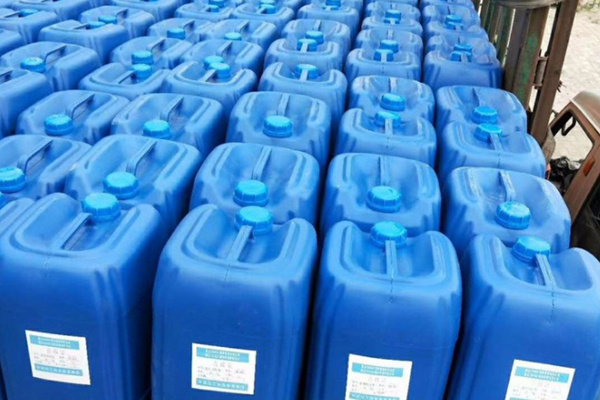
Commercial jewelry cleaning concentrates typically contain mild surfactants, chelating agents, and pH buffers. Surfactants reduce surface tension, allowing solution penetration into tight spaces while helping suspend removed contaminants. Chelating agents bind to metal ions in hard water, preventing mineral deposits on cleaned jewelry. pH buffers maintain consistent acidity throughout the cleaning cycle despite contamination introduction.
Detergent Formulations
Simple dish soap diluted in water serves as effective cleaning solution for routine jewelry maintenance. Concentration of 2 to 5 percent detergent to water provides adequate cleaning power without excessive foaming. High foam levels interfere with cavitation formation, reducing cleaning effectiveness. Low-foam or foam-free detergent formulations specifically designed for ultrasonic applications optimize performance.
Ammonia-based solutions demonstrate particular effectiveness for diamond cleaning, as ammonia dissolves the oily films that accumulate on diamond surfaces and reduce brilliance. Typical formulations combine one part household ammonia with six parts water. However, ammonia attacks certain gemstones including pearls, opals, and turquoise. This limitation necessitates careful material identification before solution selection.
Specialized tarnish removal formulations for silver jewelry incorporate mild reducing agents that chemically convert silver sulfide back to metallic silver. These solutions work synergistically with cavitation, combining chemical and mechanical tarnish removal for enhanced results. Formulations vary in aggressiveness, with some designed for light maintenance and others targeting heavy oxidation.
Temperature Control
Solution temperature affects cleaning performance through multiple mechanisms. Elevated temperatures increase molecular activity, enhancing contaminant solubility and chemical reaction rates. Warmer solutions reduce viscosity, improving cavitation efficiency and bubble collapse intensity. Most ultrasonic cleaners with heating capability operate between 50°C and 65°C for jewelry applications.
However, temperature increases must balance performance gains against material safety. Some gemstones risk thermal shock from rapid temperature changes, particularly those with internal fractures or strain. Opals and tanzanite demonstrate particular temperature sensitivity. Adhesives used in assembled jewelry or doublet gemstones may soften at elevated temperatures, risking stone displacement.
Room temperature cleaning proves adequate for routine maintenance of compatible jewelry items. Heated operation benefits heavily soiled pieces or when using cleaning formulations that require warmth for optimal effectiveness. Equipment without integrated heating allows manual temperature control through pre-warmed cleaning solution, though temperature naturally decreases during operation without active heating elements.
Operational Guidelines
Cycle Duration Standards
Optimal cleaning duration balances thoroughness against excessive exposure risk. Most jewelry items achieve satisfactory cleaning within 3 to 8 minutes of ultrasonic treatment. Light soil removal may require only 2 to 3 minutes, while heavy tarnish or embedded contamination benefits from 6 to 10 minute cycles.
Extended operation beyond 15 minutes provides diminishing returns, as most removable contamination dislodges within initial minutes. Continuing operation after contamination removal merely subjects jewelry to unnecessary vibration exposure, potentially loosening stone settings or accelerating wear on plated surfaces. Multiple short cycles with solution replacement prove more effective than single extended sessions for heavily soiled items.
Intermittent operation patterns enhance cleaning effectiveness compared to continuous cycles. Operating for 2 to 3 minutes, pausing for 30 seconds to allow contamination settling, then resuming treatment allows fresh solution contact with newly exposed surfaces. This approach proves particularly effective for layered contamination where outer deposits must release before inner accumulation becomes accessible.
Item Positioning Techniques
Jewelry placement within the cleaning basket affects results. Items should avoid touching each other or tank walls, as direct contact creates vibration pathways that bypass cleaning solution. Touching items may also cause scratching through vibration-induced movement, particularly when combining hard and soft materials.
Chains require special attention due to their tendency to tangle during vibration. Laying chains flat in the basket or loosely coiling them prevents knotting while ensuring all links receive cavitation exposure. Clasps and jump rings benefit from unobstructed positioning to allow cleaning solution penetration.
Heavily detailed items such as ornate rings or filigree brooches perform best when oriented to maximize contamination access. Positioning settings face-up or at angles allows dislodged debris to fall away rather than resettling in cleaned areas. Rotating items or performing multiple cycles with repositioning ensures comprehensive coverage of complex geometries.
Pre-Cleaning Preparation
Inspection before ultrasonic treatment identifies potential issues that require alternative cleaning approaches. Examining stones for security in their settings prevents loss from vibration-loosened prongs. Gently pressing stones while observing for movement indicates loose settings requiring repair before cleaning.
Visual examination reveals gemstone types that may prove incompatible with ultrasonic treatment. Identifying emeralds, opals, pearls, or other sensitive materials allows segregation for manual cleaning methods. Unknown stones warrant conservative treatment approaches, potentially testing ultrasonic compatibility on inconspicuous areas or selecting gentler alternatives.
Removing heavy soil through gentle brushing before ultrasonic treatment improves results and extends solution life. Pre-cleaning eliminates large particulates that would otherwise consume cleaning solution capacity and potentially resettle on jewelry during treatment. This preliminary step proves particularly valuable for items exposed to cosmetics, lotions, or environmental dust.
Granbo Ultrasonic Jewelry Cleaning Effect
Limitations and Material Restrictions
Incompatible Gemstones
Certain gemstone types demonstrate poor ultrasonic cleaning compatibility due to structural characteristics or treatments. Emeralds top the incompatibility list due to typical clarity enhancement through oil or resin filling of internal fractures. Ultrasonic vibrations dislodge these fillers, revealing fractures and degrading appearance. Tanzanite’s perfect cleavage planes create vulnerability to vibration stress, risking fracture propagation from microscopic inclusions.
Opals contain 3 to 20 percent water within their silica structure, essential for the stone’s play-of-color phenomenon. Ultrasonic vibrations can disrupt this water content or create micro-fractures, causing crazing or color loss. Turquoise, another porous stone, absorbs cleaning solutions that may alter color or introduce staining.
Organic materials including pearls, coral, amber, jet, and ivory lack compatibility with ultrasonic treatment. Pearl nacre layers may delaminate under vibration, while coral’s calcium carbonate structure proves vulnerable to chemical attack from cleaning solutions. Amber risks surface crazing, and ivory may develop structural cracks.
Adhesive-Set Stones
Modern jewelry manufacturing occasionally employs adhesive stone setting in addition to or instead of traditional mechanical prongs or bezels. Epoxy adhesives secure stones in channel settings, attach findings to flat-backed stones, or supplement mechanical settings for additional security. Ultrasonic vibrations may weaken adhesive bonds, particularly when combined with heated cleaning solutions that soften thermoplastic adhesives.
Doublet and triplet gemstones consist of multiple layers bonded with adhesive or optical cement. These assembled stones occur commonly with opals (creating doublets of thin precious opal atop backing material) and sapphires (assembled from multiple pieces). Ultrasonic treatment risks delamination at adhesive interfaces, destroying the assembled stone.
Costume jewelry frequently relies entirely on adhesive for rhinestone or glass stone attachment. This construction method proves fundamentally incompatible with ultrasonic cleaning, as adhesive bonds fail rapidly under cavitation exposure. Visual inspection for prong absence or backing material visibility helps identify adhesive-set pieces requiring alternative cleaning.
Antique and Delicate Pieces
Antique jewelry demands cautious evaluation before ultrasonic treatment. Age-related metal fatigue, thinning from decades of polishing, or deterioration of original construction techniques create vulnerabilities absent in modern pieces. Victorian-era jewelry with delicate wirework or granulation may experience structural damage from vibration intensity tolerated by contemporary pieces.
Enamel work, common in antique jewelry, demonstrates variable ultrasonic compatibility depending on application technique and current condition. Well-executed cloisonné or champlevé enamel with intact glass matrix generally withstands ultrasonic cleaning, while pieces with enamel crazing or previous damage risk further deterioration. Painted enamel or miniature portrait work may experience pigment lifting or adhesive failure.
Watches and items with mechanical components require component removal before ultrasonic cleaning. While watch parts themselves often undergo ultrasonic cleaning during servicing, assembled watches risk moisture infiltration, lubricant removal, or damage to delicate balance wheels and escapements. Removing watches from bracelets or chains before jewelry cleaning prevents inadvertent damage.
Common Issues and Solutions
Inadequate cleaning results typically stem from incorrect solution selection, insufficient power density, or excessive contamination loading. Switching to fresh cleaning solution or specialized formulations matched to contamination type often resolves performance issues. Verifying that tank capacity matches equipment power rating ensures adequate cavitation intensity throughout solution volume.
Excessive foam formation interferes with cavitation by creating gas pockets that absorb ultrasonic energy. Reducing detergent concentration or switching to low-foam formulations eliminates this issue. Adding small amounts of isopropyl alcohol to foaming solutions provides temporary foam suppression, though adjusting base formulation proves more effective long-term.
Items damaged during cleaning usually result from incompatible material selection rather than equipment malfunction. Reviewing gemstone compatibility and construction methods before processing prevents most damage scenarios. When damage occurs, examining affected items often reveals pre-existing vulnerabilities such as hairline cracks, loose settings, or incompatible materials that underwent treatment despite restrictions.
Inconsistent cleaning across tank area indicates dead zones where cavitation intensity falls below effective thresholds. Repositioning items, operating equipment on level surfaces, or verifying adequate solution depth resolves most distribution issues. Persistent problems may indicate transducer failure or suboptimal tank geometry requiring professional service or equipment replacement.
Ultrasonic cleaning technology delivers measurable performance advantages for jewelry maintenance when applied correctly. Understanding frequency requirements, material compatibility, solution chemistry, and operational parameters enables effective contamination removal while preserving valuable items. The technology excels at reaching complex geometries inaccessible to manual methods, providing efficient cleaning for compatible jewelry types. Respecting material limitations and following manufacturer guidelines ensures safe operation that maintains rather than damages precious possessions.