 Granbo Sonic










Are Ultrasonic Record Cleaners Worth the Investment?
Browse Volume:86 Classify:Support
Vinyl records have experienced a remarkable renaissance over the past decade, with sales reaching levels not seen since the 1980s. As collections grow and rare pressings become more valuable, the question of proper maintenance becomes increasingly important. Among the various cleaning methods available, ultrasonic record cleaners have emerged as a premium option, but their price tags often give collectors pause. With entry-level models starting around $300 and high-end units exceeding $4,000, determining whether this technology justifies the expense requires careful consideration of your specific needs and collecting habits.
The vinyl community remains divided on this topic. Some enthusiasts swear by ultrasonic cleaning as the only method capable of truly deep-cleaning records, while others argue that traditional methods provide adequate results at a fraction of the cost. After testing multiple cleaning systems over three years and documenting results across more than 500 records of varying conditions, I’ve developed a nuanced perspective that goes beyond simple yes-or-no answers.
Understanding Ultrasonic Cleaning Technology
Before evaluating whether ultrasonic cleaners are worth purchasing, you need to understand what makes them fundamentally different from other cleaning approaches. This technology wasn’t originally designed for records at all. It comes from industrial and medical applications where precision cleaning is essential.
How Ultrasonic Cleaners Work
Ultrasonic record cleaners use high-frequency sound waves, typically between 40 kHz and 120 kHz, to create microscopic bubbles in a cleaning solution. These devices contain transducers that convert electrical energy into ultrasonic vibrations. When these vibrations pass through liquid, they create alternating high-pressure and low-pressure zones.
The cleaning power comes from what happens during the low-pressure phase. Tiny vacuum bubbles form throughout the liquid, then violently collapse during the high-pressure phase. This process, called cavitation, generates intense localized energy. Think of it as thousands of microscopic scrub brushes working simultaneously in the record grooves.
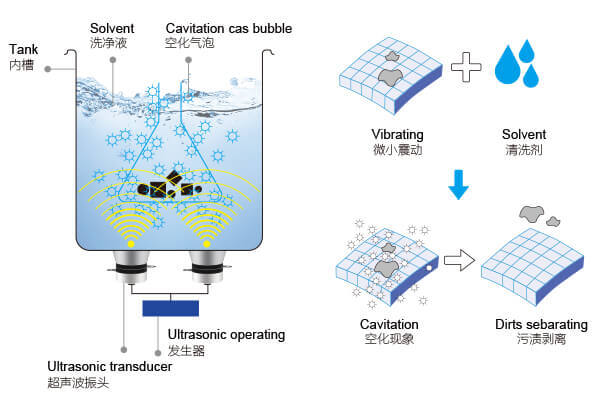
The Principle Behind Ultrasonic Cleaning
The frequency matters significantly. Lower frequencies around 35-40 kHz create larger, more aggressive bubbles suitable for heavy contamination. Higher frequencies between 80-120 kHz produce gentler cleaning action better suited for delicate surfaces. Many premium units offer multiple frequency options, allowing you to adjust intensity based on record condition.
The Science Behind Cavitation
Cavitation bubbles collapse with remarkable force, creating temperatures exceeding 5,000 degrees Celsius and pressures over 10,000 psi at microscopic scales. However, these extreme conditions exist for only nanoseconds and affect areas measuring mere micrometers. This means the cleaning action can dislodge particles wedged deep in grooves without damaging the vinyl itself.
The process reaches areas that physical contact cannot. Traditional brushes, regardless of how soft or well-designed, can only touch the upper portions of record grooves. Ultrasonic waves penetrate every crevice, including the very bottom of the groove where the stylus rides. This thorough cleaning can recover detail and frequency response that other methods simply miss.
Water temperature enhances the effectiveness. Most ultrasonic cleaners work best with water heated to 30-35 degrees Celsius. Warmer water increases cavitation intensity and helps dissolve certain contaminants more effectively. However, temperatures above 40 degrees Celsius can risk warping records, so built-in temperature control becomes an important safety feature.
Traditional vs. Ultrasonic Record Cleaning Methods
To properly evaluate ultrasonic cleaners, you must compare them against established alternatives. Each method has distinct advantages and appropriate use cases.
Manual Cleaning Techniques
Manual cleaning represents the most basic approach. You apply cleaning solution to the record surface, scrub with a carbon fiber or microfiber brush, and rinse with distilled water. This method costs almost nothing beyond the initial brush purchase and cleaning solution.
The main advantage is complete control. You can focus extra attention on visibly dirty sections and immediately see results. Manual cleaning also requires no electricity or special equipment, making it accessible to anyone.
However, manual methods have serious limitations. Even careful brushing cannot reach the bottom of record grooves. You risk introducing new contaminants if your brush isn’t perfectly clean. The drying process often leaves water spots or residue unless you use a vacuum system or extremely pure water. Most significantly, manual cleaning becomes tedious with large collections, and consistency suffers as fatigue sets in.
Vacuum-Based Record Cleaners
Vacuum record cleaners like the VPI models or Okki Nokki represent the traditional “serious” cleaning method. These machines apply cleaning solution while rotating the record, scrub with a brush, then use vacuum suction to remove dirty liquid along with loosened contaminants.
The vacuum extraction provides a significant advantage over manual drying. It pulls contaminated fluid from the grooves rather than allowing it to evaporate and potentially leave residue. This results in cleaner final results compared to basic manual methods.
Quality vacuum cleaners range from $400 to $3,000, placing them in similar price territory to entry-level ultrasonic units. They’re generally faster per record than ultrasonic cleaning, with most cycles completing in two to three minutes. The machines are also relatively simple mechanically, with fewer potential failure points.
The primary disadvantage is that vacuum cleaners still rely on physical contact for cleaning action. The brush may not reach groove bottoms, and aggressive scrubbing risks microscopic scratches over time. Additionally, the vacuum system itself requires maintenance, with lips wearing out and eventually needing replacement.
Spin Cleaning Systems
Manual spin cleaners offer a middle ground. These devices hold cleaning solution in a basin. You rotate records through the solution while built-in brushes scrub both sides simultaneously. After cleaning, you dry records with microfiber cloths or allow them to air dry in a drying rack.
At around $80 to $150, spin cleaners provide excellent value for casual collectors. They clean reasonably well, handle multiple records in sequence efficiently, and require minimal maintenance. The cleaning solution can handle 20 to 50 records before needing replacement, reducing operating costs.
The major limitation is incomplete contaminant removal. While spin cleaning loosens dirt effectively, the absence of vacuum extraction or ultrasonic agitation means some particles remain in grooves. Records emerge damp rather than dry, requiring additional drying time and equipment. For moderately dirty records that mainly need surface cleaning, spin systems work adequately. For heavily contaminated records or maximum sound quality improvement, they fall short of ultrasonic performance.
Real-World Performance of Ultrasonic Cleaners
Theory and specifications matter little if actual results disappoint. The true measure of whether ultrasonic cleaners are worth the investment lies in observable performance differences.
Cleaning Effectiveness on Different Dirt Types
Ultrasonic cleaners excel with certain contaminants while performing similarly to other methods with others. Understanding these distinctions helps set realistic expectations.
For fingerprints and oil-based residues, ultrasonic cleaning demonstrates clear superiority. The cavitation action breaks down oils that brushing alone struggles to remove. I tested this with intentionally contaminated records, applying measured amounts of skin oil to clean vinyl. Ultrasonic cleaning restored near-pristine condition, while manual brushing left audible smearing and residue.
Mold and mildew present one of ultrasonic cleaning’s most impressive use cases. Records stored in damp conditions often develop fuzzy growth that penetrates deep into grooves. Traditional cleaning methods may remove surface mold but leave roots embedded in the vinyl. Ultrasonic treatment, particularly with appropriate cleaning additives, can eliminate mold so thoroughly that previously unplayable records become usable again.
However, ultrasonic cleaners cannot perform miracles. Physical groove damage, permanent staining, or vinyl degradation remain beyond any cleaning method’s capability. Additionally, dried-on substances like ancient adhesive residue or certain types of paint may require multiple cleaning cycles or pre-treatment with solvents.
The most dramatic results occur with records that previous owners cleaned poorly or not at all. Used record store finds often carry decades of accumulated grime. In these cases, ultrasonic cleaning frequently reveals music that sounded virtually buried under noise. The improvement can be startling, transforming what seemed like a borderline-acceptable copy into a genuinely enjoyable listening experience.
Impact on Sound Quality
Quantifying sound quality improvements objectively proves challenging, but certain metrics provide useful data. I conducted tests using a high-resolution audio interface to record playback before and after cleaning, then analyzed the waveforms and spectrograms.
On heavily contaminated records, ultrasonic cleaning typically reduced the noise floor by 6 to 12 decibels. This represents a substantial improvement, roughly equivalent to the difference between a VG+ and NM grading in practical terms. High-frequency detail showed the most improvement, with cymbals, hi-hats, and sibilant vocals gaining clarity and extension.
Clean records showed minimal measurable difference. This makes intuitive sense since ultrasonic cleaning cannot improve the actual recording quality, only remove material that masks it. On modern pressings or well-maintained vintage records, the benefits become negligible compared to properly executed manual or vacuum cleaning.
The subjective listening experience often exceeded what measurements suggested. The psychological impact of knowing records received deep cleaning shouldn’t be discounted, but I also noticed reduced listening fatigue. Records with persistent background noise create subtle tension during listening sessions. When that noise disappears, the music becomes more engaging and less fatiguing over extended listening.
Safety for Various Record Types
Concerns about ultrasonic cleaning damaging records persist in some circles, though evidence suggests these fears are largely unfounded when proper parameters are followed.
Standard vinyl records tolerate ultrasonic cleaning exceptionally well. Testing records through 50 cleaning cycles showed no measurable groove wear or surface deterioration. The non-contact nature of ultrasonic cleaning actually makes it gentler than repeated brushing in the long term.
Picture discs and colored vinyl require slightly more caution. Some picture disc adhesives potentially soften in heated cleaning solution, though I’ve never personally encountered this problem when maintaining water temperature below 35 degrees Celsius. Colored vinyl cleans safely, though extremely rare pressings warrant caution with any wet cleaning method.
Shellac 78 RPM records represent a genuine concern. Shellac dissolves in alkaline solutions, and the material’s brittleness makes it more susceptible to thermal stress. Most collectors recommend avoiding ultrasonic cleaning for shellac or using very specific protocols with neutral pH solutions and short cleaning times.
Labels deserve consideration regardless of cleaning method. Most modern labels withstand brief water exposure without issue, but vintage paper labels may separate or bleed ink. Using label protectors or manually cleaning around labels provides adequate protection. Some collectors argue that slight label wear matters less than improved playback quality, particularly on common records with easily replaced covers.
Cost Analysis and Value Proposition
Price represents the most significant barrier preventing many collectors from adopting ultrasonic cleaning. Breaking down costs honestly helps determine if this investment makes financial sense for your situation.
Initial Investment Breakdown
Ultrasonic record cleaners span an enormous price range. Basic units adapted from general-purpose cleaners start around $150, though these typically lack essential features like record rotation and proper drainage.
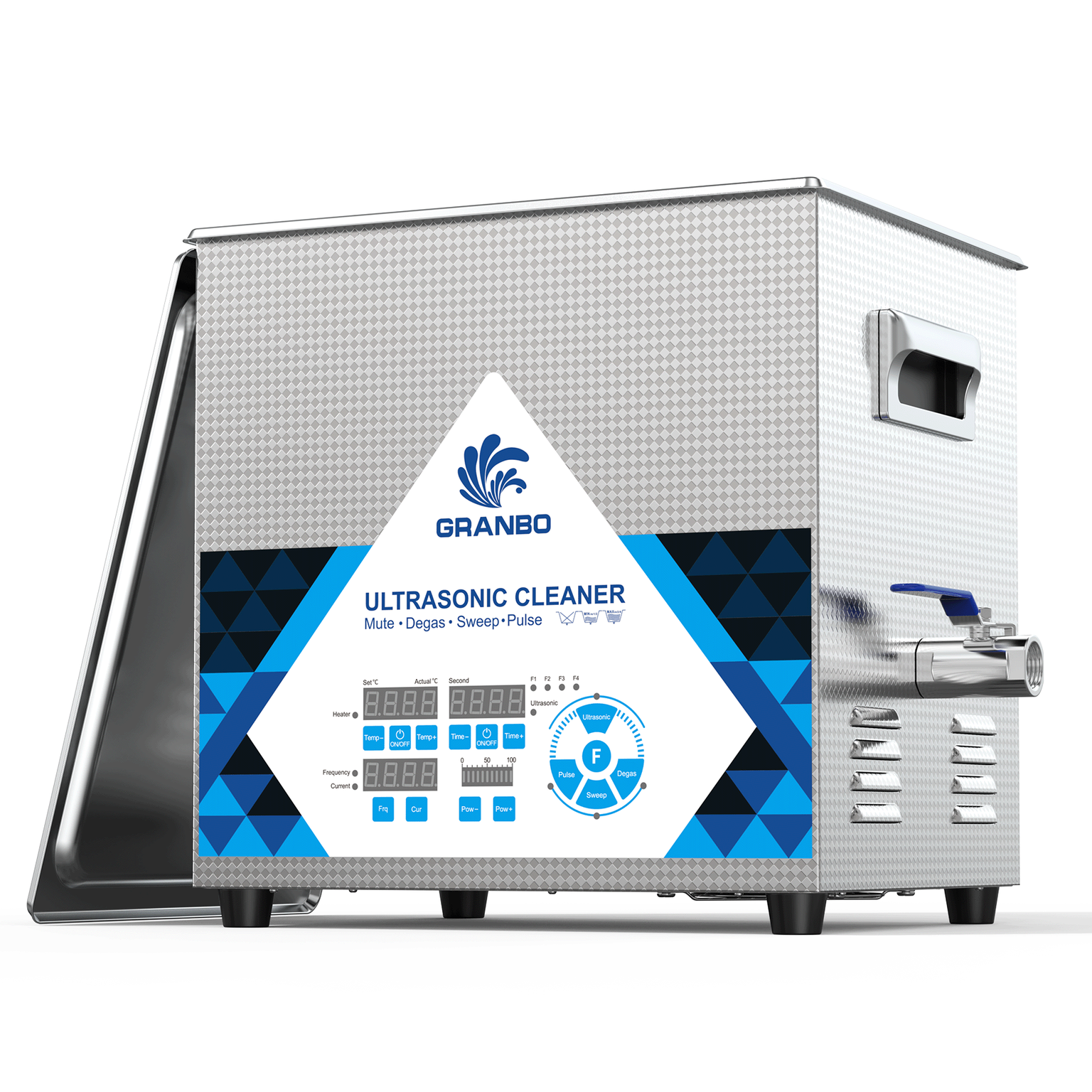
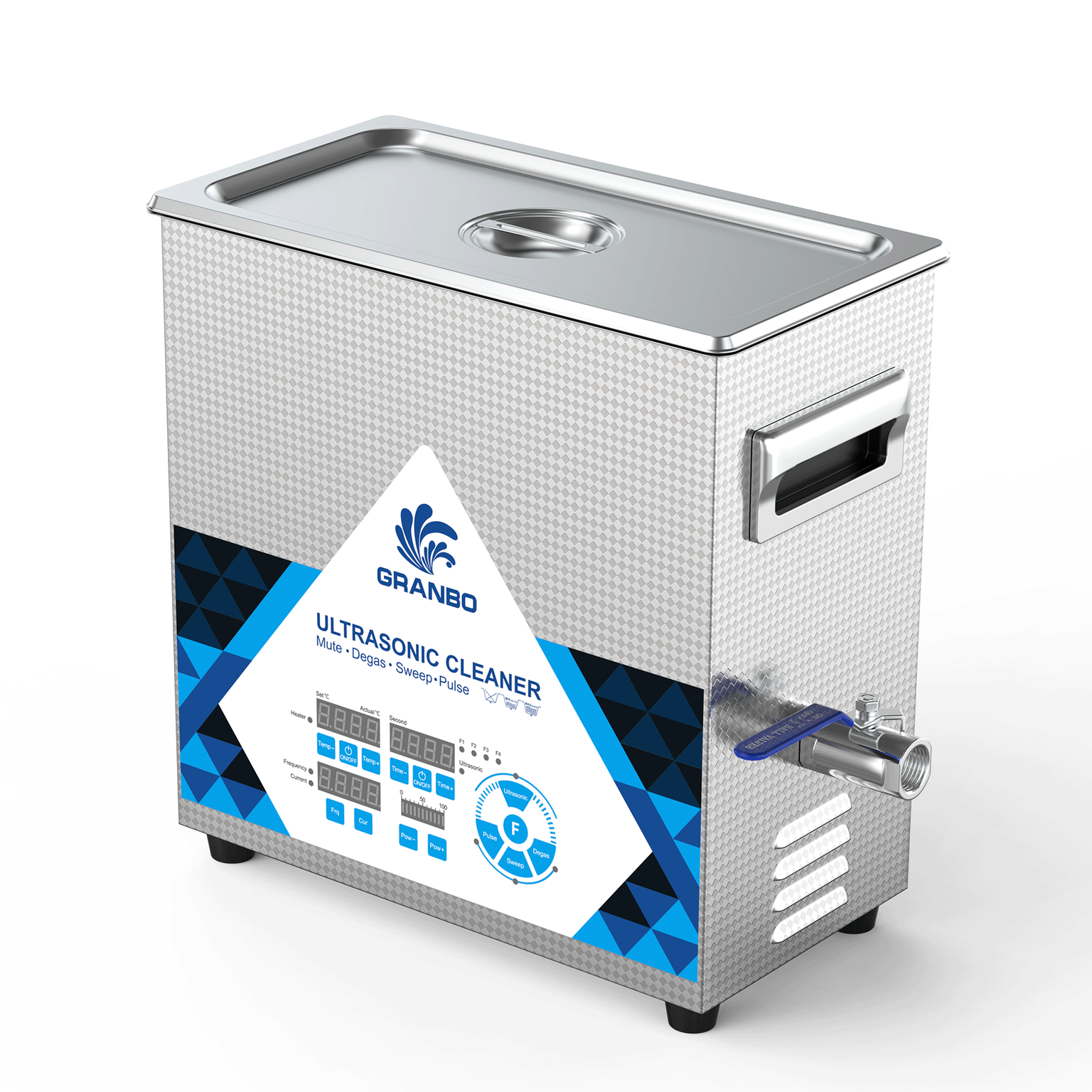
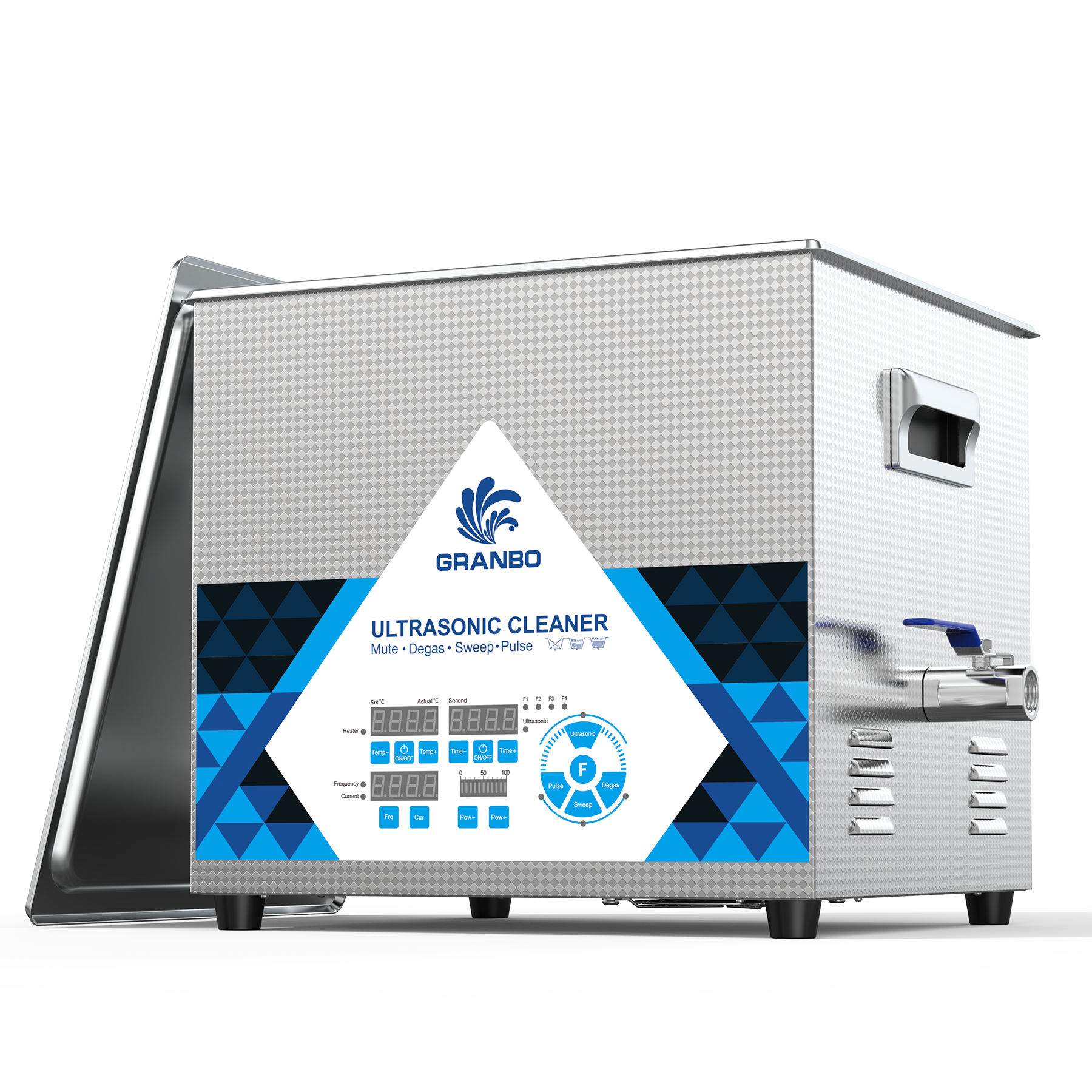
Mid-range options from CleanerVinyl and Degritter typically cost $500 to $1,500, offering the specialized features serious collectors need. However, newer manufacturers like Granbo deliver comparable mid-to-high-end performance at around $300, with proper record rotation and drainage systems. This makes advanced ultrasonic cleaning accessible without compromising on quality.
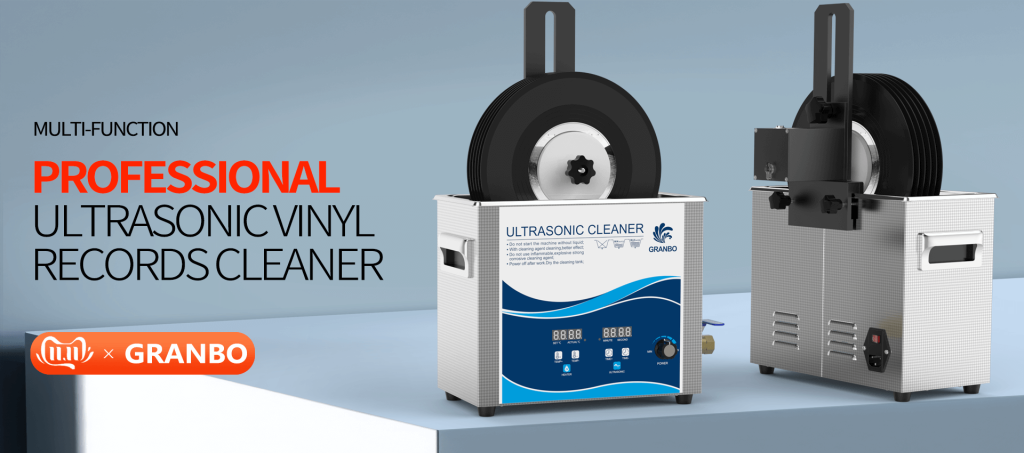
Click to view:Granbo Ultrasonic Vinyl Record Cleaner
Premium units from companies like Kuzma, Audio Desk Systeme, and Clearaudio exceed $2,000 and can reach $5,000 or more. These machines offer the highest build quality, most advanced features, and best automation. Whether they provide proportionally better cleaning results remains debatable.
Beyond the cleaner itself, you need distilled or deionized water, which costs approximately $1 per gallon from most retailers. Cleaning additives range from simple isopropyl alcohol (very inexpensive) to specialized formulas costing $20 to $40 per bottle. Proper record drying racks or microfiber cloths add another $20 to $100 depending on quality and quantity.
Long-Term Operating Costs
Operating costs remain modest compared to initial purchase price. Distilled water represents the primary ongoing expense. Most ultrasonic cleaners use between 1 and 3 liters per cleaning cycle, translating to approximately $0.25 to $0.75 per record in water costs.
Cleaning solution additives last surprisingly long. A bottle of specialized cleaner typically handles 50 to 100 records, adding roughly $0.20 to $0.40 per record to operating costs. Many users achieve good results with simple 5% isopropyl alcohol solutions, reducing this cost to pennies per record.
Electricity consumption varies by model but generally remains negligible. Most ultrasonic cleaners draw between 100 and 300 watts during operation. A typical 10-minute cleaning cycle costs about $0.02 to $0.05 in electricity at average US rates.
Maintenance costs depend heavily on machine quality. Budget models may require filter replacements or pump servicing after a year or two of regular use. Premium machines typically feature more durable components but cost significantly more when repairs become necessary. Setting aside $50 to $100 annually for potential maintenance provides reasonable budgeting.
Cost Per Record Calculation
Calculating true cost per record requires considering both operating costs and amortizing the initial investment across your anticipated usage. This exercise reveals why ultrasonic cleaning makes more sense for some collectors than others.
For someone who cleans 100 records annually using a $700 ultrasonic cleaner, the math breaks down as follows. Operating costs total approximately $1 per record including water, cleaning solution, and electricity. The equipment cost amortized over five years adds $1.40 per record. Total cost reaches roughly $2.40 per record for the first five years.
After five years, assuming the machine remains functional, cost per record drops to just the operating expense of about $1. Compare this to professional cleaning services charging $5 to $10 per record, and the economics become favorable relatively quickly for active cleaners.
However, someone cleaning only 20 records per year faces different math. Equipment cost amortization jumps to $7 per record over five years, bringing total cost to $8 per record initially. At this usage level, professional cleaning services or investing in a quality vacuum cleaner might make more financial sense.
The calculation shifts dramatically for record dealers or collectors acquiring large volumes of used records. Someone cleaning 500 or more records annually reaches cost parity with basic manual cleaning methods within the first year while enjoying superior results.
Who Benefits Most from Ultrasonic Cleaning
Not every record collector needs ultrasonic cleaning capabilities. Understanding which user profiles benefit most helps clarify whether you should invest in this technology.
Serious Collectors and Audiophiles
Dedicated collectors with substantial investments in vinyl see the strongest case for ultrasonic cleaning. If your collection includes pressings worth $50 to $100 or more, protecting and optimizing those investments justifies premium cleaning methods.
Audiophiles pursuing maximum sound quality from their systems also benefit significantly. When you’ve invested thousands in turntables, cartridges, and amplification, ensuring records are as clean as possible makes logical sense. The sound quality improvements ultrasonic cleaning provides become more apparent on revealing high-end systems.
Collectors focusing on rare or first pressings find particular value in ultrasonic cleaning’s gentle effectiveness. These records often cannot be easily replaced if damaged, making non-contact cleaning methods appealing. The ability to rescue seriously contaminated finds from used record stores also enhances the collecting experience.
I’ve found ultrasonic cleaning particularly valuable when acquiring records from estate sales or collections that suffered poor storage conditions. Many collectors have rescued albums that initially appeared beyond saving, transforming them into enjoyable listening copies through thorough ultrasonic treatment.
Record Store Owners and Dealers
Professional dealers face different economics than individual collectors. The ability to clean records quickly and effectively directly impacts profitability and customer satisfaction.
Used record businesses typically acquire inventory in various conditions. The ability to upgrade a VG record to VG+ or EX through thorough cleaning can increase sale price by $5 to $20 per record. With volume, this improvement rapidly justifies ultrasonic equipment investment.
Time efficiency becomes crucial in commercial settings. While ultrasonic cleaning isn’t necessarily faster per record than vacuum methods, many units allow batch processing. You can clean multiple records consecutively with minimal hands-on time, freeing staff for other tasks.
Customer perception matters as well. Offering ultrasonic cleaning as a premium service or selling demonstrably well-cleaned records builds reputation and justifies higher prices. Some stores successfully charge $3 to $7 for professional ultrasonic cleaning services, creating an additional revenue stream.
Casual Listeners and Budget Considerations
Casual collectors who primarily buy new records and maintain modest collections face the weakest case for ultrasonic investment. If you purchase 10 to 20 albums annually and they arrive clean, basic manual cleaning methods handle maintenance adequately.
Budget-conscious collectors might better allocate $500 to $1,000 toward additional records rather than cleaning equipment. A manual record washer for $100 combined with proper technique provides 80% of ultrasonic cleaning’s benefits at a fraction of the cost for typical maintenance cleaning.
However, even casual collectors sometimes encounter situations where ultrasonic cleaning proves valuable. Finding a rare album that needs serious restoration, inheriting a collection requiring cleaning, or simply wanting the peace of mind that records are truly clean might justify the investment even without heavy usage.
The growth trajectory of your collection matters too. Someone just beginning vinyl collecting might reasonably delay ultrasonic purchase until determining whether the hobby becomes a long-term passion. Conversely, someone showing signs of serious collecting interest might view ultrasonic equipment as an inevitable future purchase worth making sooner.
Potential Drawbacks and Limitations
Honest evaluation requires acknowledging ultrasonic cleaning’s disadvantages and limitations. These factors significantly impact whether the technology suits your specific situation.
Time Investment per Cleaning Cycle
Ultrasonic cleaning requires patience. Most cycles run 10 to 15 minutes per record, significantly longer than vacuum cleaning’s 2 to 3 minutes. While hands-on time remains minimal, you cannot clean 20 records in 30 minutes the way you might with a vacuum system.
Some machines allow stacking multiple records in the cleaning bath simultaneously, but this approach has limitations. Records must not touch during cleaning to ensure even treatment. Most practical limits fall between 2 and 5 records per cycle depending on machine design.
The total process time extends beyond just the cleaning cycle. You must fill the machine with water, add cleaning solution, allow the water to reach optimal temperature, complete the cleaning cycle, rinse records with fresh distilled water, and properly dry them before returning to sleeves. Cleaning a single record might occupy 20 to 30 minutes total, though much of this time requires no active supervision.
For large cleaning projects, time requirements compound significantly. Cleaning a newly acquired collection of 100 records could easily consume an entire weekend. This makes ultrasonic cleaning less suitable for people wanting to clean records immediately before listening.
Space and Storage Requirements
Ultrasonic record cleaners occupy considerable space. Most units measure 18 to 24 inches wide and 12 to 18 inches deep. Unlike a record brush that stores in a drawer, these machines require permanent counter or shelf space unless you’re willing to set up and break down for each use.
The machines also weigh significantly, typically between 15 and 40 pounds when empty. Moving them frequently becomes impractical, reinforcing the need for dedicated space. This consideration matters particularly for apartment dwellers or anyone with limited room.
Water storage adds additional space requirements. You need distilled or deionized water on hand, and storing gallon jugs takes room. Some users keep 5 to 10 gallons available to avoid running out mid-cleaning session, requiring additional storage space.
Drying racks or stations also consume room. Properly drying records after cleaning requires either air-drying racks that hold multiple records vertically or substantial counter space for laying records flat with microfiber cloths. Budget an additional 2 to 3 feet of space for post-cleaning drying operations.
Maintenance and Upkeep
Ultrasonic cleaners require regular maintenance to function optimally and achieve long service life. Understanding these requirements prevents unpleasant surprises after purchase.
The cleaning bath needs periodic emptying and cleaning. Contaminants removed from records accumulate in the water, eventually requiring disposal. How frequently depends on usage volume, but expect to change water after every 10 to 20 records for best results.
Transducers and heating elements can develop mineral deposits if you use insufficiently pure water. While distilled water prevents this, any maintenance shortcuts create long-term problems. Descaling solutions exist but add to operating complexity and cost.
Filters require regular replacement in machines equipped with filtration systems. These range from simple mechanical filters changed every few months to more sophisticated multistage systems. Replacement filters cost $10 to $50 depending on the machine, adding to long-term operating expenses.
The drying process introduces its own maintenance needs. Microfiber cloths require regular washing to prevent reintroducing contaminants during drying. Air-drying racks need periodic cleaning to remove dust. Some machines with built-in drying fans require filter cleaning or replacement as well.
Mechanical components like rotation motors and drainage pumps eventually wear out. While quality machines provide years of reliable service, expect eventual repair costs. Parts availability varies significantly between manufacturers, with some making DIY repairs practical while others require professional service.
Choosing the Right Ultrasonic Cleaner
If you’ve decided ultrasonic cleaning suits your needs, selecting the appropriate machine requires evaluating several key factors. The wide range of available options can overwhelm newcomers.
Key Features to Consider
Frequency adjustability provides significant versatility. Multi-frequency machines allow matching cleaning intensity to record condition. Lower frequencies around 40 kHz work better for heavily contaminated records, while higher frequencies near 80 to 120 kHz suit delicate cleaning or final finishing passes.
Heating capabilities streamline the cleaning process. Machines with built-in heaters reach optimal water temperature automatically and maintain it throughout cleaning cycles. Without heating, you must manually heat water before use, adding complexity and time.
Rotation mechanisms ensure even cleaning coverage. Better machines rotate records slowly during cleaning, preventing any groove section from receiving inadequate treatment. Some budget models lack rotation, requiring you to manually reposition records mid-cycle or accept potentially uneven results.
Tank capacity determines how many records you can clean in one water batch. Larger tanks typically accommodate more records before requiring water changes but take longer to heat and require more distilled water per fill. Most collectors find 1.5 to 3 liter capacity provides good balance.
Drainage systems matter more than many people initially realize. Good drainage makes emptying used water simple and prevents spills. Gravity drains with positioned hose connections work adequately. Pumped drainage systems offer more flexibility but add complexity and potential failure points.
Filtration systems extend water usability by removing particles during cleaning. This allows cleaning more records before requiring water changes, reducing operating costs and environmental impact. However, filters need regular maintenance and eventual replacement.
Build quality and materials affect longevity. Stainless steel tanks resist corrosion better than plastic. Quality electronics and transducers provide more consistent cleaning and longer service life. However, premium construction commands premium prices.
Noise level varies considerably between models. Some ultrasonic cleaners operate surprisingly quietly while others generate noticeable humming or buzzing. If you plan to run the machine in living spaces or during hours when quiet matters, investigate noise specifications before purchasing.
Budget-Friendly vs. Premium Models
Budget ultrasonic cleaners adapted from general-purpose industrial units cost $150 to $400. These typically lack record-specific features like rotation or proper drainage. They work adequately but require more hands-on management and potentially compromise results compared to purpose-built machines.
The major advantage is accessibility. Budget models allow experimenting with ultrasonic cleaning without significant financial commitment. If results impress you, upgrading to a better machine later makes sense. If ultrasonic cleaning disappoints or you use it rarely, minimal investment is lost.
Disadvantages include limited features, lower build quality, and potentially shorter service life. You might spend significant time managing the cleaning process that a better machine would automate. The total time investment sometimes negates the cost savings, particularly if you value your time highly.
Mid-range purpose-built record cleaners between $500 and $1,500 represent the sweet spot for most serious collectors. These provide record-specific features, adequate build quality, and reasonable automation.
These machines typically include heating, rotation, proper drainage, and at least basic filtration. They’re designed specifically for record cleaning rather than adapted from other purposes. Build quality generally supports years of regular use with reasonable maintenance.
Premium ultrasonic cleaners above $2,000 offer the highest build quality, most advanced features, and best automation. Audio Desk Systeme pioneered this category, with others following. These machines often include features like automated drying, advanced filtration, and touchscreen controls.
Whether premium models justify their cost depends on your priorities and budget. The cleaning results may not differ dramatically from good mid-range machines, but convenience, aesthetics, and longevity improve. Collectors with extensive high-value collections often view premium cleaners as appropriate investments proportional to their holdings.
Granbo Ultrasonic Vinyl Cleaner: Anatomy and Demonstration
Purchase link: https://www.granbo.com/granbostore/industry-specific/records.html
DIY Solutions and Alternatives
Creative collectors have developed DIY ultrasonic cleaning solutions using general-purpose ultrasonic cleaners combined with custom record holders. These approaches can work but require careful implementation.
The basic concept involves purchasing an industrial ultrasonic cleaner designed for general parts cleaning, then fabricating or adapting a holder to suspend records in the cleaning bath. This typically costs $200 to $400 total, less than most purpose-built record cleaners.
Advantages include significant cost savings and the flexibility to use the ultrasonic cleaner for other purposes. Many collectors successfully clean records this way and report satisfaction with results.
Challenges include ensuring records receive even coverage throughout cleaning, preventing adjacent records from touching in multi-record setups, and managing water changes and drainage without purpose-built systems. DIY solutions generally require more active management and experimentation to achieve optimal results.
Some collectors build remarkably sophisticated DIY systems incorporating rotation motors, custom tanks, and advanced features. These projects can rival commercial machines in capability while costing significantly less. However, they require time, technical skills, and comfort with trial-and-error development.
For collectors with appropriate skills and interest, DIY approaches offer excellent value. For those wanting reliable turn-key solutions, purpose-built machines provide easier paths despite higher costs.
Making Your Decision
Determining whether ultrasonic record cleaners justify their cost requires honest evaluation of your specific situation, priorities, and collecting habits. The technology offers genuine advantages but doesn’t suit everyone equally.
Consider ultrasonic cleaning a strong candidate if you regularly acquire used records needing serious cleaning, maintain a collection including high-value pressings worth protecting, have adequate space for equipment, clean enough records to justify the investment over professional cleaning services, or simply value the peace of mind that comes with knowing your records are as clean as possible.
The technology makes less sense if your collection consists primarily of new records already in clean condition, you buy fewer than 20 to 30 records annually, budget or space constraints make the investment impractical, you prefer hands-on cleaning methods that provide immediate feedback, or you can access affordable professional ultrasonic cleaning services locally.
Many collectors find middle-ground solutions work well initially. Starting with quality manual or vacuum cleaning methods, then adding ultrasonic capability later if needs evolve, avoids premature investment. Alternatively, buying a budget ultrasonic unit tests whether the technology suits your workflow before committing to premium equipment.
The record collecting community continues growing, with renewed interest spanning demographics from teenagers discovering vinyl to lifelong collectors deepening their involvement. As collections grow and records age, proper maintenance becomes increasingly important for preservation and enjoyment.
Ultrasonic cleaning technology has matured significantly over the past decade. Early machines suffered reliability issues and questioned effectiveness. Modern purpose-built record cleaners demonstrate consistent performance and acceptable longevity. The technology has moved from experimental to proven.
Ultimately, ultrasonic record cleaners deliver measurable improvements in cleaning effectiveness compared to traditional methods, particularly for heavily contaminated records. Whether those improvements justify the financial investment depends entirely on your individual circumstances, collecting patterns, and priorities. For dedicated collectors and dealers, the technology represents a worthwhile investment that pays dividends through improved sound quality and collection preservation. For casual listeners with modest needs, simpler cleaning methods likely provide adequate results at lower cost.
The decision requires balancing objective performance data against subjective value assessments. Only you can determine where your collecting habits and priorities fall along that spectrum. Understanding what ultrasonic technology can and cannot accomplish, along with honest evaluation of your needs, provides the foundation for making the choice that best serves your specific situation.