 Granbo Sonic












Ultrasonic Cleaners: The Science Behind the Hype
Browse Volume:49 Classify:Support
Your watch band has grime in every crevice. Your eyeglasses have buildup that wiping can’t remove. Small engine parts sit coated in oil and carbon deposits. Traditional cleaning methods require intense scrubbing, harsh chemicals, or simply fail to reach tight spaces. Ultrasonic cleaners promise a different approach, using sound waves and liquid to clean items thoroughly without manual effort.
These devices have moved from industrial settings into consumer homes over the past decade. You can now purchase ultrasonic cleaners ranging from $30 tabletop units to $300 professional-grade models. Online marketplaces overflow with options, each claiming superior cleaning power. But the fundamental question remains: do these devices actually deliver on their promises?
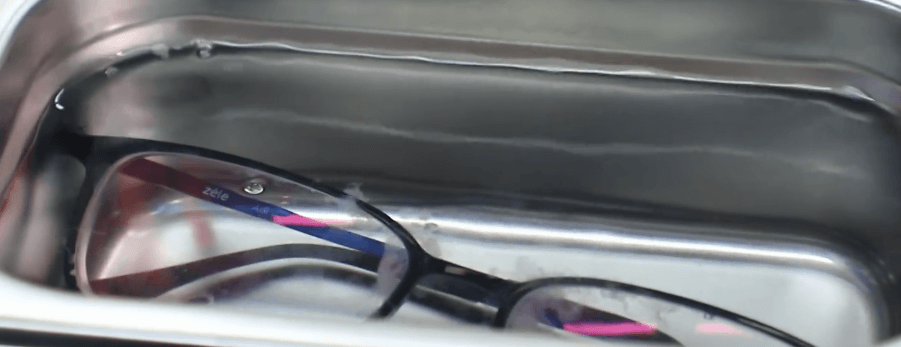
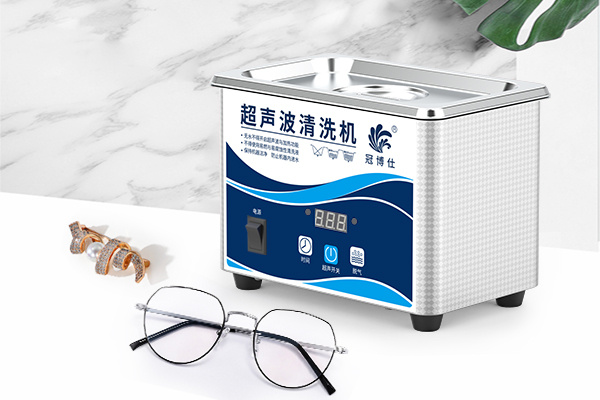
A pair of eyeglasses is being cleaned in an ultrasonic cleaner, with visible dirt and grime being lifted away before your eyes.
The technology sounds almost futuristic. Microscopic bubbles form and collapse thousands of times per second, creating tiny shock waves that dislodge contaminants. No brushing, no scrubbing, just physics doing the work. Understanding how ultrasonic cleaners function, what they genuinely excel at, and where they disappoint helps you decide whether this technology deserves space in your home or workshop.
Understanding Ultrasonic Cleaning Technology
How Cavitation Actually Works
Ultrasonic cleaning relies on a physical phenomenon called cavitation. When high-frequency sound waves pass through liquid, they create alternating high-pressure and low-pressure cycles. During low-pressure phases, tiny vacuum bubbles form in the liquid. These bubbles are microscopic, often measuring just a few micrometers in diameter.
The bubbles exist only briefly. When pressure increases again, the bubbles violently collapse or implode. This implosion happens in microseconds and releases significant energy despite the tiny size. The collapsing bubbles create localized shock waves and microjets of liquid that impact nearby surfaces with surprising force.
When items sit in the ultrasonic cleaning bath, millions of these bubbles form and collapse against their surfaces every second. The cumulative effect of countless microscopic impacts dislodges dirt, oils, and contaminants from surfaces. This process works particularly well in crevices, threads, and tight spaces where brushes cannot reach.
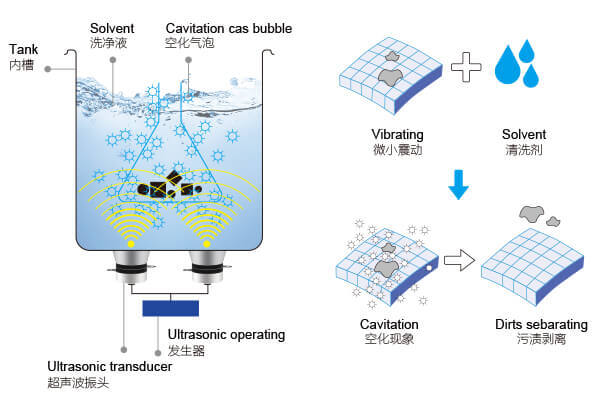
The Principle Behind Ultrasonic Cleaning
The cleaning action is mechanical rather than chemical, although the liquid solution plays important supporting roles. Cavitation physically breaks the bonds between contaminants and surfaces. The aggressive microscopic scrubbing reaches into blind holes, under deposits, and into corners that manual cleaning misses entirely.
Temperature affects cavitation intensity. Warmer liquids typically produce more vigorous cavitation up to a point. Most ultrasonic cleaners work best between 140°F and 160°F (60°C to 71°C). Beyond certain temperatures, cavitation actually decreases because bubbles become too stable and don’t collapse as violently.
The Role of Frequency and Power
Ultrasonic cleaners operate at frequencies above human hearing range, typically between 20 kHz and 200 kHz. The most common consumer and industrial units run at 40 kHz, which represents a balance between cleaning power and gentleness. Lower frequencies create larger, more powerful bubbles that deliver aggressive cleaning but may damage delicate items.
Higher frequency units (80 kHz to 170 kHz) produce smaller bubbles with gentler implosion forces. These work better for delicate items like precision instruments, semiconductors, or fragile jewelry. The smaller bubbles can penetrate finer gaps but deliver less impact force per bubble. Applications requiring gentle cleaning favor higher frequencies.
Power output, measured in watts, determines how many bubbles form and how intense the cavitation becomes. More powerful units create denser cavitation fields with more cleaning action. A typical consumer cleaner might deliver 50 to 100 watts, while industrial models can exceed 1,000 watts for large tank capacities.
The relationship between power and tank size matters significantly. A small 100-watt unit with a half-liter tank creates intense cavitation. That same 100 watts spread across a 5-liter tank produces weak, ineffective cleaning. Manufacturers should match power output to tank volume, typically aiming for at least 50 to 100 watts per liter for effective performance.
Transducers convert electrical energy into mechanical vibrations that create the ultrasonic waves. Quality cleaners use multiple transducers positioned strategically around or beneath the tank. This ensures even distribution of ultrasonic energy throughout the cleaning solution. Cheap units may have single transducers that create uneven cavitation with dead zones where little cleaning occurs.
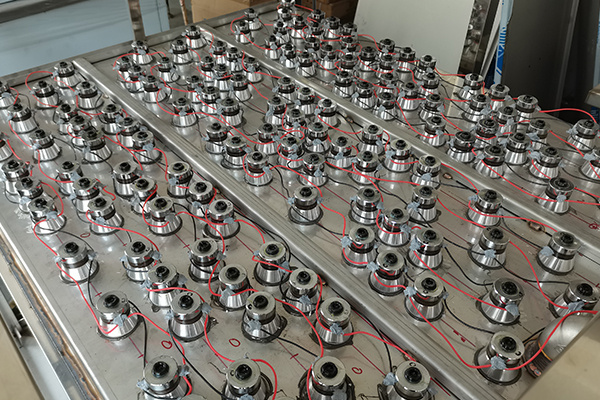
Ultrasonic Transducers Installed at the Bottom of the Cleaning Tank
What Ultrasonic Cleaners Excel At
Jewelry and Precious Metals
Ultrasonic cleaners shine brightest when tackling jewelry. Gold, silver, and platinum items respond beautifully to ultrasonic cleaning. The cavitation reaches into intricate settings, behind gemstones, and through chain links where dirt and skin oils accumulate. A five-minute ultrasonic cycle often restores brilliance that manual cleaning cannot match.
Professional jewelers rely on ultrasonic cleaners as standard equipment. They understand the technology’s strengths and limitations. Hard gemstones like diamonds, rubies, and sapphires tolerate ultrasonic cleaning well. The intense cavitation removes soap residue, lotions, and accumulated grime without scratching metal or damaging settings.
Wedding rings particularly benefit from ultrasonic cleaning. These items sit on fingers constantly, accumulating lotions, soaps, dirt, and dead skin cells in every groove. The underside of settings becomes especially grimy. Traditional cleaning requires toothbrushes and considerable effort. Ultrasonic cleaners restore original sparkle with minimal work.
Watch bands and bracelet links present similar challenges. Dirt packs into the joints between links where manual cleaning proves tedious. Ultrasonic cavitation flushes these spaces clean. Metal watch bands emerge looking nearly new after proper ultrasonic treatment. The technology saves hours of detailed hand cleaning.

granbo ultrasonic Jewelry Cleaning effect
Eyeglasses and Optical Equipment
Eyeglasses rank among the most commonly cleaned items in home ultrasonic units. The nose pads, hinge areas, and frame crevices trap skin oils, dust, and debris. These accumulations make glasses look dingy despite regular wiping. Ultrasonic cleaning removes buildup from areas that cloths cannot effectively reach.
Modern eyeglasses with their coatings require gentle care. Harsh scrubbing damages anti-reflective and scratch-resistant coatings. Ultrasonic cleaning provides thorough results without mechanical abrasion. The cavitation works underneath deposits, lifting them away rather than grinding them across delicate surfaces.
Optical shops and optometrists commonly offer ultrasonic cleaning as a service. They use the same technology available in consumer units but may employ specialized solutions formulated for optical coatings. The process typically takes three to five minutes and leaves glasses noticeably cleaner than manual methods achieve.
Contact lens cases also benefit from ultrasonic cleaning. These small plastic containers develop protein deposits and biofilm from repeated use. Traditional rinsing doesn’t fully clean the cases. Brief ultrasonic treatment removes accumulated contaminants, potentially extending case life and improving hygiene.
Small Metal Parts and Tools
Mechanics and hobbyists find ultrasonic cleaners invaluable for small metal components. Carburetor parts, fuel injectors, and engine valves accumulate carbon deposits and varnish that resist solvent soaking alone. Ultrasonic cavitation combined with appropriate cleaning solutions removes these stubborn deposits effectively.
The technology excels at cleaning threaded fasteners. Bolts, nuts, and screws pick up dirt, rust, and thread-locking compounds. These contaminants make reassembly difficult and can cause thread damage. Ultrasonic cleaning strips threads clean without the risk of wire brush damage.
Precision tools like drill bits, taps, and dies benefit from ultrasonic maintenance. Metal shavings, cutting fluid residue, and oxidation accumulate on these items. Ultrasonic cleaning restores sharp edges and flute clarity. Many machinists incorporate ultrasonic cleaning into their tool maintenance routines.
Firearms enthusiasts use ultrasonic cleaners for gun parts. Disassembled components including bolts, firing pins, and small springs get thoroughly cleaned in minutes. The cavitation reaches into recesses and removes powder residue more completely than manual scrubbing. However, proper solutions and post-cleaning lubrication remain essential for firearm maintenance.
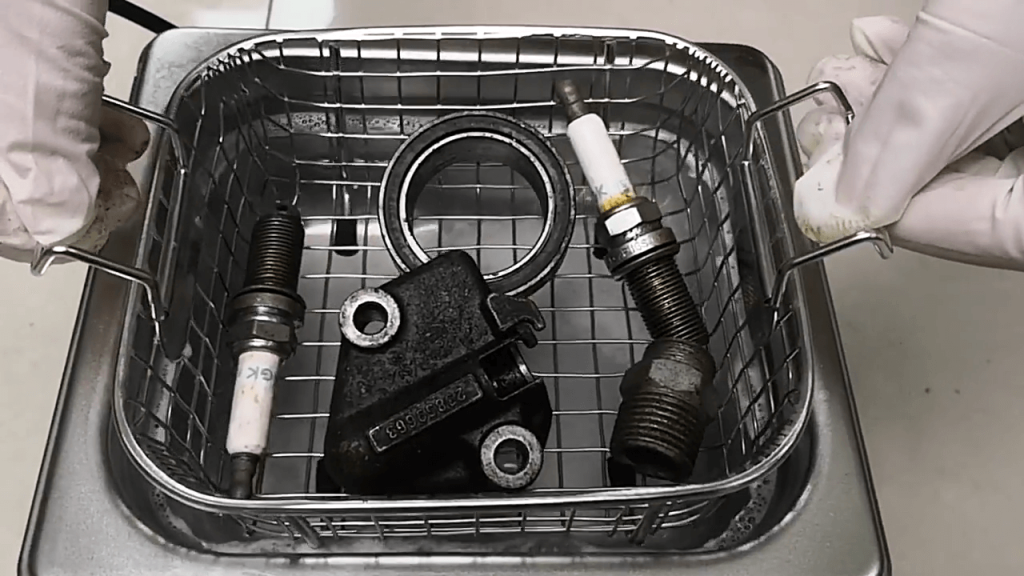
Machine Clean Carburetor And Hardware
Electronics and Circuit Boards
Professional electronics repair and manufacturing extensively employ ultrasonic cleaning. Circuit boards with flux residue from soldering operations require thorough cleaning. Flux left on boards can cause corrosion and electrical problems. Ultrasonic cleaning with appropriate solutions removes flux without damaging components.
The key to safe electronics cleaning involves using the right solutions and ensuring complete drying. Water-based cleaners work for many applications, but specialized electronics cleaning solutions provide better results. Items must dry completely before powering, typically requiring forced air or low-temperature oven drying.
Contaminated connectors and contact surfaces respond well to ultrasonic treatment. Oxidation and dirt on electrical contacts create resistance and connection failures. Gentle ultrasonic cleaning in suitable solutions restores conductivity. This application requires careful material compatibility checking to avoid damaging plastic housing or plating.
Vintage electronics collectors and restorers use ultrasonic cleaners to revive old components. Decades of dust, smoke residue, and oxidation come off circuit boards and metal chassis parts. The process reveals original finishes and improves reliability. However, truly delicate components may require hand cleaning to avoid damage.
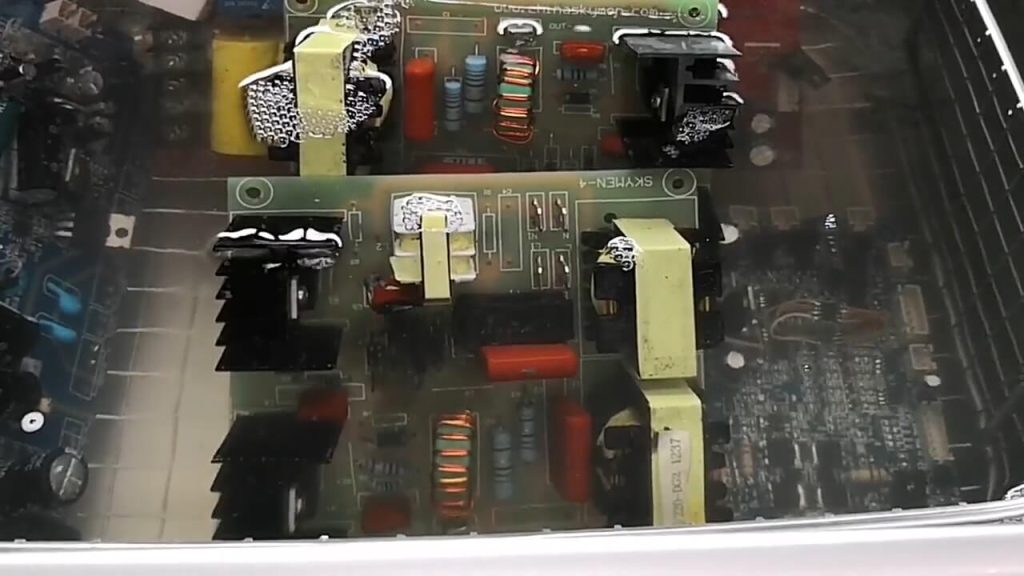
15L Washer Clean Keyboard Circuit Board PCB
Where Ultrasonic Cleaners Fall Short
Materials That Don’t Respond Well
Certain materials simply don’t tolerate ultrasonic cleaning well. Soft gemstones including pearls, opals, emeralds, and turquoise can fracture or delaminate from the intense vibration. The cavitation that effectively cleans hard surfaces can damage these delicate stones. Jewelers never ultrasonically clean pieces containing vulnerable gems.
Porous materials absorb cleaning solution during ultrasonic treatment. Wood, leather, unsealed stone, and certain plastics soak up liquid. This absorption can cause swelling, discoloration, or permanent damage. Items with porous components need alternative cleaning methods that don’t involve liquid immersion.
Some plastics become brittle or crack under ultrasonic exposure. The mechanical stress from cavitation can propagate existing micro-cracks or create new ones. Older plastics that have already degraded prove particularly vulnerable. Testing small areas or similar scrap pieces before cleaning valuable plastic items makes sense.
Electroplated items require caution. Thin plating can lift or peel if the underlying bond is weak. Chrome, nickel, and gold plating usually tolerate ultrasonic cleaning well when properly applied. However, cheap plating or items with plating damage may lose more finish during ultrasonic treatment. Vintage items with worn plating should be cleaned gently or manually.
Heavily Soiled Items
Ultrasonic cleaners work best on light to moderate contamination. Heavy grease, thick paint, or dense carbon deposits often exceed what cavitation alone can remove. The microscopic bubbles cannot generate enough cumulative force to dislodge very thick or strongly bonded materials.
Pre-cleaning heavily soiled items improves ultrasonic results dramatically. Removing loose dirt, scraping off thick deposits, or pre-soaking in solvents prepares items for effective ultrasonic treatment. Expecting ultrasonic cleaning to handle everything without preparation leads to disappointment.
Baked-on or polymerized materials resist ultrasonic action. These substances have chemically bonded to surfaces in ways that mechanical cavitation cannot easily disrupt. Appropriate chemical solutions become more important than ultrasonic action for these challenges. Sometimes chemical soaking followed by ultrasonic treatment provides the answer.
Large solid contaminants don’t respond to ultrasonic cleaning. If you can see and mechanically remove dirt, doing so before ultrasonic treatment makes sense. The technology excels at removing microscopic particles and thin films, not chunks of visible debris. Using ultrasonic cleaners as final detailing tools rather than primary cleaning devices yields best results.
Delicate or Porous Surfaces
Painted surfaces may suffer damage from ultrasonic cleaning. The cavitation can undercut paint edges, particularly where adhesion is already compromised. Models, painted miniatures, and decorative items with applied finishes should not undergo ultrasonic treatment unless you’re certain the paint can withstand it.
Gilt or gold leaf applications are too delicate for ultrasonic cleaning. The extremely thin metal layer will lift and separate from substrates. Antique frames, decorative objects, and illuminated manuscripts with gilt should never enter ultrasonic cleaners. Even gentle frequency units can destroy these fragile finishes.
Composite materials with different hardness levels may separate during ultrasonic cleaning. The cavitation impacts softer and harder materials differently, potentially creating stress at the interface. Items with glued assemblies, inlays, or laminated construction require careful consideration before ultrasonic treatment.
Organic materials including bone, ivory, horn, and shell are generally unsuitable for ultrasonic cleaning. These materials have internal structures that can fracture from repeated cavitation impacts. They may also be porous and absorb solutions. Alternative cleaning methods better preserve these natural materials.
Scientific Evidence and Real-World Testing
Laboratory Studies on Cleaning Effectiveness
Scientific research consistently demonstrates ultrasonic cleaning effectiveness for specific applications. Studies published in industrial engineering journals show that ultrasonic treatment removes particulate contamination more completely than spray washing or immersion cleaning alone. Quantitative measurements using microscopy and surface analysis confirm superior cleanliness levels.
Research comparing cleaning methods for medical instruments shows ultrasonic cleaning removes biological contaminants more thoroughly than manual scrubbing. Studies measure bacterial counts before and after various cleaning protocols. Ultrasonic treatment combined with enzymatic solutions achieves the highest contamination reduction, which is why hospitals extensively use this technology.
Materials science research examines how different frequencies and power levels affect various contaminants and substrates. These controlled studies help optimize ultrasonic cleaning parameters for specific applications. Findings show that matching frequency to the task significantly improves results. One-size-fits-all approaches often underperform compared to tailored parameters.
Academic research into cavitation physics continues refining our understanding of the cleaning mechanism. High-speed photography and computer modeling reveal bubble dynamics in microscopic detail. This research helps manufacturers design more effective transducers and optimize tank geometries for even cavitation distribution.
Industry Applications and Standards
Industrial sectors that demand extreme cleanliness rely heavily on ultrasonic technology. Aerospace manufacturing uses ultrasonic cleaning for precision components where any contamination could cause failures. The industry has developed strict cleaning standards and validation protocols proving ultrasonic effectiveness.
Medical device manufacturing follows rigorous cleanliness requirements enforced by regulatory agencies. Ultrasonic cleaning forms a standard step in producing implants, surgical instruments, and diagnostic equipment. The technology’s ability to clean complex geometries and tight tolerances makes it essential for these applications.
The semiconductor industry requires atomic-level cleanliness for wafer processing. While the most critical cleaning uses other technologies, ultrasonic cleaning handles many support tasks. The industry’s cleanliness standards far exceed most applications, yet ultrasonic cleaning proves valuable even in these demanding contexts.
Watchmaking and precision instrument manufacturing have used ultrasonic cleaning for decades. These industries require removing manufacturing residues from tiny parts without damage. The long history of successful industrial use demonstrates genuine effectiveness, not marketing hype. Professional adoption based on measurable results validates the technology.
Consumer Product Performance
Independent testing of consumer ultrasonic cleaners shows wide performance variation. Quality units from established manufacturers generally perform as advertised within reasonable expectations. Budget models often disappoint due to inadequate power, poor transducer placement, or defective components.
Consumer Reports and similar testing organizations periodically evaluate ultrasonic cleaners. Their testing reveals that price doesn’t always predict performance. Some mid-priced units outperform expensive models. The testing emphasizes the importance of reading detailed reviews and specifications rather than assuming higher prices mean better results.
User experiences documented in online reviews provide valuable real-world data. Patterns emerge showing what works consistently. Jewelry cleaning receives overwhelmingly positive feedback. Eyeglass cleaning shows good results with occasional complaints about inadequate solutions. Attempts to clean heavily soiled items or inappropriate materials generate negative reviews.
YouTube creators and bloggers have produced numerous ultrasonic cleaner tests. While not scientifically rigorous, these demonstrations show actual performance with common items. The videos reveal both successes and failures, helping viewers set realistic expectations. Watching items clean in real-time provides better understanding than reading descriptions.
Factors That Affect Cleaning Performance
Solution Chemistry Matters
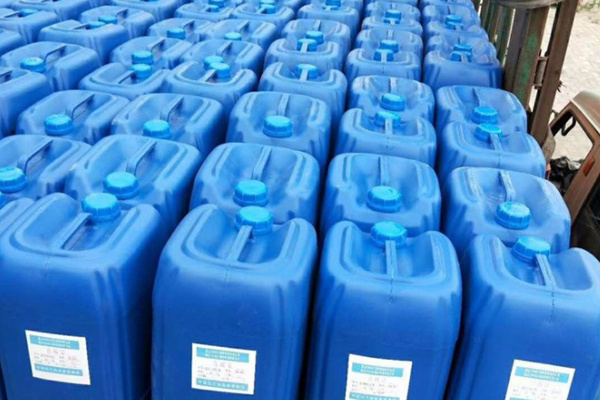
Ultrasonic Cleaning Solution
Pure water alone provides minimal cleaning effectiveness in ultrasonic units. The cavitation occurs, but without chemical help, many contaminants remain bonded to surfaces. Adding appropriate cleaning agents dramatically improves results. The solution breaks down oils, loosens deposits, and helps cavitation work more effectively.
Commercial ultrasonic cleaning solutions are formulated for specific tasks. Jewelry cleaners contain surfactants and mild alkaline compounds that dissolve oils and enhance metal brightness. Degreasing solutions for mechanical parts have stronger alkaline chemistry and emulsifiers. Using task-appropriate solutions matters more than most users realize.
Simple dish soap and water works reasonably well for general cleaning. A few drops of quality dish detergent in the tank creates adequate solution for items like eyeglasses or lightly soiled jewelry. This economical approach suits routine home use. However, specialized solutions outperform dish soap for specific challenging tasks.
Solution pH affects cleaning and material safety. Acidic solutions work well for rust and mineral deposits but may damage some materials. Alkaline solutions excel at removing oils and organic residues. Neutral solutions clean gently but may lack power for stubborn contamination. Matching solution chemistry to both the contamination and item material prevents damage while maximizing effectiveness.
Temperature Impact
Heated ultrasonic cleaners outperform cold units significantly. Warmth reduces liquid viscosity, allowing easier bubble formation and collapse. Heat also increases chemical reaction rates, helping cleaning solutions work faster. Most professionals consider heating essential for optimal results, though it adds cost to equipment.
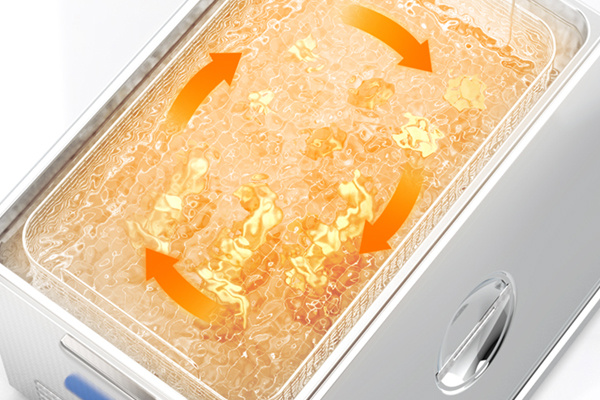
Heating
The ideal temperature range for general ultrasonic cleaning falls between 140°F and 160°F (60°C to 71°C). This range maximizes cavitation intensity for most applications. Lower temperatures work but require longer cleaning times. Excessively high temperatures can damage temperature-sensitive items and actually reduce cavitation effectiveness.
Some consumer units lack heating elements, relying on ambient temperature solution. These can still clean effectively but require longer times and may struggle with tough jobs. Pre-heating solution in a microwave before adding it to non-heated tanks improves performance. However, this approach proves inconvenient for regular use.
Temperature stability matters during cleaning cycles. As ultrasonic transducers operate, they generate heat that warms the solution. In units without temperature control, the bath gradually heats during use. This can benefit cleaning initially but may eventually exceed optimal temperatures. Quality units maintain consistent temperatures throughout operation.
Cleaning Time and Cycles
Longer cleaning cycles don’t necessarily produce better results. Most items reach maximum cleanliness within 5 to 10 minutes of ultrasonic exposure. Extended cleaning beyond this point rarely improves outcomes and may increase wear on the item or equipment. Understanding when items are adequately clean prevents wasted time and energy.
Multiple short cycles sometimes outperform single long cycles. Running a 3-minute cycle, repositioning items, then running another 3-minute cycle can clean more evenly. This approach ensures all surfaces receive adequate ultrasonic exposure. Items may shield each other in crowded tanks, making repositioning beneficial.
Degassing new cleaning solution before processing items improves effectiveness. When fresh solution first enters the tank, dissolved air creates large bubbles that interfere with cavitation. Running the ultrasonic unit for a minute or two without items allows these large bubbles to escape. Degassed solution produces finer, more effective cavitation.
Very quick cleaning cycles under 2 minutes suit lightly soiled items needing just freshening. Eyeglasses worn daily might need only 2 to 3 minutes. Heavily tarnished jewelry might require the full 10 minutes. Learning to match cleaning time to contamination level optimizes both results and efficiency.
Tank Size and Item Placement
Proper item placement significantly affects cleaning results. Items should be suspended or placed on racks rather than sitting directly on the tank bottom. Direct contact with the bottom dampens vibration transmission and creates unevenly cleaned areas. Most quality cleaners include baskets or racks for proper positioning.
Overcrowding the tank reduces effectiveness. Items need solution surrounding all surfaces for cavitation to reach everywhere. Stacking items or filling tanks too full creates shielded areas that don’t clean properly. Processing items in smaller batches produces better results than cramming everything into one cycle.
Tank size should match typical cleaning needs. A tiny 0.5-liter tank works for earrings and small items but cannot handle eyeglasses or watch bands. A 3-liter tank offers versatility for home use, accommodating most personal items while remaining compact. Industrial users need larger tanks matching their component sizes.
Solution level affects cleaning uniformly. Maintaining proper fill levels as indicated by manufacturers ensures transducers work optimally. Overfilling wastes solution and may cause spills. Underfilling reduces the effective cleaning zone and may expose some transducers to air, causing damage.
Comparing Different Ultrasonic Cleaner Types
Consumer Grade vs Industrial Models
Consumer ultrasonic cleaners prioritize affordability and home use convenience. They typically feature small to medium tank sizes (0.6 to 3 liters), moderate power output (50 to 150 watts), and simple controls. Build quality varies widely, with budget units using thin stainless steel tanks and minimal transducers.
Industrial ultrasonic cleaners are built for continuous operation and demanding applications. They feature robust construction, powerful transducer arrays, and precise control systems. Tank sizes range from several liters to hundreds of liters for large parts. These units cost hundreds to thousands of dollars but deliver consistent, powerful cleaning.
The performance gap between consumer and industrial units is substantial. Industrial models generate intense, uniform cavitation throughout large tanks. They incorporate heating, filtration, and often multiple frequency settings. Professional users need this performance and pay accordingly. Home users rarely require such capability.
Durability separates consumer from industrial equipment dramatically. Industrial units withstand daily use for years with minimal maintenance. Consumer models may fail after months of occasional use, particularly budget units. However, for intermittent home use, moderate-quality consumer units often provide adequate service at fraction of industrial costs.
Frequency Variations and Their Uses
Standard 40 kHz cleaners handle most general applications effectively. This frequency creates moderately sized bubbles with good cleaning power suitable for jewelry, tools, eyeglasses, and general parts. The vast majority of consumer and industrial cleaners operate at this frequency because it balances effectiveness with versatility.
Lower frequency units (20 to 25 kHz) generate larger, more aggressive bubbles. These excel at heavy-duty cleaning of durable items like engine parts or heavily contaminated tools. The stronger cavitation removes stubborn deposits but may damage delicate surfaces. Industrial degreasing and parts cleaning often employ lower frequencies.
Higher frequency cleaners (80 to 170 kHz) produce gentler action suitable for delicate items. Precision optics, semiconductor wafers, and fragile medical devices benefit from these frequencies. The smaller bubbles penetrate finer features without the aggressive impact of lower frequencies. These specialized units cost more and serve niche applications.
Dual-frequency or multi-frequency units offer versatility. Some cleaners can switch between 40 kHz and 80 kHz, allowing users to match frequency to the task. This flexibility benefits users who clean diverse items requiring different approaches. However, most home users find single-frequency 40 kHz units entirely adequate.
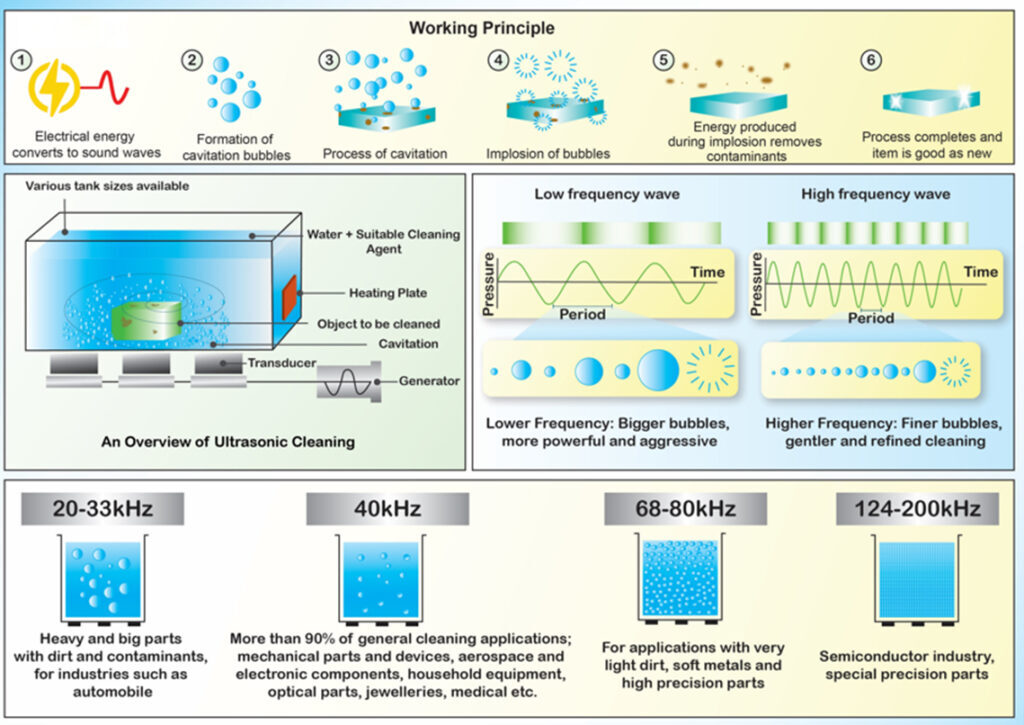
Typical Cleaning Applications for Ultrasonic Cleaners at Different Frequencies
Budget Models vs Premium Units
Budget ultrasonic cleaners under $50 offer basic functionality with minimal features. They lack heating, provide limited power, and often have thin construction. These units work for very light cleaning tasks but frequently disappoint users expecting professional results. Build quality issues and early failures plague this price segment.
Mid-range cleaners between $80 and $200 offer better value for serious users. These units typically include heating, adequate power for their tank size, and more robust construction. Digital controls and timer functions improve usability. Quality brands in this range provide reliable performance for regular home or small business use.
Premium consumer and semi-professional units cost $250 to $500 or more. They feature superior transducer arrays, precise temperature control, and exceptional build quality. Some offer adjustable power and degassing cycles. These units approach industrial performance in compact packages suited for demanding home workshops or professional use.
The performance difference between budget and quality units is dramatic. Spending an extra $50 to $100 often yields vastly better results and years longer service life. However, spending $400 when a $150 unit would suffice wastes money. Matching purchase price to actual needs and usage frequency makes economic sense.
Getting the Best Results from Your Ultrasonic Cleaner
Pre-Cleaning Preparation
Removing loose dirt before ultrasonic cleaning improves results and keeps solution cleaner longer. Rinse items under running water or wipe away visible contamination. This simple step prevents large particles from settling in the tank and reduces solution replacement frequency.
Disassembly increases ultrasonic cleaning effectiveness. Removing watch bands from watch faces, separating jewelry clasps, and opening folded chains allows solution and cavitation to reach all surfaces. Items with moving parts should be disassembled as far as practical for thorough cleaning.
Pre-soaking heavily contaminated items in appropriate solvents before ultrasonic treatment tackles stubborn deposits. Letting greasy parts sit in degreaser for 30 minutes, then ultrasonic cleaning, produces better results than ultrasonic treatment alone. This two-step approach handles contamination beyond ultrasonic capability alone.
Inspecting items for damage before cleaning prevents ultrasonic treatment from worsening existing problems. Loose stones, cracked plastics, or lifting plating may fail during cleaning. Identifying vulnerable items allows hand cleaning instead, avoiding damage from cavitation stress.
Choosing the Right Solution
Matching cleaning solution to the task dramatically impacts results. Commercial ultrasonic jewelry cleaner works brilliantly on precious metals and hard gemstones but may be overkill for eyeglasses. Heavy-duty degreaser suits mechanical parts but could damage delicate items. Reading solution labels and following recommendations matters.
Concentration affects both cleaning power and safety. Most commercial ultrasonic solutions dilute with water at specific ratios. Following manufacturer recommendations prevents excessive concentration that might damage items or inadequate concentration that cleans poorly. Measuring solutions accurately improves consistency.
Homemade solutions using household products work for many applications. Dish soap and water handles general cleaning. White vinegar solutions remove mineral deposits and light rust. Ammonia-based window cleaner works for some applications. These economical alternatives suit frequent routine cleaning when commercial solutions seem expensive.
Solution replacement frequency depends on use intensity. Heavy contamination quickly exhausts cleaning solution chemistry. Visual inspection helps determine when solution looks too dirty or stops cleaning effectively. Most users should change solution after several uses or when it appears significantly contaminated.
Optimal Settings and Timing
Starting with shorter cleaning times and checking progress prevents over-cleaning. Begin with 3 to 5 minutes, inspect items, then continue if needed. This approach prevents excessive exposure to items that clean quickly while allowing additional time for stubborn contamination.
Temperature settings should match item sensitivity and contamination type. Delicate items clean adequately at lower temperatures around 120°F to 130°F (49°C to 54°C). Greasy parts benefit from hotter solution at 150°F to 160°F (65°C to 71°C). Adjusting temperature optimizes cleaning without risking damage.
Degassing solution before cleaning improves initial effectiveness. Run the cleaner empty for 30 to 60 seconds when using fresh solution. This allows large air bubbles to escape. The cavitation becomes finer and more effective once dissolved air reduces.
Monitoring items during cleaning through the tank window catches any problems early. Watching for unusual reactions, movement indicating loose parts, or signs of damage allows stopping the cycle before significant harm occurs. Periodic visual checks provide peace of mind and prevent surprises.
Cost-Benefit Analysis
When the Investment Makes Sense
Jewelers, both professional and hobbyists, gain clear benefits from ultrasonic cleaners. The time saved cleaning intricate pieces and the superior results justify the investment quickly. Anyone regularly cleaning multiple jewelry items will appreciate the convenience and effectiveness.
Eyeglass wearers who struggle with manual cleaning find good value in ultrasonic cleaners. The ability to thoroughly clean frames, especially around nose pads and hinges, improves comfort and appearance. For people with multiple glasses or those who prefer very clean eyewear, the investment makes sense.
Hobbyists working with small parts including models, miniatures, tools, or mechanical components benefit significantly. The time and effort saved cleaning components, plus the improved cleanliness achieved, enhance hobby enjoyment. Serious hobbyists often consider ultrasonic cleaners essential workshop equipment.
Professional applications in dental offices, optical shops, repair services, and manufacturing clearly justify ultrasonic cleaner costs. The technology enables cleanliness standards difficult or impossible to achieve manually. Industrial and professional users typically recover equipment costs quickly through labor savings and improved quality.
Alternative Cleaning Methods
Manual cleaning with appropriate brushes and solutions remains effective for many items. Toothbrushes, cotton swabs, and microfiber cloths handle most routine cleaning tasks adequately. These methods cost almost nothing and work well when time isn’t critical. For occasional cleaning needs, manual methods may suffice.
Steam cleaners offer different advantages for some applications. They sanitize through heat and clean through pressure without chemicals. Steam works well on certain surfaces that ultrasonic cleaning cannot handle. However, steam cleaners and ultrasonic cleaners serve different purposes and excel at different tasks.
Chemical soaking works for items that can tolerate extended immersion. Degreasing solutions, tarnish removers, and specialized cleaners soften and dissolve contaminants given adequate time. This passive approach requires minimal equipment but lacks the mechanical action that ultrasonic cavitation provides.
Professional cleaning services make sense for valuable or delicate items. Jewelers clean jewelry, opticians clean eyeglasses, and specialists handle various items. Service costs are modest, typically $5 to $20. For people who clean items infrequently, paying for professional service costs less than purchasing equipment.
Long-Term Value Considerations
Quality ultrasonic cleaners provide years of service with minimal maintenance. A well-made $150 unit might last a decade with occasional use, averaging $15 annually. This compares favorably to professional cleaning service costs for people with regular cleaning needs. The convenience of home cleaning adds value beyond pure economics.
Budget ultrasonic cleaners often fail within months or couple years. A $35 cleaner that works six months before failing costs more over time than buying quality initially. Replacement costs and frustration with poor performance make budget units questionable value despite low initial prices.
Solution costs add to ownership expenses. Commercial ultrasonic cleaning solutions range from $10 to $30 per bottle. Heavy users might spend $50 to $100 annually on solutions. However, homemade solutions using dish soap or other household products drastically reduce ongoing costs.
Energy consumption remains minimal for home ultrasonic cleaners. Most units consume 50 to 150 watts during operation. Typical cleaning cycles last only minutes, resulting in negligible electricity costs. The environmental impact and operating cost of ultrasonic cleaning compare favorably to alternatives requiring extensive water or chemical use.
Ultrasonic cleaners do actually work, but their effectiveness depends heavily on application, expectations, and equipment quality. The technology excels at cleaning jewelry, eyeglasses, small tools, and precision components. Scientific evidence supports ultrasonic cleaning for removing light to moderate contamination from items with complex geometries.
However, these devices are not miracle workers. They cannot remove heavy deposits, clean inappropriate materials, or replace all other cleaning methods. Understanding what ultrasonic cleaners genuinely accomplish versus marketing claims helps set realistic expectations. When used for suitable applications with proper solutions and techniques, ultrasonic cleaners deliver impressive results that justify their place in many homes and workshops