 Granbo Sonic











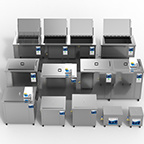
What Makes One Ultrasonic Cleaner Different from Another?
Browse Volume:171 Classify:Support
Ultrasonic cleaners are widely used across industries and households alike — from cleaning delicate jewelry to decontaminating lab instruments. At the heart of these machines is the principle of cavitation: the rapid formation and implosion of microscopic bubbles in a liquid medium, caused by high-frequency sound waves. These implosions generate tiny shockwaves that loosen and remove dirt, grime, oils, and other contaminants from surfaces, including hard-to-reach crevices.
Most ultrasonic cleaners operate within a frequency range of 20kHz to 120kHz, with the frequency selection tailored to the sensitivity and complexity of the objects being cleaned. Lower frequencies produce larger, more forceful cavitation bubbles, ideal for heavy-duty cleaning. Higher frequencies create smaller bubbles, better suited for delicate components such as semiconductors, optical lenses, or intricate watch parts.
What started as a cleaning technology for medical and dental instruments has expanded into nearly every sector — automotive, aerospace, manufacturing, food service, and even home use. Yet despite their broad applicability, not all ultrasonic cleaners are created equal.
The Misconception: “They All Look the Same, So They Must Be the Same”
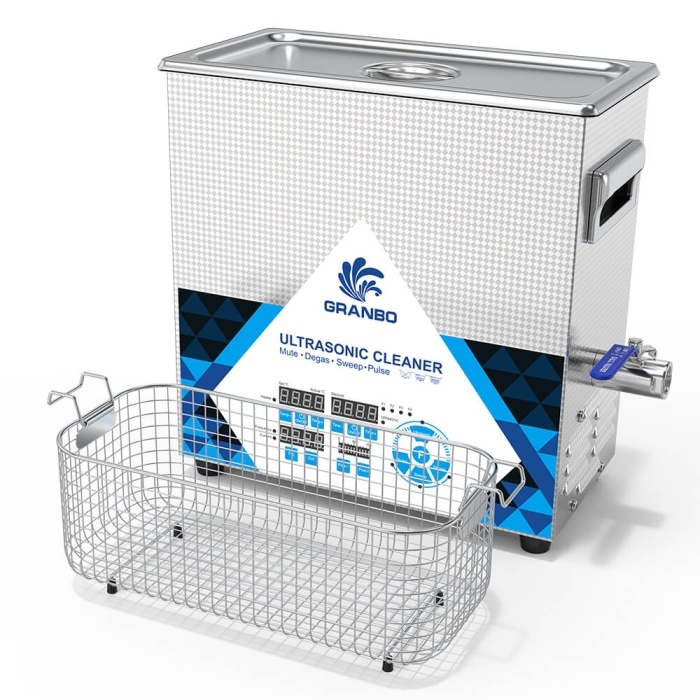
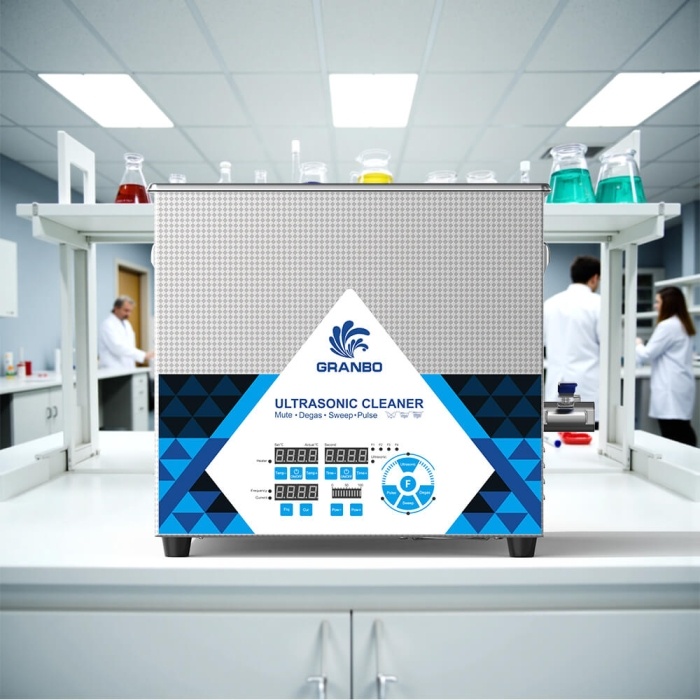
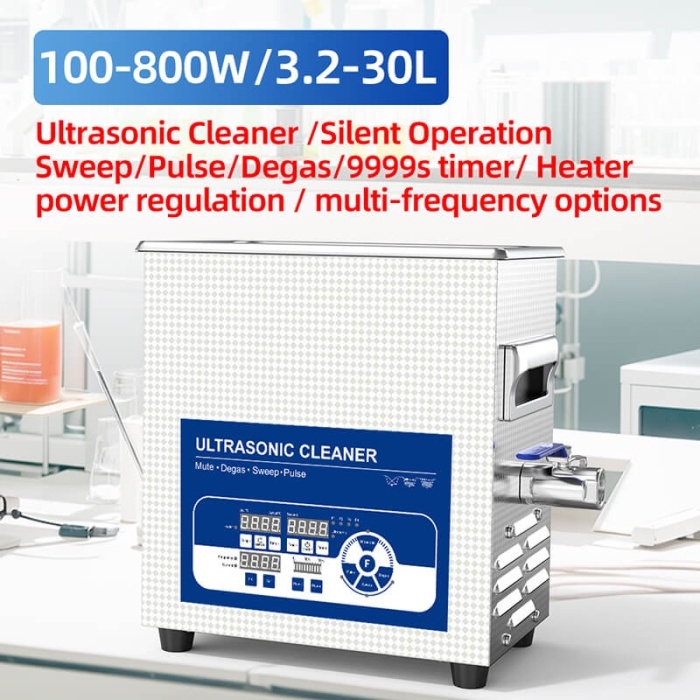
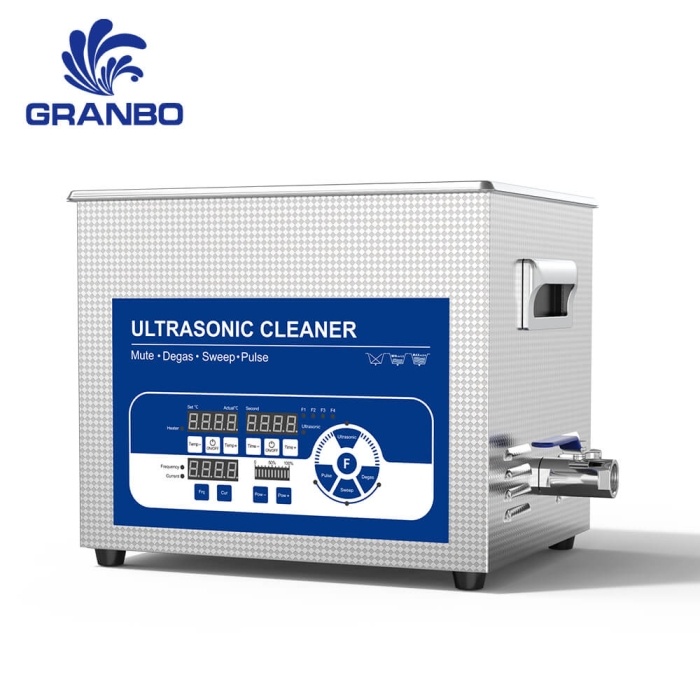
Walk into an online store or search for ultrasonic cleaners on any e-commerce platform, and you’ll notice something: many of them look virtually identical. Sleek stainless steel tanks, a digital display, maybe a few buttons or knobs — it’s easy to assume they’re interchangeable. This superficial similarity, however, conceals vast differences in performance, longevity, safety, and suitability for specific applications.
One of the biggest reasons behind this confusion is the proliferation of generic manufacturing. Dozens of brands source identical-looking units from the same factories, sometimes with only the front panel customized. Without opening the machine or analyzing its internal components — the ultrasonic transducers, generator circuitry, and even the tank build quality — the average buyer has no idea what they’re really getting.
Visual parity does not mean functional equivalence. In fact, treating all ultrasonic cleaners as the same could lead to ineffective cleaning, premature equipment failure, or even damage to the items being cleaned.

Frequency Matters: Low vs High-Frequency Cleaners
The frequency of an ultrasonic cleaner is one of its most defining technical characteristics, yet it’s often overlooked by casual users. To understand why frequency matters, it helps to visualize what happens in the cleaning bath. Sound waves traveling through the liquid cause alternating high- and low-pressure cycles. During the low-pressure phase, small vacuum bubbles form. These collapse violently during the high-pressure phase, producing the “scrubbing” effect central to ultrasonic cleaning.
Lower frequencies — typically around 20kHz to 28kHz — create larger cavitation bubbles and release more energy upon collapse. This is ideal for removing heavy contaminants like grease, carbon deposits, or polishing compounds from metal tools or engine parts. However, this same intensity can damage softer materials or fine features.
Higher frequencies — 40kHz, 68kHz, 80kHz, or even above 100kHz — generate gentler cavitation. They’re better suited for cleaning delicate surfaces, such as gold-plated jewelry, dental appliances, microchips, or glass lenses, where aggressive action could cause pitting or etching.
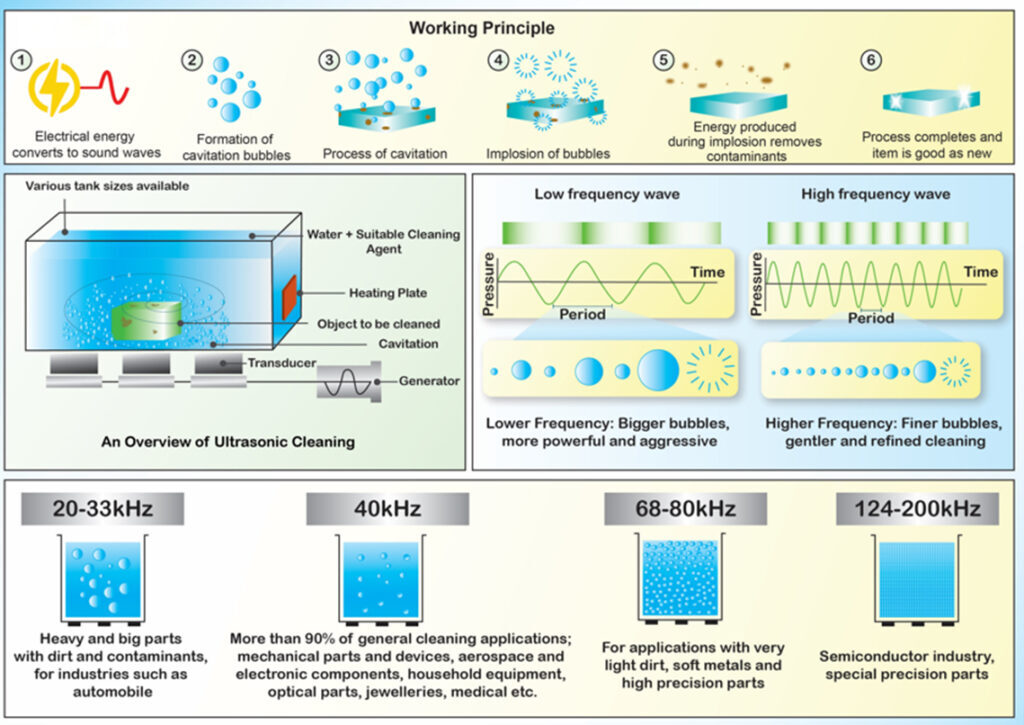
How Ultrasonic Cleaners Perform Differently at Various Frequencies
Some high-end units offer multi-frequency capability, allowing users to switch between frequencies based on the item being cleaned. This flexibility is essential in labs, hospitals, or manufacturing lines dealing with varied materials and contamination types.
A study published in Ultrasonics Sonochemistry noted that frequency selection directly affects the physical forces applied during cleaning, which can influence not only cleanliness but also microstructural integrity of the cleaned object (source).
Power Output and Cleaning Efficiency
Another major differentiator is power — not just the wattage listed on the spec sheet, but how that power is delivered and managed. In ultrasonic cleaners, the transducer converts electrical energy from the generator into mechanical vibrations at ultrasonic frequencies. The more efficient this conversion, the better the cavitation — and hence, the cleaning result.
Too little power, and cavitation bubbles won’t form effectively, especially in larger tanks or when the solution contains oils or surfactants. Too much power, and you risk damaging sensitive components or producing excessive heat. Power density (measured in watts per liter) is often a more meaningful measure than total power, especially when comparing differently sized machines.
Moreover, there’s a difference between “rated power” and “actual operational power.” Some budget units advertise high wattage but deliver much less during sustained operation due to poor thermal management or underpowered components.
In professional settings, consistent power delivery is essential. For example, a jewelry manufacturer relying on ultrasonic cleaning before plating needs predictable performance; inconsistent cavitation could lead to poor adhesion of the coating. In contrast, a DIY user cleaning garden tools may not notice minor fluctuations — but even here, excessive heat due to uncontrolled power can cause plastic parts to warp or crack.
The choice of transducers also plays a role. Piezoelectric vs magnetostrictive designs, bonded vs bolted configurations — all influence efficiency, lifespan, and cleaning uniformity.
Tank Material, Thickness, and Design
At first glance, all ultrasonic cleaner tanks might seem like simple steel containers — but the construction quality of the tank plays a crucial role in both performance and durability. Most machines use stainless steel, but not all stainless steels are equal.
High-grade units often use SUS304 or SUS316 stainless steel, with proper thickness and surface treatment to withstand prolonged cavitation forces and chemical exposure. Lower-grade materials or thin metal walls may develop microscopic cracks over time, especially under intense low-frequency cleaning conditions. Once cavitation-induced erosion sets in, cleaning efficiency drops, and contamination risks increase — especially in lab or medical settings.
Welded vs seamless tanks also matter. Poorly welded corners can be weak points that leak or rust, while seamless tanks reduce cleaning dead zones. Additionally, the tank shape — depth, width, and aspect ratio — affects how evenly the ultrasonic waves distribute, influencing where and how effectively items are cleaned.

Ultrasonic Cleaner Tank
The importance of tank design is often highlighted in industrial case studies, particularly when cavitation fatigue becomes a limiting factor for long-term equipment reliability.
The Generator Behind the Scenes
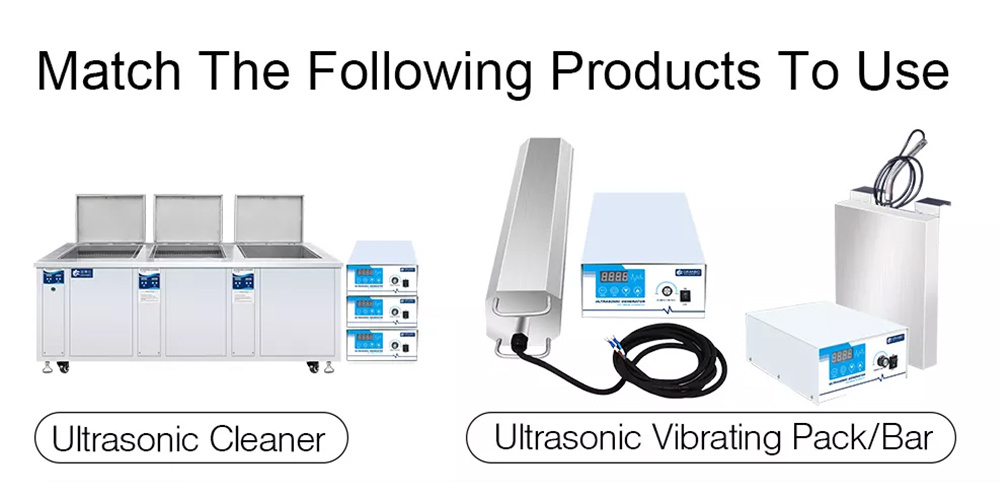
Think of the ultrasonic generator as the brain of the machine. It takes electrical input and converts it into high-frequency signals that drive the transducers. A low-quality generator will produce unstable frequencies, causing uneven cavitation, increased noise, and heat buildup.
High-end ultrasonic generators feature feedback control systems, frequency tracking, and even automatic load compensation. These functions ensure that if the cleaning load changes — say you add multiple items into the tank — the generator adjusts output to maintain stable performance. Cheaper models often lack such controls, resulting in inefficient cleaning as soon as the load increases or the liquid temperature fluctuates.
Some industrial-grade machines even allow users to fine-tune the frequency sweep range, pulse modulation, or duty cycles. This level of control is critical in scientific and semiconductor cleaning, where residue at a microscopic scale can compromise entire production batches.
Failure of a poorly designed generator doesn’t just affect cleaning quality — it can burn out transducers or overheat the tank. Long-term tests published in IEEE Transactions on Industrial Electronics have demonstrated that power waveform stability directly correlates with transducer lifespan and cavitation uniformity.
Built-in Heating: Convenience or Critical Feature?
Heating is one of the most misunderstood features in ultrasonic cleaners. Many models boast internal heaters, often up to 60–80°C, and for good reason — heat enhances the cleaning process, particularly when removing oils, waxes, and biological residues.
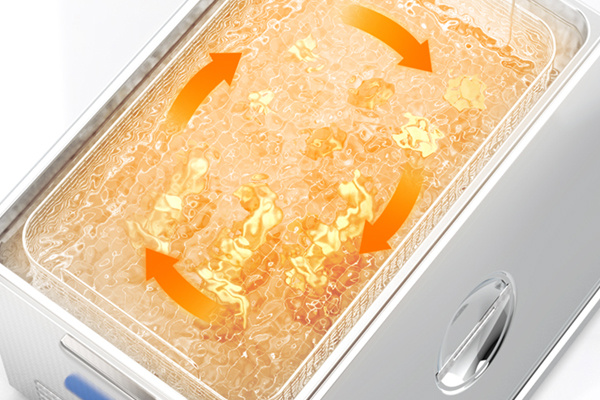
Heating
However, heating must be used properly and carefully. Excessive heat, especially in prolonged cycles, can alter the properties of cleaning agents or damage sensitive items like plastics, resins, or adhesives. Additionally, some cheaper units advertise a heating function but use low-efficiency, slow-response heating elements that take hours to reach target temperatures.
Professionally designed ultrasonic cleaners often include PID temperature controllers, which offer precision heating with minimal overshoot. They may also integrate thermal cutoffs and overheat protection, ensuring safety when machines are used in labs or medical environments.
In dental applications, for example, studies have shown that combining a temperature of 50–60°C with appropriate enzymatic cleaners enhances removal of biofilm from scalers and curettes without damaging the instruments (source).
User Interface and Operation Features
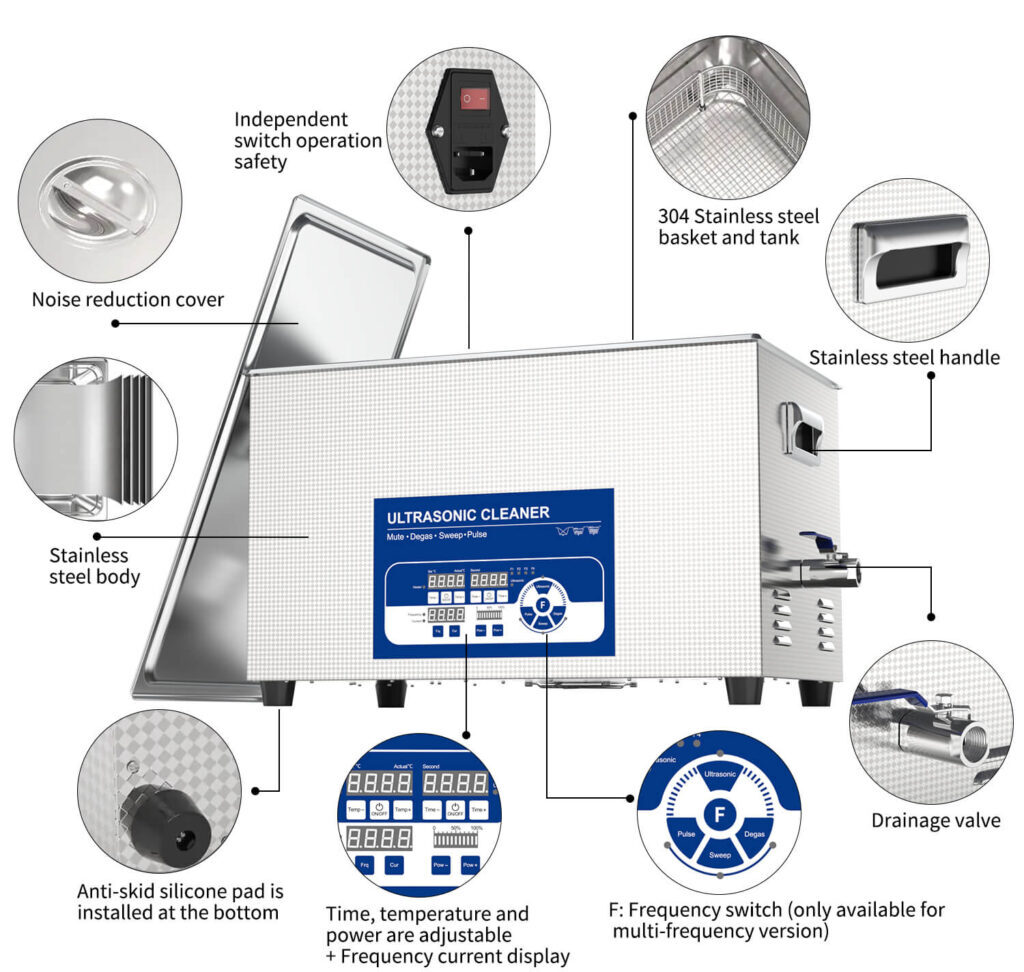
From a user’s perspective, how you interact with an ultrasonic cleaner determines much of the cleaning workflow. Older analog machines often rely on rotary dials for time and heat settings. While simple and durable, they lack precision.
Modern machines increasingly feature digital control panels, touchscreen interfaces, programmable cycles, and memory presets. These features are not just for convenience — in professional settings, being able to repeat the exact cleaning protocol ensures consistent results.
For example, a watch repair shop may set a 6-minute cycle at 40kHz with 45°C heat for stainless steel bracelet cleaning. The ability to save and replicate this program across multiple units ensures uniformity and reduces error.
Some laboratory-grade cleaners now include USB data logging, WiFi connectivity, or batch tracking systems, making them suitable for compliance-heavy environments such as pharma or aerospace. Conversely, budget-friendly units for home use may sacrifice these in favor of affordability — a fair trade-off, so long as expectations are realistic.
The bottom line: the user interface isn’t just a cosmetic upgrade. It determines how effectively a cleaner fits into a workflow — whether for daily eyeglass cleaning or rigorous decontamination in a biotech lab.
Chemical Compatibility and Cleaning Liquids
It’s a common misconception that ultrasonic cleaning works best with just water. In reality, the choice of cleaning solution is just as crucial as the machine itself — and different ultrasonic cleaners handle chemicals differently.
Some models are built with basic resistance to water and mild detergents, while others are engineered to handle corrosive solvents, alkaline detergents, or enzymatic fluids used in industrial, dental, or biological applications. If a cleaner’s inner tank or gaskets aren’t chemically resistant, they may degrade rapidly, leach contaminants into the bath, or even create safety hazards.
For example, chloride-rich solutions can corrode low-grade stainless steel, and solvents like acetone can weaken seals and fog plastic lids. High-end ultrasonic cleaners are often paired with manufacturer-approved chemical lists and documentation showing material compatibility. This ensures long-term integrity and safe handling.
Research by materials science institutions has shown that specific stainless steel alloys such as SUS316L outperform SUS201 and SUS304 in resisting pitting and stress corrosion in chloride environments.
Thus, not all machines support all chemicals equally. The smarter approach is matching your cleaning task — whether it’s removing flux from PCBs or protein residues from dental tools — with both a suitable liquid and a machine rated to handle it.
Accessories and Add-ons: Baskets, Lids, Racks, and More
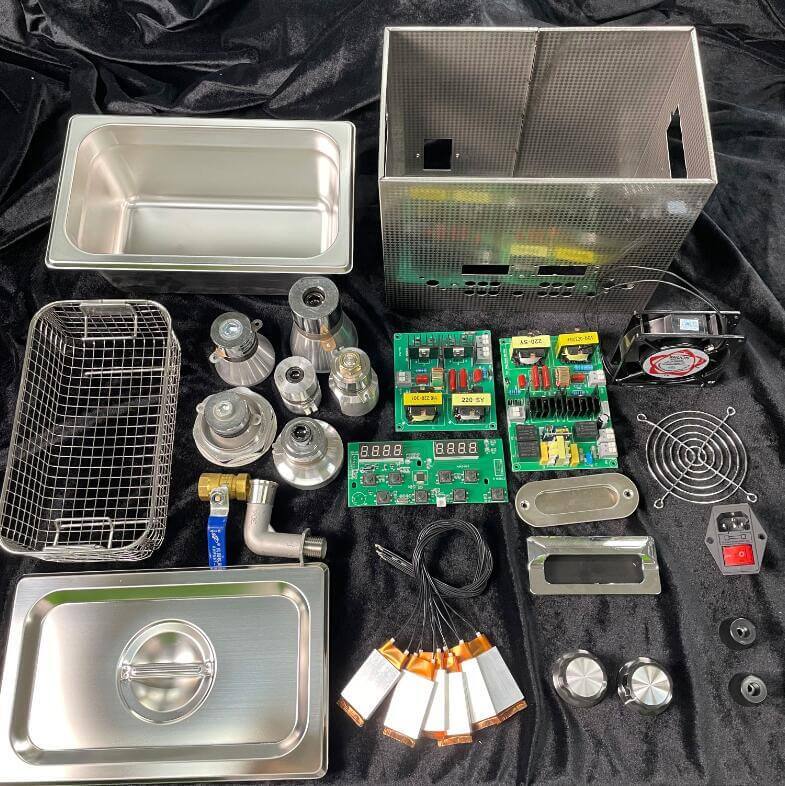
Accessories often seem like afterthoughts, but they can significantly impact cleaning performance. For instance, a suspended basket not only protects delicate items from direct contact with transducers but also allows cavitation to reach all surfaces evenly.
However, basket design matters. Coarse mesh may block ultrasonic waves. Cheap, heavy baskets may absorb cavitation energy. Top-tier cleaners come with acoustically optimized baskets, often with polymer coatings or fine stainless mesh tuned for specific frequencies.
Lids are another overlooked component. A tight-fitting lid reduces heat and vapor loss, keeping the bath stable — which matters during long cleaning cycles. Some industrial cleaners even offer condensation-recapture lids, preventing vaporized chemicals from escaping into the workspace.
Then there are specialized racks: test tube holders for lab use, dental cassette trays, watch holder platforms, injector clamps for automotive applications. Whether a cleaner offers these — and how well they integrate with the tank design — can differentiate a professional-grade unit from a generic consumer model.
Accessory versatility becomes even more critical in regulated environments. For instance, medical clinics may need autoclavable baskets to maintain sterilization protocols. This is why accessories are not mere add-ons, but extensions of the cleaner’s functional value.
Certifications, Safety, and Compliance Standards
Behind the sleek steel of an ultrasonic cleaner lies an electrical and mechanical device — one that must meet safety standards depending on where and how it’s used.
For household devices, certification might simply mean CE or FCC marks. But in clinical, pharmaceutical, aerospace, or cleanroom environments, you’re looking at much more stringent requirements:
- ISO 13485 for medical device quality management
- RoHS and REACH compliance for chemical safety
- UL/CSA certification for electrical safety in North America
- IQ/OQ/PQ documentation for validation in GMP facilities
Lack of such certifications not only makes it risky to operate a cleaner in certain settings — it may even be illegal. Furthermore, machines with high electromagnetic interference (EMI) may disrupt nearby lab instruments. Others may lack surge protection, thermal overload guards, or insulation — especially among budget or counterfeit imports.
Safety is not just a checkbox; it defines where a cleaner can be legally installed, how it must be operated, and what consequences arise from failure. In professional settings, compliance documentation is often audited.
This is a key reason why two ultrasonic cleaners that look identical online may serve entirely different markets once you dig into their certification profiles.
Longevity, Maintenance, and Serviceability
Finally, even the best ultrasonic cleaner must face the test of time. But how long should one expect a cleaner to last — and what separates a machine that dies in 18 months from one that runs for a decade?
Much of this depends on internal build quality: PCB construction, transducer bonding, cooling fans, wiring insulation, and power supply shielding. Professional-grade models are designed with modular replaceability: transducers can be swapped, boards repaired, and tanks resurfaced. Budget devices, on the other hand, are often sealed and non-serviceable.
Manufacturers that offer extended warranties (2–5 years) typically signal confidence in their component sourcing and engineering. They may also maintain authorized service centers — crucial for labs or production lines that depend on uptime.
Maintenance protocols also vary. High-end devices may include self-cleaning cycles, descaling alerts, or diagnostics. Lesser models often lack such safeguards, leaving users unaware of internal degradation until performance drops or failure occurs.
Industry reliability data from cleaning equipment surveys shows that well-maintained ultrasonic units in lab and industrial settings often surpass 8 years of continuous use, provided periodic descaling, power checks, and chemical residue cleaning are performed.
Use Case Determines Everything: Household vs Lab vs Industrial Cleaners
An ultrasonic cleaner used to clean a retainer in a college dorm is nothing like one cleaning jet engine components in an aerospace facility. And somewhere between those extremes sits the entire world of dental clinics, watchmakers, jewelers, automotive workshops, and electronics labs.
Household ultrasonic cleaners are typically compact, simple, and low-powered. They’re optimized for ease of use and safety — perfect for eyeglasses, small jewelry, or retainers. But they usually lack frequency tuning, temperature stability, and advanced timing controls.
Laboratory-grade cleaners, on the other hand, focus on reproducibility. A lab needs identical cavitation patterns for every sample batch, with frequency sweep, degas modes, and precision temperature control. Many are also designed to meet cleanroom requirements or validation needs like IQ/OQ/PQ.
Industrial ultrasonic systems scale even further — supporting gallons of cleaning solution, multiple tanks, automation interfaces, oil skimmers, and conveyor integration. These are designed for 24/7 throughput, rugged performance, and operator safety under demanding conditions.
The point is clear: “One ultrasonic cleaner fits all” doesn’t apply. What works for a pair of silver earrings won’t clean a diesel fuel injector, and what’s safe for polymer-based medical devices may damage solder joints on a PCB. Matching the device to the cleaning context is crucial.
Cost Isn’t Always the Best Indicator of Quality
It’s tempting to assume that more expensive means better — and sometimes that’s true. But in the ultrasonic cleaning world, price alone doesn’t guarantee performance, durability, or even usefulness.
Some low-cost units offer excellent value for light-duty applications. Conversely, overpriced units may add gimmicks — like unnecessary LCDs or WiFi control — while neglecting core performance metrics such as tank uniformity or signal stability.
What truly differentiates a quality ultrasonic cleaner is:
- Frequency matching and sweep technology
- Consistent power delivery across the tank
- Materials compatibility with cleaning fluids
- Well-documented safety and certification
- Component repairability and manufacturer support
Smart buyers prioritize technical match over marketing claims, and many institutions perform internal benchmarks — like foil tests, particle analysis, or cleaning time comparisons — before standardizing on a model.
In short, understanding what you need cleaned, how often, and under what constraints (budget, space, safety) leads to smarter choices than chasing brand or price alone.
Why It’s Important to Know Ultrasonic Cleaners Aren’t All the Same
Ultrasonic cleaning might seem like a mature, simple technology at first glance. But as we’ve explored, there’s a deep range of variation across models — in frequency, transducer type, power handling, fluid compatibility, safety compliance, and long-term reliability.
Treating all ultrasonic cleaners as interchangeable is a shortcut to poor results — and sometimes equipment damage, wasted chemicals, or even health risks.
Whether you’re a biomedical lab cleaning surgical instruments or a hobbyist maintaining brass cartridges, choosing the right ultrasonic cleaner means understanding your cleaning goals and environment, then selecting a device built to meet them.
So, are all ultrasonic cleaners the same? Absolutely not — and understanding the differences will make every cleaning task safer, faster, and more effective.